
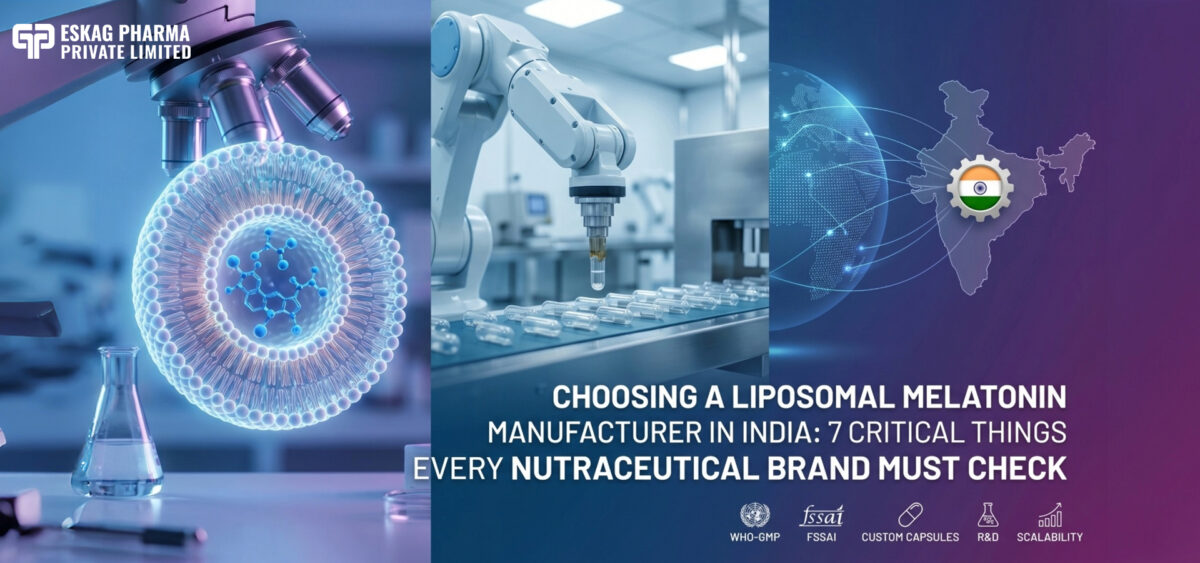
How to Choose a Liposomal Melatonin Manufacturer in India: 7 Things Every Nutraceutical Brand Must Check
The sleep supplement industry is undergoing a fundamental transformation. As global consumers increasingly demand evidence-based, high-bioavailability solutions for circadian rhythm disruptions, melatonin supplement brands face an urgent question: is your manufacturing partner truly equipped to deliver the next generation of liposomal formulations — or are you simply paying premium prices for standard powder encapsulated in expensive packaging?
Choosing the right liposomal melatonin manufacturer is one of the most consequential supply chain decisions a nutraceutical brand can make. It determines product efficacy, regulatory compliance, international market access, and ultimately, consumer trust. This comprehensive guide examines the seven critical evaluation criteria every brand must apply before committing to a liposomal supplement partner.
Key Takeaways
- The Liposomal Quality Gap: Melatonin is highly sensitive to degradation during processing. Selecting a verified liposomal melatonin manufacturer guarantees that the active ingredients are completely encapsulated within stable phospholipid bilayers, ensuring superior bioavailability over standard options.
- Critical Compliance Benchmarks: Partnering with a WHO-GMP supplement manufacturer and an FSSAI certified manufacturer is non-negotiable. These standards ensure cleanroom integrity, precise heavy metal testing, and international export eligibility.
- End-to-End Scalability: A premier liposomal melatonin manufacturer India should offer robust R&D capabilities for custom capsule formulation setups, allowing seamless transition from small-batch testing to high-volume commercial production under a single roof.
The Surging Market Demand for High-Bioavailability Sleep Supplements
The global market for sleep health solutions has entered a phase of accelerated expansion. According to recent market research, the circadian rhythm sleep disorder market was valued at USD 2.33 billion in 2024 and is projected to reach approximately USD 4.38 billion by 2034, expanding at a compound annual growth rate of 6.56%. Within this landscape, melatonin supplement products — particularly advanced liposomal formats — represent the fastest-growing therapeutic category.
Rising Consumer Awareness of Circadian Rhythm and Sleep Hygiene
Modern consumers are no longer passive recipients of pharmaceutical sleep aids. Driven by data from wearables, sleep tracking applications, and a proliferation of peer-reviewed research in chronobiology, today’s health-conscious buyers are actively researching the mechanisms behind melatonin supplementation. They understand concepts such as circadian misalignment, delayed sleep phase disorder (DSPD), and the pineal gland’s role in endogenous melatonin synthesis. The CDC reported that 30.5% of U.S. adults slept fewer than seven hours per night in 2024, and approximately 18.1% of adults reported persistent difficulty staying asleep — creating a vast, underserved market for effective melatonin supplement solutions.
Why Brands Are Shifting Away from Standard Melatonin Powders
Standard melatonin tablets and capsules face a fundamental pharmacokinetic limitation: extensive hepatic first-pass metabolism and gastrointestinal acid degradation leave only 10–15% of the administered dose biologically available. This bioavailability ceiling limits the clinical efficacy of conventional formulations and forces brands to use higher labelled doses, which increase the risk of next-day grogginess, hormonal effects, and consumer dissatisfaction. The scientific evidence supporting superior delivery systems is increasingly compelling — a double-blind case control study published in PMC (2023) confirmed that liposomal melatonin achieves significantly shorter sleep latency compared to conventional melatonin (10.8 ± 5 minutes versus 18.1 ± 13.4 minutes, p = 0.002), with greater bioavailability enabling effective action at lower dosages. Brands that continue relying on standard powders are sacrificing clinical differentiation in an increasingly competitive market.
Reference: Efficacy of Liposomal Melatonin in sleep EEG in Childhood: A Double Blind Case Control Study. PMC9819026. PubMed Central, 2023.
Finding a Specialised Melatonin Supplement Manufacturer to Capture the Premium Market
The premium nutraceutical segment demands more than cost efficiency. Brands seeking to position their melatonin supplement at the upper tier of the market must partner with manufacturers who combine advanced liposomal encapsulation technology, stringent quality assurance infrastructure, and the regulatory certifications required for both domestic and international distribution. The melatonin supplement manufacturer you choose should be equipped to validate encapsulation efficiency, particle size distribution, and phospholipid bilayer integrity — not merely blend powders and fill capsules.
The Technical Complexity of Processing Stable Lipid Bilayers
Liposomal technology is not simply an upgrade to conventional powder blending. It represents an entirely different category of pharmaceutical manufacturing that demands specialised equipment, environmental controls, and process expertise. Brands must understand this technical gulf before evaluating any liposomal melatonin manufacturer.
Why Ordinary Blending Infrastructure Fails Liposomal Standards
Conventional nutraceutical manufacturing relies on dry blending, granulation, and basic capsule filling. Liposomal processing, by contrast, requires homogenisation or microfluidisation at controlled flow rates, solvent-exchange protocols, and aqueous phase management — all performed under strict environmental controls. Research published in PMC (2020) on microfluidics-based LNP manufacturing demonstrates that particle characteristics are fundamentally determined by lipid composition, buffer type and molarity, and precise flow-rate management — variables that standard blending equipment cannot control. A contract facility lacking these capabilities cannot produce a stable, shelf-viable liposomal melatonin product, regardless of how competitive their pricing appears.
Reference: Manufacturing Considerations for the Development of Lipid Nanoparticles Using Microfluidics. PMC7697682. PubMed Central, 2020.
Controlling Nano-Vesicle Particle Size Distribution During Compounding
Particle size uniformity is the defining quality attribute of any liposomal formulation. Research published in PMC confirms that polydispersity index (PDI) values below 0.3 indicate homogeneous, stable, and well-dispersed liposomes suitable for nutraceutical applications, while PDI values above 0.5 indicate a heterogeneous, commercially unacceptable preparation. A skilled liposomal melatonin manufacturer controls particle sizing through dynamic light scattering (DLS) instrumentation, and validates this with zeta potential measurements that confirm bilayer surface charge and colloidal stability. GMP-grade liposomal nanotherapy studies — including a landmark PubMed-indexed study (Lobatto et al., 2015) — demonstrated that robust GMP manufacturing consistently yields stable liposomes sized 100 nm ± 10 nm, with long circulatory half-life and minimal degradation.
Reference: Pharmaceutical development and preclinical evaluation of a GMP-grade anti-inflammatory nanotherapy. PubMed ID 25791805. Lobatto et al., 2015.
Reference: Quality by Design Approach in Liposomal Formulations: Robust Product Development. PMC9822211. PubMed Central, 2023.
How an Expert Liposomal Melatonin Manufacturer Prevents Ingredient Leakage
Melatonin is a lipophilic indoleamine with a molecular weight of 232.28 g/mol, making it highly susceptible to bilayer leakage when encapsulation conditions are suboptimal. Premature leakage — caused by temperature excursions, pH fluctuations, or inadequate phospholipid purity — results in a product that degrades rapidly and fails to deliver its labelled dose to target tissues. A credible liposomal melatonin manufacturer addresses leakage prevention through encapsulation efficiency testing, zeta potential optimisation, and accelerated stability protocols that simulate real-world storage and distribution conditions.
1. Absolute Compliance: Demanding a WHO-GMP Supplement Manufacturer
The first and most non-negotiable criterion when evaluating a liposomal melatonin manufacturer is verified WHO-GMP certification. This is the foundational credential that separates a credible industrial partner from a low-compliance toll-blender.
Understanding the Stringent Protocols of World Health Organization GMP Controls
WHO-GMP (World Health Organization Good Manufacturing Practices) standards govern every aspect of pharmaceutical-grade production: raw material qualification, in-process controls, environmental monitoring, equipment qualification, personnel training, batch documentation, and finished product release. For liposomal formulations specifically, these controls are critical because lipid bilayers are inherently sensitive to processing deviations. WHO-GMP certification confirms that a manufacturing facility has undergone third-party audit validation of its quality management systems — it is recognised across GCC countries, the United Kingdom, African markets, and select EU jurisdictions as the threshold credential for export-eligible production. Only a fraction of nutraceutical manufacturers in India currently hold valid WHO-GMP certification, making certified facilities critical for brands targeting export markets or premium domestic positioning.
Ensuring Cross-Contamination Prevention in Advanced Cleanrooms
Liposomal manufacturing requires cleanroom environments with HEPA filtration, defined air change rates, and validated microbial monitoring protocols. Cross-contamination between API batches is a primary risk in facilities that handle multiple nutraceutical formulations simultaneously. A credible WHO-GMP supplement manufacturer implements dedicated cleanroom zones for liposomal processing, closed-loop automated cleaning-in-place (CIP) protocols between production runs, and continuous environmental monitoring through settle plates and active air sampling — all of which are non-negotiable for producing a premium liposomal melatonin product.
Why Working with a WHO-GMP Supplement Manufacturer Minimises Regulatory Risks
Brands that source from non-GMP-certified manufacturers expose themselves to product recalls, import refusals at international customs checkpoints, and liability from lot-to-lot inconsistency. A WHO-GMP supplement manufacturer provides the batch documentation, Certificate of Analysis (CoA), and process validation records that importing countries require for product registration and market authorisation. For brands building long-term equity in premium sleep supplement categories, this protection is not optional.
Compliance Checklist: WHO-GMP
- Valid, audited WHO-GMP certificate with documented renewal history
- Dedicated cleanroom zones rated ISO Class 7 or ISO Class 8 for liposomal processing
- Validated CIP/SIP protocols with documented microbial test results
- Comprehensive batch manufacturing records and deviation management system
- Certificate of Analysis issued for every commercial batch
2. Domestic and Global Certifications: Verifying the FSSAI Status
For nutraceutical brands operating in or manufacturing within India, FSSAI certification is not merely a bureaucratic requirement — it is the legal licence to manufacture. Partnering with an FSSAI certified manufacturer ensures your product complies with India’s Food Safety and Standards Act of 2006 and its subsequent nutraceutical-specific amendments.
The Role of the Food Safety and Standards Authority of India in Advanced Nutraceuticals
The Food Safety and Standards Authority of India (FSSAI) oversees licensing, labelling, and manufacturing standards for all nutraceutical categories, including dietary supplements and health supplements. FSSAI compliance for advanced liposomal formulations encompasses mandatory declaration of phospholipid carrier materials, active ingredient assay verification, heavy metal testing (lead, arsenic, cadmium, mercury), and microbiological safety standards. The nutraceutical category in India is governed under FSSAI’s Health Supplements and Nutraceuticals regulations, and any FSSAI certified manufacturer must demonstrate alignment with these frameworks through documented manufacturing licences and routine surveillance audits.
Auditing Ingredient Traceability and Raw Material Testing Policies
FSSAI compliance requires manufacturers to maintain documented ingredient traceability from supplier qualification through finished product release. For a liposomal melatonin manufacturer, this means every batch of phospholipid carrier (soy lecithin or sunflower lecithin), melatonin API, and processing excipient must be traceable to a qualified supplier with documented assay certificates. Brands should audit this system during supplier evaluation visits, requesting supplier qualification records, incoming material inspection logs, and raw material COA archives as standard due diligence.
Why an FSSAI Certified Manufacturer Is Essential for Regulatory Product Approvals
Domestic market product registration with state food safety authorities requires FSSAI manufacturing licence documentation. International markets increasingly require FSSAI certification as a proxy indicator of manufacturing quality equivalent to cGMP standards. Furthermore, e-commerce platforms and organised retail chains in India require FSSAI product registration numbers as a condition of listing. Partnering with an FSSAI certified manufacturer is therefore not only a legal necessity but a commercial prerequisite for distribution across premium domestic and international channels.
3. Advanced Custom Capsule Formulation Capabilities
The conversion of a liquid liposomal matrix into a commercially viable, shelf-stable solid dosage form is among the most technically challenging aspects of nutraceutical manufacturing. A liposomal melatonin manufacturer lacking this capability will force your brand into liquid soft-gel formats with limited shelf life, higher packaging costs, and restricted consumer acceptance.
Converting Liquid Liposomal Matrix Into Stable Solid Dosage Powders
Spray-drying and lyophilisation (freeze-drying) are the two primary industrial processes for converting liquid liposomal suspensions into dry powder intermediates suitable for hard capsule filling. Spray-drying offers cost efficiency and scalability, but must be performed at carefully controlled inlet and outlet temperatures to prevent phospholipid bilayer disruption. Lyophilisation produces a more stable, lower-moisture product but at significantly higher capital and operational costs. A sophisticated liposomal supplement partner must be equipped with at least one of these conversion technologies and must be able to demonstrate validated process parameters that preserve liposomal structure — confirmed through pre- and post-drying particle size analysis.
Selecting the Right Moisture-Resistant HPMC Capsule Shell Technology
Once converted to a dry powder intermediate, the liposomal melatonin content must be encapsulated in a capsule shell that protects the bilayer structure from moisture-induced degradation throughout its shelf life. Research published in PubMed (Missaghi et al., 2010) established that hydroxypropyl methylcellulose (HPMC) capsules exhibit a moisture content of only 3–8%, compared to 13–16% for conventional gelatin capsules. This critically lower moisture content makes HPMC the preferred shell material for liposomal nutraceutical formulations, as excess moisture can cause phospholipid bilayer fusion, leading to leakage of the encapsulated melatonin. HPMC capsules also offer pH-controlled disintegration profiles, enabling small intestine-targeted release for optimal liposomal uptake.
Reference: HPMC capsules: current status and future prospects. PubMed ID 21092714. J Pharm Pharmacol, 2010.
Tailoring Release Profiles with Precision Custom Capsule Formulation
Custom capsule formulation capabilities allow brands to specify not only the dose but the release architecture of their liposomal melatonin product. Immediate-release HPMC capsules are suitable for rapid sleep onset applications. Extended-release or enteric-coated variants can sustain plasma melatonin levels throughout the night, addressing the needs of consumers with sleep maintenance challenges. A credible liposomal melatonin manufacturer with true custom capsule formulation expertise will work with your R&D team to define the target product profile (TPP), establish quality target product profile (QTPP) criteria, and conduct in vitro dissolution testing at multiple pH levels to validate the chosen release architecture before commercial production.
4. Evaluating Regional Logistics: The Strategic Indian Advantage
India’s position as the world’s fastest-growing nutraceutical contract manufacturing hub is supported by a combination of raw material availability, regulatory infrastructure, skilled technical talent, and freight connectivity that collectively create compelling cost and quality advantages for international brands.
Sourcing Infrastructure and High-Purity Phospholipid Supply Chains in India
India’s pharmaceutical and nutraceutical raw material supply chains have matured significantly over the past decade. High-purity phosphatidylcholine — the primary structural component of liposomal bilayers — is now sourced from qualified Indian importers and a growing number of domestic processors, providing liposomal melatonin manufacturer India partners with reduced lead times and better pricing compared to sourcing exclusively from European or North American suppliers. Additionally, India’s proximity to soy and sunflower lecithin processing facilities in neighbouring agricultural regions creates logistical advantages for consistent raw material supply.
Export Advantages and Freight Corridor Efficiencies for International Brands
India’s major nutraceutical manufacturing clusters — including Baddi (Himachal Pradesh), Ahmedabad, Mumbai, Hyderabad, and Bengaluru — are well-connected to India’s premier international freight hubs. The nutraceutical contract manufacturing services market in India generated USD 13.3 billion in revenue in 2023 and is projected to reach USD 33.2 billion by 2030, growing at a 14% CAGR. This scale is supported by established export logistics infrastructure that provides international brands with competitive freight rates, experienced customs brokers for nutraceutical product classification, and compliance with destination-country import documentation requirements.
Cost-Efficiency Milestones Offered by a Liposomal Melatonin Manufacturer India
Manufacturing costs at a liposomal melatonin manufacturer India partner can be 30–50% lower than equivalent European or North American contract manufacturers, primarily due to lower labour costs, more competitive raw material procurement networks, and government incentive structures for pharmaceutical export under schemes such as Production Linked Incentive (PLI). For international brands, this cost efficiency does not require compromising on quality when the partner holds WHO-GMP and FSSAI certifications and employs internationally trained formulation scientists — a combination increasingly common among premium Indian nutraceutical suppliers.
5. Assessing R&D Depth and Technological Infrastructure
The distinction between a true liposomal supplement partner and a toll-blending contractor lies primarily in R&D capability. Brands building a long-term product pipeline in the sleep supplement or cognitive health categories require a manufacturing partner who can co-develop formulations, conduct rigorous stability testing, and scale processes from bench to commercial production without sacrificing quality.
Pilot-Batch Validation and Dynamic Stability Testing Protocols
A credible liposomal supplement partner will always offer pilot-batch validation as the first phase of commercial production scale-up. This step involves manufacturing a small-scale batch under the same process conditions as the intended commercial batch, then subjecting it to accelerated stability testing at 40°C/75% RH (ICH Zone IVb conditions), real-time stability at 25°C/60% RH, and photostability testing. These studies confirm that the liposomal melatonin product maintains its particle size distribution, encapsulation efficiency, potency, and microbiological quality throughout its proposed shelf life — typically 18–24 months. Any liposomal melatonin manufacturer who offers to skip pilot validation in favour of immediate commercial production should be regarded with significant caution.
Verifying Particle Sizing Equipment and Electron Microscopy Controls
The analytical infrastructure of your liposomal supplement partner is a direct indicator of their manufacturing capability. Essential instruments for liposomal quality control include Zetasizer (DLS) for particle size and zeta potential, high-performance liquid chromatography (HPLC) for melatonin assay, Karl Fischer titration for moisture content, and transmission electron microscopy (TEM) or scanning electron microscopy (SEM) for direct visualisation of liposomal vesicle morphology. Facilities without in-house analytical instrumentation are dependent on third-party laboratories for quality control — introducing delays, chain-of-custody risks, and reduced real-time process control during manufacturing.
Selecting a Strategic Liposomal Supplement Partner Over a Simple Vendor
The shift in perspective from vendor selection to strategic liposomal supplement partnership is critical for brands with serious product development ambitions. A strategic partner co-invests intellectual effort in your product’s success — providing formulation scientists who understand phospholipid chemistry, regulatory consultants who track FSSAI guideline amendments, and quality assurance teams who proactively identify stability risks before they become market recalls. This partnership model — rather than pure price-based vendor selection — is what separates brands that build durable market positions from those perpetually chasing the lowest MOQ quote.
6. Raw Material Integrity and Sourcing Networks
The quality of a liposomal melatonin product is fundamentally determined by the purity and consistency of its raw materials. Phospholipid carrier quality, in particular, has a direct and measurable impact on liposome formation efficiency, bilayer stability, and the uniformity of encapsulation.
Evaluating Sourcing Quality for Non-GMO Soy or Sunflower Lecithin Carriers
Phosphatidylcholine (PC) from soy or sunflower lecithin is the primary structural component of liposomal bilayers used in nutraceutical applications. A landmark PubMed study (McClements et al., 2018, PubMed ID 30372060) evaluated four grades of sunflower lecithin (Sunlipon 50, 65, 75, and 90) for liposome fabrication, confirming that all four were suitable for producing stable vesicles, and that loading capacity and heat stability of encapsulated bioactives increased proportionally with phosphatidylcholine content. For a nutraceutical supplier India context, brands should specify minimum PC content thresholds for their lecithin carrier — typically 70–90% PC for pharmaceutical-grade applications — and demand Certificates of Analysis with total phospholipid assay values from each incoming batch.
Reference: Fabrication and Characterization of Curcumin-Loaded Liposomes Formed from Sunflower Lecithin. PubMed ID 30372060. McClements et al., Food Chemistry, 2018.
Sunflower lecithin is increasingly preferred over soy lecithin in premium nutraceutical formulations because it is inherently non-GMO, allergen-free, and received GRAS (Generally Recognised as Safe) status from the FDA in 2019. The main phospholipids in sunflower and soybean lecithin — phosphatidylcholine (PC), phosphatidylinositol (PI), phosphatidylethanolamine (PE), phosphatidylserine (PS), and phosphatidic acid (PA) — have similar profiles between sources, making sunflower lecithin a scientifically equivalent and commercially superior alternative for brands targeting clean-label consumer segments.
Ensuring Raw Material Assay Levels and Microbiological Cleanliness Standards
Beyond phospholipid quality, melatonin API purity is equally critical. Pharmaceutical-grade melatonin should meet BP (British Pharmacopoeia) or USP (United States Pharmacopeia) monograph specifications, including assay purity of ≥99.0%, heavy metal testing within pharmacopoeial limits, and microbiological testing for total aerobic count, total yeast and mould, and specified organisms (E. coli, Salmonella). A reliable nutraceutical supplier India will maintain incoming material inspection protocols that test every melatonin API lot against these specifications before release for manufacturing, and will retain retained samples from each lot for traceability throughout the product’s shelf life.
How a Reliable Nutraceutical Supplier India Secures Consistent Supply Chains
Supply chain continuity is a critical but often underestimated risk in nutraceutical manufacturing. A seasoned nutraceutical supplier India with robust procurement systems maintains dual-qualified supplier lists for all critical raw materials — ensuring that a single supplier disruption does not halt production schedules. Leading Indian nutraceutical contract manufacturers typically partner with European, North American, and Indian API suppliers to balance cost efficiency with supply security. Brands should request documentation of supplier qualification programmes, secondary supplier approvals, and material safety data sheets (MSDS) during the due diligence process.
7. Turnkey Contract Manufacturing and Scalability Infrastructure
The final and perhaps most commercially decisive evaluation criterion is the depth and flexibility of the manufacturer’s contract manufacturing capabilities. For brands at any stage — from product concept through commercial scale — the ability to source end-to-end services under a single roof dramatically reduces project complexity, timeline risk, and the hidden costs of managing multiple vendors.
Comprehensive End-to-End Services from Formulation Design to Finished Outer Packaging
True turnkey contract manufacturing encompasses: formulation development, pilot-batch manufacturing, stability testing, analytical method development and validation, FSSAI product registration support, commercial-scale manufacturing, primary packaging (HPMC capsule filling, induction-sealed bottles, blister packing), and finished outer packaging with printed cartons, leaflets, and barcode compliance. Brands that work with a manufacturing partner offering all of these services under a single quality management system benefit from seamless batch traceability, unified deviation management, and a single point of accountability for product quality.
Minimum Order Quantities (MOQs) vs. Commercial High-Speed Scaling Capacities
A critical practical consideration for brands at different stages of market development is the manufacturer’s minimum order quantity flexibility. Typical nutraceutical manufacturing facilities in India expect MOQs of 2,000–5,000 units per product for new launches. Leading contract manufacturers with high-speed automated capsule filling lines — capable of 100,000+ capsules per hour — can transition seamlessly from pilot validation batches to commercial production volumes without reformulation, revalidation, or loss of process control. Brands should evaluate this scaling capability explicitly, requesting documentation of batch size ranges and evidence of validated scale-up procedures.
Why Choose Eskag Pharma as Your Advanced Industrial Contract Manufacturing Partner
Eskag Pharma stands as a premier liposomal melatonin manufacturer India partner, combining WHO-GMP and FSSAI certified manufacturing infrastructure with advanced liposomal encapsulation technology, in-house analytical laboratories equipped with DLS particle sizing and HPLC, and a dedicated custom capsule formulation team with deep expertise in phospholipid bilayer chemistry.
What Eskag Pharma Delivers as Your Liposomal Supplement Partner
- WHO-GMP and FSSAI certified manufacturing facility with dedicated cleanroom zones for liposomal processing
- Advanced microfluidisation and spray-drying infrastructure for liquid-to-solid liposomal conversion
- In-house DLS Zetasizer, HPLC, and Karl Fischer analytical instrumentation for full-batch QC
- Non-GMO sunflower or soy lecithin sourcing with dual-qualified supplier networks
- Custom capsule formulation in HPMC vegetarian capsules with pH-targeted release profiles
- Pilot-batch validation and ICH-compliant accelerated stability studies included as standard
- MOQs as low as 2,000 units with seamless scale-up to high-volume commercial production
- Full turnkey contract manufacturing: formulation → batch manufacturing → QC → packaging → regulatory support
- Export documentation and Certificate of Analysis for international market distribution
As a trusted nutraceutical supplier India partner to domestic and international brands, Eskag Pharma offers the rare combination of pharmaceutical-grade technical expertise, regulatory compliance depth, and commercial scalability that the next generation of sleep supplement brands requires. Whether you are launching a new liposomal melatonin SKU or scaling an existing line to meet growing international demand, Eskag Pharma provides the infrastructure, expertise, and quality systems to support every stage of your brand’s journey.
Conclusion:The 7-Point Framework for Evaluating Your Liposomal Melatonin Manufacturer
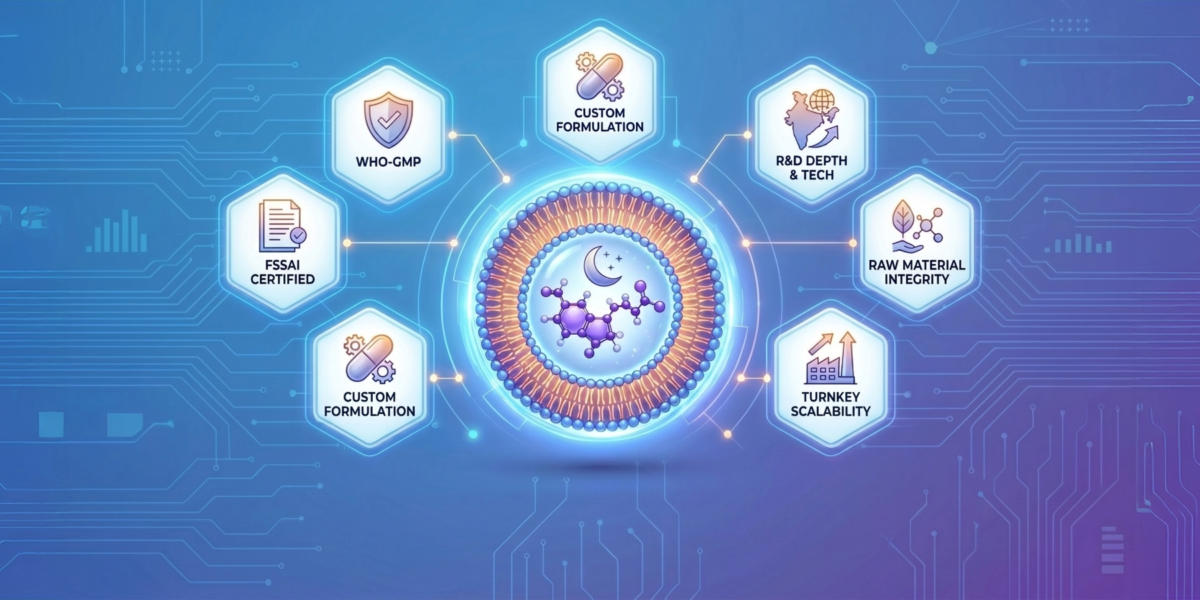
The decision to partner with a liposomal melatonin manufacturer is not a procurement exercise — it is a strategic investment in the scientific credibility, regulatory safety, and market differentiation of your brand. The seven criteria evaluated in this guide provide a rigorous, evidence-based framework:
- WHO-GMP certification — the foundational quality credential for pharmaceutical-grade liposomal production
- FSSAI certification — the legal manufacturing licence and domestic market enabler for any FSSAI certified manufacturer
- Custom capsule formulation — the technical capability to convert liposomal matrices into shelf-stable HPMC dosage forms
- Indian logistics advantage — cost efficiency, supply chain depth, and export freight connectivity from a liposomal melatonin manufacturer India partner
- R&D depth — pilot validation, stability protocols, and analytical infrastructure that define a true liposomal supplement partner
- Raw material integrity — non-GMO phospholipid sourcing, API assay verification, and dual-qualified supply networks managed by a reliable nutraceutical supplier India
- Turnkey scalability — end-to-end contract manufacturing from formulation through finished packaging
Brands that apply this framework rigorously — rather than selecting primarily on price or production capacity — will build products that deliver genuine clinical differentiation, pass international regulatory scrutiny, and earn long-term consumer loyalty in the premium sleep supplement market.

-
 📅 June 30, 2026
Key Takeaways The Bioavailability Challenge: Stand... -
 📅 June 29, 2026
Over the past decade, dermatological science has u... -
 📅 June 27, 2026
The global nutraceutical industry faces a critical... -
 📅 June 27, 2026
Iron deficiency anaemia remains the most prevalent... -
 📅 June 26, 2026
Uneven skin tone, persistent redness, and acne tha... -
 📅 June 26, 2026
If you struggle to switch off after a long day, yo... -
 📅 June 26, 2026
India’s sleep aid market is on course to rea... -
 📅 June 26, 2026
Key Takeaways The First-Pass Barrier: Traditional ... -
 📅 June 24, 2026
Sleep disruption is not simply a lifestyle inconve... -
 📅 June 18, 2026
The sleep supplement industry is undergoing a fund...
When choosing a liposomal melatonin manufacturer, verify capabilities in high-pressure homogenization or microfluidization for uniform nano-vesicles. Confirm in-house TEM analysis, encapsulation efficiency testing (target >85%), particle size distribution, and GMP-compliant scalable production with stability protocols.
Selecting a WHO-GMP certified manufacturer is vital for sleep aids to ensure validated processes, contamination prevention, and consistent product quality. This certification upholds international standards for safety, potency, and purity, essential for regulatory approval and consumer trust.
An FSSAI certified manufacturer should provide Certificate of Analysis (COA), microbial and heavy metal test reports, pesticide screening, stability data, allergen declarations, and GRAS compliance documentation. For liposomal products, include vesicle characterization and encapsulation validation reports.
Custom capsule formulation converts liquid liposomes into stable dry forms by adsorbing them onto inert carriers like maltodextrin, followed by spray drying or lyophilization. The resulting powder is blended with excipients and encapsulated, preserving liposomal structure and enhancing shelf stability.
Indian liposomal melatonin manufacturers are highly cost-effective due to lower production costs, advanced WHO-GMP facilities, and efficient supply chains. They offer competitive pricing for premium encapsulation technology with full export compliance, often at significant savings compared to Western manufacturers.
Premium partners test vesicle encapsulation efficiency using techniques like ultracentrifugation or dialysis to separate free and encapsulated melatonin, quantified via HPLC. They complement this with TEM imaging, dynamic light scattering for size, and zeta potential analysis to confirm high efficiency.
Yes, a trusted nutraceutical supplier in India can customize sleep blends by combining liposomal melatonin with adaptogens like Ashwagandha, L-Theanine, or Valerian root. They develop synergistic formulations optimized for efficacy, stability, and regulatory compliance under GMP conditions.
Dry liposomal melatonin products typically maintain stability for 24 to 36 months when stored in cool, dry, and light-protected conditions. Proper encapsulation technology and antioxidant inclusion help preserve vesicle integrity and active ingredient potency over this period.
Yes, Eskag Pharma provides complete dossier support under third-party contract manufacturing agreements. This includes technical specifications, stability reports, COA, manufacturing process documentation, and assistance with regulatory submissions and export certifications like COPP for global market access.
The typical turnaround time for private label liposomal capsules ranges from 6 to 10 weeks. This covers formulation development, artwork approval, manufacturing, rigorous quality testing, packaging, and final dispatch, depending on order volume and customization requirements.