
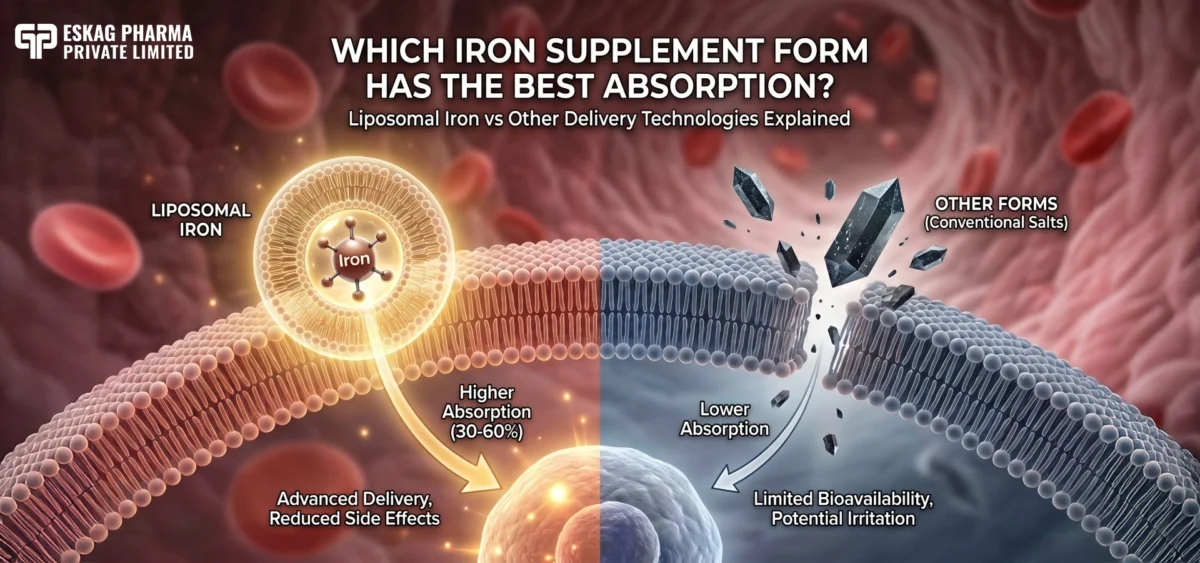
Which Iron Supplement Form Has the Best Absorption? Liposomal Iron vs Other Delivery Technologies Explained
Patients struggling with iron deficiency anaemia often find themselves overwhelmed by conflicting information about supplement choices, absorption rates, and the numerous delivery technologies available in today’s market. Many individuals experience frustration when conventional iron supplements cause uncomfortable side effects or fail to provide adequate therapeutic results despite consistent use. Healthcare providers increasingly recognise that selecting the best iron supplement absorption technology requires understanding complex factors, including bioavailability mechanisms, patient tolerance profiles, and manufacturing quality standards. Advanced delivery systems such as liposomal encapsulation, chelation, and microencapsulation offer distinct advantages over traditional ferrous salts, though navigating these options requires evidence-based guidance.
In this blog, you’ll discover comparisons of iron delivery technologies, clinical evidence supporting bioavailability claims, and practical insights for optimising therapeutic outcomes.
Key Takeaways:
- Liposomal iron achieves 30-60% absorption compared to conventional supplements, which achieve only 10-20% bioavailability, owing to enhanced cellular uptake mechanisms. Advanced delivery technologies significantly reduce gastrointestinal side effects while improving patient compliance and treatment success.
- Clinical evidence shows 2.7-3.5 times greater bioavailability with liposomal formulations alongside faster haemoglobin response rates. Manufacturing quality standards, including WHO-GMP certification, ensure consistent encapsulation efficiency and pharmaceutical-grade therapeutic outcomes globally.
- Patient tolerance profiles vary significantly across delivery systems, with advanced technologies associated with a reduced incidence of side effects. Specialised populations, including elderly patients, people with chronic diseases, and sensitive individuals, benefit from enhanced formulation technologies.
Quick Answer: Liposomal iron offers the best absorption (30-60%) and 2.7-3.5x greater bioavailability than conventional supplements, while significantly minimising gastrointestinal side effects.
Iron Supplement Absorption: The Science Behind Bioavailability
Iron absorption is a tightly regulated physiological process governed by sophisticated molecular mechanisms, including hepcidin hormone signalling, divalent metal transporter proteins, and ferroportin export channels, which collectively determine the optimal absorption of iron supplements across different supplementation approaches.
- Traditional ferrous salts exhibit 10-15% absorption rates, with significant variability due to gastric pH, dietary inhibitors such as phytates and polyphenols, and individual hepcidin regulation, which affects the efficiency of duodenal iron uptake in comparison studies of iron supplement bioavailability [1].
- Iron enters enterocytes through DMT1 (Divalent Metal Transporter 1) for non-heme iron and HCP1 (Heme Carrier Protein 1) for heme iron, with subsequent ferroportin-mediated export into circulation regulated by hepcidin binding and protein degradation.
- This 25-amino-acid hepatic hormone controls systemic iron homeostasis by binding to ferroportin and triggering its degradation, thereby blocking iron export from enterocytes and reducing the liposomal iron absorption rate during iron-sufficient states or inflammatory conditions.
- Absorption efficiency varies from 25-30% for organ meats to 2-4% for plant sources, with ascorbic acid enhancing uptake while calcium, tannins, and phytic acid creating competitive inhibition at transporter sites.
- Overcoming physiological barriers requires formulation technologies that bypass gastric degradation, minimise dietary interactions, and optimise cellular uptake via alternative absorption pathways, while maintaining best iron supplement absorption profiles comparable to those of liposomal iron vs conventional iron formulations.
Iron absorption science establishes foundational principles, while determining the best iron supplement absorption requires examining clinical evidence comparisons.
Liposomal Iron vs Conventional Iron: Clinical Evidence
Clinical studies demonstrate that liposomal iron formulations provide superior bioavailability and tolerance profiles compared with conventional iron formulations, though therapeutic efficacy varies across patient populations and study methodologies.
Here is a tabular representation to understand the difference between the two:
|
Parameter |
Liposomal Iron |
Conventional Iron |
|
Absorption Rate |
30-60% bioavailability through phospholipid-mediated cellular uptake |
10-20% bioavailability is limited by gastric degradation |
|
Hemoglobin Response |
1.8-2.4 g/dL increase within four weeks of treatment |
1.2-1.8 g/dL increase requiring longer therapy duration |
|
Side Effect Incidence |
5-15% patients experience gastrointestinal adverse events |
40-60% patients report nausea, constipation, and gastric irritation |
|
Dosing Requirements |
Lower elemental iron doses achieve therapeutic outcomes |
Higher doses are needed to compensate for poor absorption |
|
Patient Compliance |
Enhanced adherence through improved tolerability and flexibility |
Poor compliance due to side effects and restrictions |
Clinical evidence establishes liposomal superiority, while a comprehensive analysis of liposomal ferric pyrophosphate capsules reveals broader possibilities in the technological landscape.
Advanced Iron Delivery Technologies Comparison Matrix
Modern iron supplementation encompasses diverse delivery systems, including microencapsulation, chelation, liposomal technology, nanoparticle formulations, and heme-based sources, each offering distinct advantages for optimal iron absorption by enhancing bioavailability, stability, and patient tolerance.
1. Microencapsulation Technology
Advanced microencapsulation creates protective polymer matrices that prevent iron from interacting with food components during storage and gastric transit. This technology demonstrates burst intestinal absorption kinetics and sustained bioavailability, offering superior performance achieving best iron supplement absorption in comparison studies with traditional formulations.
2. Chelated Iron Compounds
Iron-chelating peptide complexes enhance bioavailability 2-3 times compared to ionised iron through protective mechanisms against dietary inhibitors [2]. Amino acid chelation forms stable complexes that demonstrate pH-independent absorption; whether liposomal iron is better depends on specific patient requirements and chelation effectiveness.
3. Nanoparticle Delivery Systems
Iron-loaded nanoparticles enable targeted delivery via specialised cellular uptake mechanisms and a controlled size distribution. Nano-formulations demonstrate sustained-release profiles, optimising best iron supplement absorption outcomes in liposomal iron vs conventional iron comparisons by enhancing membrane penetration.
4. Sucrosome Technology
Iron-sucrose molecular complexes form water-soluble carriers with time-dependent absorption patterns that show gradual increases in ferritin expression. Sucrosome formulations provide intermediate bioavailability profiles between conventional salts and advanced technologies, offering alternatives for liposomal iron formulation manufacturer development strategies.
5. Heme Iron Sources
Natural heme iron is absorbed more efficiently via specialised HCP1 transporters, bypassing the traditional regulatory mechanisms that govern non-heme uptake. Heme formulations achieve the best iron supplement absorption rate comparisons with minimal food interactions and reduced regulatory interference.
Technology comparisons reveal differences in absorption, while manufacturer standards for liposomal iron formulations determine patient tolerance outcomes.
Also read: The Evolution of Iron Therapy: Why Liposomal Iron is the Preferred Choice for Anemia Management
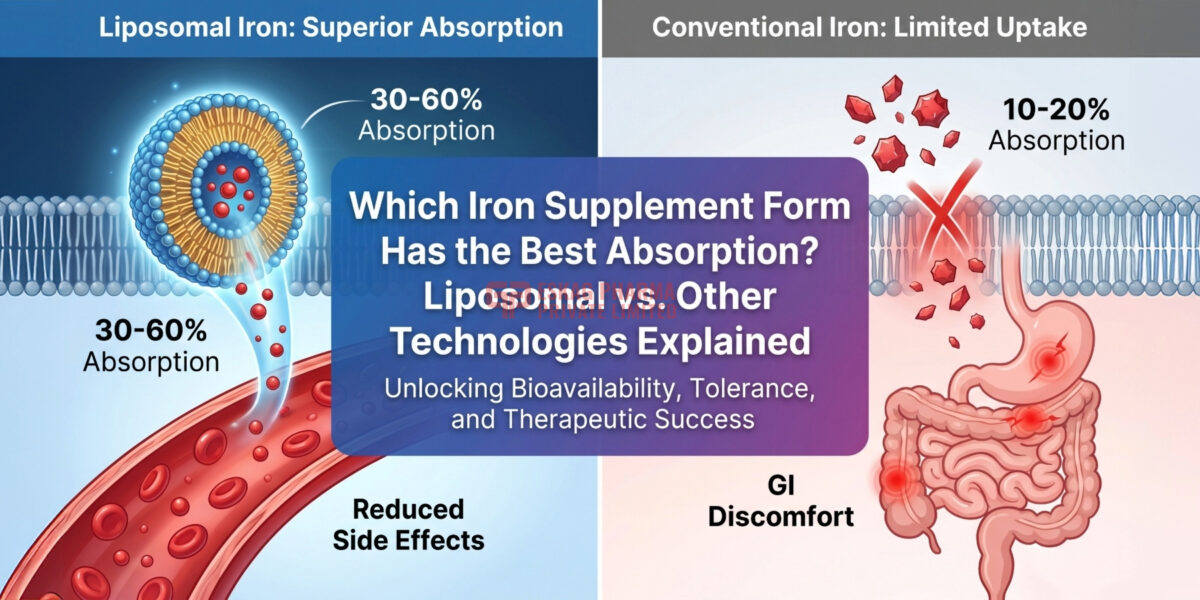
Side Effect Profiles and Patient Tolerance Comparison
Advanced iron delivery technologies demonstrate significantly improved patient tolerance profiles compared to conventional formulations, with enhanced compliance rates supporting more successful therapeutic outcomes across diverse patient populations.
- Liposomal encapsulation minimises direct contact between iron and the intestinal mucosa, reducing oxidative stress and inflammation that commonly occur with conventional supplements. This protective mechanism translates to improved patient comfort during supplementation.
- Advanced formulations address the primary compliance barriers affecting traditional iron therapy, enabling patients to maintain consistent supplementation schedules. Better tolerance supports long-term treatment success and faster recovery.
- Modern delivery systems reduce food interaction requirements and timing restrictions, providing greater lifestyle flexibility for patients. This convenience factor significantly improves adherence compared to strict conventional supplement protocols.
- Patients with gastrointestinal sensitivities, chronic conditions, or post-surgical states benefit particularly from advanced formulations designed for best iron supplement absorption tolerability and absorption.
- Superior technology platforms create positive treatment experiences, encouraging patient confidence and continued therapy completion for optimal iron repletion outcomes.
Patient tolerance profiles demonstrate formulation advantages, while achieving the best iron supplement absorption depends on manufacturing quality standards.
Manufacturing Quality and Formulation Considerations
Pharmaceutical-grade iron supplement manufacturing demands stringent quality systems, including WHO-GMP compliance, validated analytical methods, and comprehensive stability protocols, to ensure consistent therapeutic efficacy, safety profiles, and regulatory approval across global markets.
1. WHO-GMP Certification Standards
WHO-GMP certification establishes baseline requirements for facilities, production protocols, and quality control systems, ensuring consistent manufacturing practices. Compliant facilities demonstrate documented quality management systems, validated equipment qualification, and trained personnel maintaining pharmaceutical-grade standards throughout production cycles.
2. Encapsulation Efficiency Requirements
Advanced delivery systems require validated encapsulation processes that achieve at least 85% efficiency, with a documented particle size distribution and membrane integrity. Quality control protocols include dynamic light scattering measurements, zeta potential analysis, and batch-specific verification, ensuring consistent therapeutic performance and bioavailability.
3. Stability Testing Protocols
Comprehensive stability programs evaluate product performance under accelerated and real-time storage conditions in accordance with ICH guidelines. Testing parameters include potency retention, degradation product formation, and physical stability, ensuring shelf-life specifications support global distribution requirements and regulatory compliance.
4. Raw Material Qualification Systems
Incoming material control requires supplier qualification, verification of certificates of analysis, and identity testing to ensure pharmaceutical-grade ingredients meet established specifications. Risk-based supplier management includes audit programs, change control procedures, and continuous monitoring to maintain supply chain integrity and product consistency.
5. Documentation and Traceability Controls
GMP compliance demands complete batch documentation, deviation management, and comprehensive change control systems supporting product lifecycle management. Electronic records, validated analytical methods, and audit trail requirements ensure regulatory compliance while facilitating investigation procedures and continuous improvement initiatives.
Manufacturing standards determine therapeutic effectiveness, while selecting the best iron supplement absorption requires partnering with proven pharmaceutical expertise.
Why Choose Eskag Pharma for Iron Supplementation Procurements
Eskag Pharma combines advanced expertise in liposomal technology with comprehensive third-party manufacturing capabilities, delivering pharmaceutical-grade iron formulations that meet international quality standards. Our WHO-GMP-certified facilities provide complete formulation development from concept through commercial production, supporting diverse therapeutic applications, including iron deficiency management and specialised population needs, through an established global presence across multiple regulatory jurisdictions.
Eskag Pharma ensures reliable supply chain management through consistent product availability and competitive pricing. Technical teams provide regulatory documentation support, analytical method validation, and custom formulation development addressing specific procurement requirements. Our commitment to innovation, quality excellence, and customer partnership positions Eskag Pharma as the preferred choice for pharmaceutical companies seeking reliable iron supplement manufacturing solutions.
Final Thoughts
Your iron supplement selection should prioritise bioavailability and tolerance over cost considerations alone, as superior absorption translates directly to better therapeutic outcomes and treatment success. Consider advanced delivery technologies when conventional supplements cause side effects or fail to achieve adequate iron repletion, recognising that investment in quality formulations reduces long-term healthcare costs. Understanding the best mechanisms for iron supplement absorption helps patients and healthcare providers make evidence-based decisions that support faster recovery and improved compliance rates. Evaluate manufacturers based on WHO-GMP certification, clinical documentation, and comprehensive quality control protocols, ensuring consistent therapeutic effectiveness and patient safety standards.
Eskag Pharma provides healthcare professionals with advanced iron delivery technologies manufactured to stringent pharmaceutical standards, supporting optimal patient outcomes through superior bioavailability and exceptional tolerability.

References
- Fei, C. (2015). Iron Deficiency Anaemia: A Guide to Oral Iron Supplements – Clinical Correlations. [online] Clinical Correlations.
- Piskin, E., Cianciosi, D., Gulec, S., Tomas, M. and Capanoglu, E. (2022). Iron Absorption: Factors, Limitations, and Improvement Methods. ACS Omega, [online] 7(24), pp.20441–20456. doi:https://doi.org/10.1021/acsomega.2c01833.
-
 📅 June 30, 2026
Key Takeaways The Bioavailability Challenge: Stand... -
 📅 June 29, 2026
Over the past decade, dermatological science has u... -
 📅 June 27, 2026
The global nutraceutical industry faces a critical... -
 📅 June 27, 2026
Iron deficiency anaemia remains the most prevalent... -
 📅 June 26, 2026
Uneven skin tone, persistent redness, and acne tha... -
 📅 June 26, 2026
If you struggle to switch off after a long day, yo... -
 📅 June 26, 2026
India’s sleep aid market is on course to rea... -
 📅 June 26, 2026
Key Takeaways The First-Pass Barrier: Traditional ... -
 📅 June 24, 2026
Sleep disruption is not simply a lifestyle inconve... -
 📅 June 18, 2026
The sleep supplement industry is undergoing a fund...
Liposomal iron demonstrates the highest absorption rates at 30-60% bioavailability compared to conventional iron supplements. Clinical studies show 2.7-3.5 times greater bioavailability than ferrous sulfate through advanced phospholipid delivery technology.
Liposomal iron shows superior absorption, reduced side effects, and better patient tolerance compared to conventional forms. Studies demonstrate faster haemoglobin response rates and significantly lower gastrointestinal adverse events.
Phospholipid encapsulation protects iron from gastric degradation while enabling direct cellular uptake through specialised absorption pathways. This technology bypasses traditional barriers that limit conventional iron absorption.
Enhanced bioavailability means that lower doses achieve therapeutic outcomes, reducing side effects and improving compliance. Cost-effectiveness analysis favours liposomal iron due to reduced treatment failures and faster recovery times.
Conventional iron causes gastrointestinal issues in 40-60% of patients, while liposomal forms show 5-15% incidence rates. Common symptoms include nausea, constipation, and a metallic taste with traditional supplements.
Consider absorption rates, side effect profiles, and individual tolerance when selecting iron supplements. Healthcare providers can recommend optimal formulations based on the severity of the deficiency and medical history.
Liposomal iron exhibits minimal food interactions due to its protective encapsulation, unlike conventional forms. This flexibility improves compliance and reduces interference with absorption from dietary inhibitors.
Seek WHO-GMP certified facilities with documented encapsulation efficiency, stability testing, and comprehensive quality control protocols. Manufacturing standards directly impact therapeutic effectiveness and product reliability.
Liposomal iron typically shows a faster response, with initial improvements within 2-4 weeks, compared to conventional supplements. Enhanced bioavailability accelerates iron store replenishment and symptom resolution.
Liposomal iron shows reduced interaction potential due to enhanced absorption efficiency and targeted delivery mechanisms. However, timing adjustments may still be necessary for certain medications, such as antibiotics.