
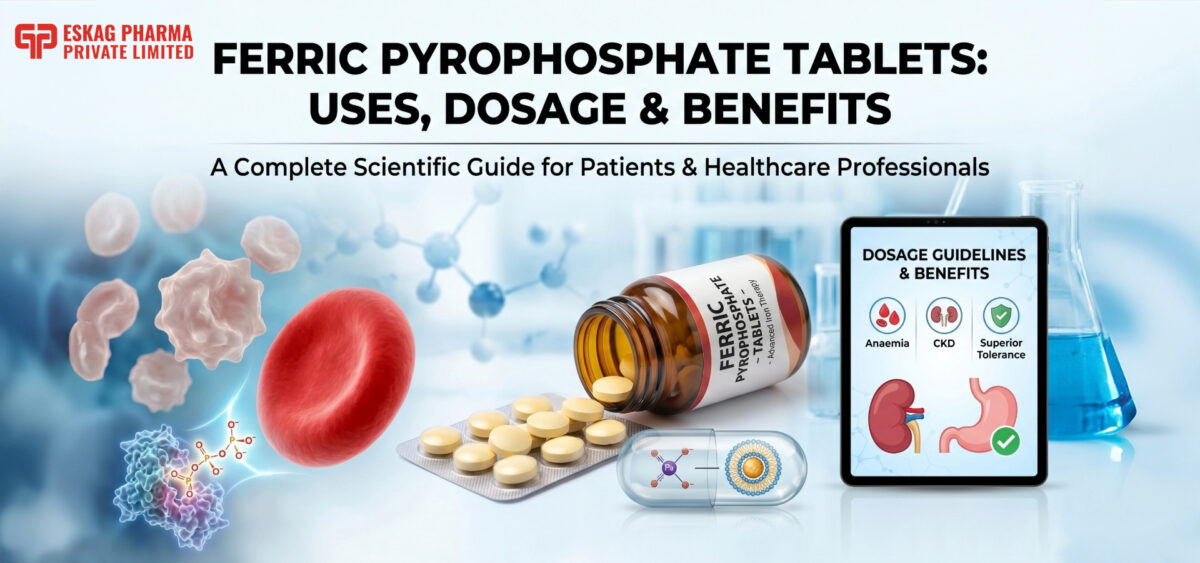
Ferric Pyrophosphate Tablet Uses, Dosage & Benefits: A Complete Guide for Patients & Healthcare Professionals
Patients struggling with iron deficiency anaemia often face frustrating challenges in finding supplements providing effective treatment without debilitating gastrointestinal side effects. Traditional iron supplements frequently cause nausea, constipation, and stomach discomfort, forcing many individuals to discontinue treatment despite urgent medical needs. Healthcare professionals recognise that poor patient compliance with conventional iron therapy remains a significant barrier to successful anaemia management. The complexity of selecting appropriate iron formulations becomes particularly challenging when treating elderly patients, those with chronic kidney disease, or gastrointestinal sensitivities.
In this blog, you’ll discover comprehensive information about ferric pyrophosphate tablet uses, dosage guidelines, safety considerations, and therapeutic advantages.
Key Takeaways:
- Ferric pyrophosphate provides superior gastrointestinal tolerance with significantly reduced side effects compared to conventional iron supplements. Direct transferrin binding mechanism eliminates reticuloendothelial processing while maintaining therapeutic efficacy for anaemia treatment consistently.
- Clinical dosing requires individualised medical supervision based on laboratory results and underlying health conditions. Healthcare providers adjust dosing protocols considering patient age, kidney function, and concurrent medications for optimisation.
- The advanced safety profile demonstrates minimal hypersensitivity reactions, while contraindications include iron overload disorders requiring monitoring. Monthly laboratory assessments prevent iron accumulation, ensuring safe long-term therapy in appropriate patients.
Quick Answer: Ferric pyrophosphate tablets treat iron deficiency anaemia with superior tolerability, requiring medical supervision for dosing based on individual patient needs and laboratory monitoring.
What is Ferric Pyrophosphate and How Does It Work?
Ferric pyrophosphate is a novel iron replacement therapy that differs from conventional iron supplements in its unique molecular structure and direct iron transfer mechanism via plasma transferrin. Unlike traditional iron formulations that require cellular processing, ferric pyrophosphate consists of iron complexed with pyrophosphate and citrate anions, forming a stable 1300 Da complex with exceptional water solubility.
- Direct Transferrin Iron Donation: Research shows ferric pyrophosphate directly transfers iron to apo-transferrin with fast kinetics, achieving 100% transferrin loading within 10 minutes without reticuloendothelial processing.
- Stable Molecular Structure: X-ray studies reveal that the iron-pyrophosphate-citrate complex remains stable in solution for months, with a Log Kstab of 9.30 indicating superior iron-binding strength [1].
- Dual Binding Site Activation: Crystal analysis demonstrates iron donation to both N-lobe and C-lobe transferrin sites, ensuring efficient iron utilisation for red blood cell production.
- No Carbohydrate Coating Required: Low-molecular-weight design eliminates nanoparticle formation and tissue accumulation concerns while maintaining ferric pyrophosphate tablet uses pharmaceutical stability.
- Enhanced Safety Profile: Direct transferrin binding prevents exposure to non-transferrin-bound iron, reducing the risk of oxidative stress and cellular damage.
Primary Clinical Uses and Medical Applications Today
Ferric pyrophosphate tablet uses encompass diverse therapeutic applications in which conventional iron supplements lack adequate efficacy or tolerability in managing iron deficiency disorders across multiple patient populations.
Iron Deficiency Anaemia Treatment in Adult Populations
Ferric pyrophosphate oral dose formulations treat iron deficiency anaemia when gastrointestinal intolerance limits conventional therapy. Standard ferric pyrophosphate dosage for adults ranges from 50-100mg daily based on haemoglobin response. Liposomal delivery systems enhance bioavailability while significantly reducing constipation and metallic taste.
Chronic Kidney Disease Management and Dialysis Support
A meta-analysis of 1,755 patients shows that ferric citrate compounds significantly improve haemoglobin and iron parameters [2]. Ferric pyrophosphate tablet uses provide dual benefits by addressing iron deficiency and phosphorus control. Direct transferrin binding proves particularly effective in CKD patients with compromised absorption pathways.
Post-Surgical Iron Replacement and Recovery Support
Post-operative iron losses require prompt replacement therapy to support healing and prevent complications of anaemia. Ferric pyrophosphate tablet uses include recovery protocols where rapid iron repletion accelerates tissue repair. Enhanced absorption characteristics restore iron stores faster than conventional supplements in surgical patients.
Gastrointestinal Malabsorption Disorders Treatment
Inflammatory bowel disease and celiac patients experience impaired iron absorption requiring specialised supplementation strategies. Liposomal iron dosage for adults bypasses absorption barriers through unique delivery mechanisms and molecular structure. These formulations prove valuable for long-term maintenance therapy in chronic malabsorption conditions.
Elderly Patient Iron Deficiency Management
Age-related gastric acid reduction and drug interactions interfere with the absorption of traditional iron supplements. Ferric pyrophosphate tablet uses for adults over 65 account for comorbidities and concurrent medications that affect metabolism. Improved tolerability reduces treatment discontinuation rates commonly seen with conventional iron supplements.
Complete Dosage Guidelines for Adults and the Elderly
Ferric pyrophosphate dosage adults requires individualised medical supervision based on laboratory results, iron deficiency severity, and underlying health conditions to ensure safe and effective treatment outcomes.
Standard Adult Iron Deficiency Treatment
Healthcare providers typically prescribe an oral dose of ferric pyrophosphate based on haemoglobin levels and serum iron parameters. Individual dosing requirements vary significantly depending on the severity of the deficiency, absorption capacity, and treatment response. Liposomal iron dosage for adults often requires adjustment due to its enhanced bioavailability compared with conventional formulations. Medical supervision ensures appropriate dose titration while monitoring for potential side effects or interactions.
Chronic Kidney Disease Dosing Considerations
Dialysis patients lose 5-7mg of iron per treatment session, requiring specialised replacement protocols under nephrologist supervision. Ferric pyrophosphate dosage for adults with CKD depends on dialysis frequency, baseline iron stores, and concurrent medications. Regular laboratory monitoring guides dose optimisation to prevent both deficiency and iron overload complications. Healthcare providers adjust dosing based on haemoglobin targets and transferrin saturation levels.
Elderly Patient Dosing Modifications
Clinical studies show no geriatric-specific limitations to ferric pyrophosphate tablet uses, though age-related changes require careful medical evaluation. Ferric pyrophosphate oral dose adjustments account for decreased gastric acid production and potential drug interactions. Physicians consider comorbidities like heart failure or diabetes when determining appropriate treatment regimens. Gradual dose titration minimises cardiovascular and gastrointestinal complications in elderly patients.
Special Population Considerations
Malabsorption disorders may require modified dosing strategies, under the guidance of a gastroenterologist or haematologist, to achieve optimal outcomes. Healthcare providers evaluate individual absorption capacity and adjust ferric pyrophosphate dosage in adults accordingly based on treatment response. Liposomal iron dosage for adults with absorption issues often requires specialised monitoring protocols. Medical supervision ensures safe iron repletion without the risk of accumulation in challenging patient populations.
Medical Supervision and Monitoring Requirements
Laboratory monitoring guides all dosing decisions, with healthcare providers determining appropriate targets for haemoglobin and iron parameters. Ferric pyrophosphate oral dose optimisation requires regular medical evaluation during initiation and maintenance phases of treatment. Physicians monitor transferrin saturation levels to prevent iron overload while ensuring adequate therapeutic response. Always consult healthcare providers for personalised dosing recommendations based on individual medical needs and laboratory results.
Comprehensive safety guidelines establish the foundation, but understanding specific therapeutic advantages reveals why ferric pyrophosphate outperforms conventional iron supplementation.
Key Benefits and Advantages Over Other Iron Supplements
Ferric pyrophosphate offers superior therapeutic benefits through enhanced tolerability, improved compliance, and advanced formulation technologies that address the primary limitations of conventional iron supplementation in clinical practice.
- Clinical trials show ferric pyrophosphate causes 12% gastrointestinal side effects compared to 41% with ferrous sulfate, eliminating common issues like nausea and constipation that lead to treatment discontinuation [3].
- Studies demonstrate significantly better compliance rates with ferric pyrophosphate, reducing treatment failures due to poor adherence and encouraging consistent daily intake for successful therapy.
- Unlike ferrous sulfate, which imparts dark colouration, ferric pyrophosphate tablet uses maintain yellowish-white appearance, preserving product aesthetics and patient acceptance in pharmaceutical formulations.
- Leading liposomal ferric pyrophosphate capsules manufacturer facilities utilise microencapsulation technology, enhancing bioavailability while protecting against gastric acid degradation for optimised therapeutic outcomes.
- Ferric pyrophosphate finished formulation in India represents cost-effective production capabilities that meet international quality standards while maintaining competitive pricing for global pharmaceutical distribution.
Also read: Pharmaceutical Formulation vs API Manufacturing: Key Differences Explained
Safety Profile, Side Effects, and Important Precautions
Ferric pyrophosphate demonstrates a well-established safety profile with manageable adverse effects, though specific contraindications and monitoring requirements demand careful medical supervision to prevent iron accumulation and hypersensitivity reactions.
- Clinical trials report hypersensitivity reactions in 0.3% of patients, with potential for serious allergic responses, including anaphylaxis, requiring immediate medical attention. Symptoms include rash, itching, lightheadedness, difficulty breathing, and facial swelling necessitating emergency intervention and treatment discontinuation.
- Safety studies document procedural hypotension as the most common cardiovascular effect, with additional events including arteriovenous fistula thrombosis and hemorrhage complications. Blood pressure monitoring during ferric pyrophosphate tablet uses prevents severe hypotensive episodes particularly in elderly patients with existing cardiovascular conditions.
- Patients with hemochromatosis, iron overload syndromes, or elevated transferrin saturation face absolute contraindications to ferric pyrophosphate therapy. Monthly laboratory monitoring of serum iron, ferritin levels, and transferrin saturation prevents excessive iron accumulation potentially causing organ damage or toxicity.
- Long-term studies report discoloured faeces as the most common treatment-emergent adverse effect, alongside mild nausea and stomach discomfort in sensitive patients [4]. Iron supplementation interferes with tetracycline antibiotics, levothyroxine, and proton pump inhibitors requiring timing adjustments for optimal absorption.
- Research confirms no geriatric-specific limitations for elderly patients, though pediatric safety remains unestablished requiring alternative iron therapy options. Accidental overdose represents fatal poisoning risk in children under six years requiring secure storage and immediate medical attention for suspected ingestion.
Eskag Pharma’s Advanced Ferric Pyrophosphate Solutions
Eskag Pharma, a leading third-party manufacturer, uses a WHO-GMP-compliant manufacturing infrastructure to produce pharmaceutical-grade ferric pyrophosphate formulations meeting international regulatory standards across diverse therapeutic applications. The company’s advanced production capabilities encompass both conventional tablet formulations and innovative liposomal delivery systems, addressing varied patient populations requiring iron supplementation therapy. Through rigorous quality control protocols and comprehensive analytical testing, Eskag Pharma ensures consistent batch-to-batch performance while maintaining cost-effective pricing structures for healthcare providers. The company’s global presence enables reliable supply chain management supporting continuous product availability across multiple markets, while technical expertise in mineral chemistry facilitates customised formulation development for specific clinical requirements patient demographics.
Final Thoughts
Your iron deficiency treatment decisions should prioritise supplements demonstrating both therapeutic efficacy and patient tolerance for successful therapy completion. Consult healthcare professionals for a comprehensive evaluation of your specific medical conditions, current medications, and laboratory parameters before initiating supplementation. Understanding ferric pyrophosphate tablet uses helps patients make informed decisions about treatment options while recognizing medical supervision importance.
Smart patients recognise that superior tolerability profiles directly impact treatment adherence, making advanced formulations valuable investments in successful management. Eskag Pharma provides pharmaceutical-grade ferric pyrophosphate formulations manufactured under stringent quality standards supporting treatment.

References
- Fishbane, S., Ganz, T. and Pratt, R.D. (2022). Ferric pyrophosphate citrate for parenteral administration of maintenance iron: structure, mechanism of action, clinical efficacy and safety. Current Medical Research and Opinion, 38(8), pp.1417–1429. doi:https://doi.org/10.1080/03007995.2022.2092373.
- Wu MY, Chen YC, Lin CH, Wu YC, Tu YK, Tarng DC. Safety and efficacy of ferric citrate in phosphate reduction and iron supplementation in patients with chronic kidney disease. Oncotarget. 2017 Oct 20;8(63):107283-107294. doi: 10.18632/oncotarget. 21990. PMID: 29291028; PMCID: PMC5739813.
- Kochar, I.S., Kaur, D. and Sachdeva, M. (2025). Comparative efficacy and tolerability of ferric pyrophosphate vs ferrous sulfate in pediatric iron deficiency anaemia: a 6-month randomized controlled trial. Egyptian Pediatric Association Gazette, 73(1).
- Lee CT, Lee CC, Wu MJ, Chiu YW, Leu JG, Wu MS, Peng YS, Wu MS, Tarng DC. Long-term safety and efficacy of ferric citrate in phosphate-lowering and iron-repletion effects among patients with on hemodialysis: A multicenter, open-label, Phase IV trial. PLoS One. 2022 Mar 3;17(3):e0264727. doi: 10.1371/journal.pone.0264727. PMID: 35239732; PMCID: PMC8893642.
-
 📅 June 30, 2026
Key Takeaways The Bioavailability Challenge: Stand... -
 📅 June 29, 2026
Over the past decade, dermatological science has u... -
 📅 June 27, 2026
The global nutraceutical industry faces a critical... -
 📅 June 27, 2026
Iron deficiency anaemia remains the most prevalent... -
 📅 June 26, 2026
Uneven skin tone, persistent redness, and acne tha... -
 📅 June 26, 2026
If you struggle to switch off after a long day, yo... -
 📅 June 26, 2026
India’s sleep aid market is on course to rea... -
 📅 June 26, 2026
Key Takeaways The First-Pass Barrier: Traditional ... -
 📅 June 24, 2026
Sleep disruption is not simply a lifestyle inconve... -
 📅 June 18, 2026
The sleep supplement industry is undergoing a fund...
Ferric pyrophosphate tablets treat iron deficiency anaemia, support red blood cell production, and replace iron losses in chronic kidney disease patients. These tablets are particularly effective for patients experiencing gastrointestinal intolerance to conventional iron supplements.
Adults typically require 50-100mg daily, depending on the severity of deficiency and individual patient needs, as determined by healthcare professionals. Dosing may require adjustment based on laboratory results, patient response, and concurrent medical conditions.
Liposomal iron formulations often require lower doses due to enhanced bioavailability and improved absorption through phospholipid delivery systems. Standard liposomal ferric pyrophosphate provides 27-30mg elemental iron with reduced gastrointestinal side effects compared to conventional formulations.
Ferric pyrophosphate offers superior gastrointestinal tolerance, reduced metallic taste, stable physical properties, and direct iron donation to plasma transferrin. Clinical studies demonstrate 32% reduction in adverse events compared to conventional oral iron therapies.
Most patients experience initial improvement in fatigue and energy levels within 2-4 weeks of starting treatment. Complete restoration of iron stores typically requires 3-6 months of consistent therapy, depending on the severity of the deficiency.
Ferric pyrophosphate may interact with antibiotics, proton pump inhibitors, and calcium supplements, affecting absorption rates. Healthcare professionals should review all medications to optimise timing and prevent potential drug interactions.
Liposomal technology encapsulates iron in phospholipid membranes, protecting it from gastric acid degradation while enhancing intestinal absorption. This delivery system significantly reduces common side effects such as nausea, constipation, and a metallic taste.
Patients with hemochromatosis, iron overload disorders, or severe allergic reactions to iron products should avoid ferric pyrophosphate. Individuals with active peptic ulcers or inflammatory bowel disease require careful medical supervision before starting treatment.
Store tablets in a cool, dry place at room temperature (15-25°C), away from direct sunlight and moisture. Keep containers tightly closed and out of children’s reach, and check expiration dates regularly to ensure medication safety.
Take tablets on an empty stomach when possible for optimal absorption, and avoid tea, coffee, and dairy products for 2 hours. Vitamin C-rich foods, such as citrus fruits, can enhance iron absorption when consumed with the medication.