
Liposomal CoQ10 Capsules: Heart Health, Cellular Energy & Anti-Ageing Science
Coenzyme Q10 sits at the centre of how cells make energy. It also shields fats inside membranes from oxidative damage. After midlife, the body makes less of it. A standard oral powder often fails to restore tissue stores because the molecule is large and fat-soluble. This article explains liposomal coq10 benefits for the heart, daily energy, and healthy ageing. It also shows how brands can source a stable liposomal capsule through WHO-GMP contract supply.
Key Takeaways
- The energy and ageing spark. Coenzyme Q10 drives mitochondrial ATP and acts as a fat-soluble antioxidant. Natural levels fall after the fourth decade. Clear liposomal coq10 benefits matter for fatigue, oxidative stress, and long-term cell care.
- The absorption problem, solved. CoQ10 is poorly water soluble. Plain powders often miss the bloodstream. A phospholipid bilayer wraps the nutrient. The vesicle can enter lymph and plasma without a fatty meal.
- Heart muscle needs a constant ATP supply. Clinical work reports gains in ejection fraction and fewer major events in selected heart-failure trials. Statin use can also lower endogenous CoQ10.
- Manufacturing is not a simple blend. Stable lipid vesicles need high-shear sizing, tight moisture control, and oxidation control. A skilled lipid plant can run contract capsule work that brands scale with confidence.
The Decline of Cellular Energy and the Ageing Process
Ageing is not only grey hair and slower recovery. It is a slow drop in how well mitochondria turn fuel into ATP. CoQ10 is part of that chain. When tissue stores fall, cells work harder for the same output. A well-designed product aims to refill those stores. Form matters as much as milligrams.
How Natural Coenzyme Q10 Production Drops Drastically After Age 40
The body builds CoQ10 through the mevalonate pathway. Output peaks in early adult life, then declines. Classic tissue work by Kalén and colleagues found large age-related losses in human organs. Heart muscle CoQ10 in later life can sit near half the youthful level[1].
Illness and medicines can widen the gap. Heart failure, metabolic stress, and some lipid-lowering drugs all sit on the same pathway. This is why oral CoQ10 becomes relevant in midlife wellness plans. It is also why absorption design now sits at the centre of product briefs.
The Impact of Mitochondrial Dysfunction on Daily Physical Fatigue
Mitochondria are the cell’s power plants. CoQ10 shuttles electrons in complexes I–III of the respiratory chain. When CoQ10 is short, ATP output falls. Spare electrons leak and form reactive oxygen species. The result is a loop of low energy and more membrane damage.
Why a Standard Coq10 supplement Fails to Replenish Depleted Tissue Stores
Crystalline CoQ10 is large, lipophilic, and almost insoluble in water. In the gut it tends to clump. Bile and dietary fat can help a little. Fasted dosing often helps almost not at all. Even with a meal, a large share of a powder dose never reaches plasma.
That is why high milligram labels can still disappoint. The bottle claims 200 mg or 300 mg. The blood curve stays modest. Tissue refill takes weeks of steady intake. If the form is weak, those weeks are wasted. This is the first reason brands now ask about liposomal coq10 benefits rather than raw powder cost.
The Clinical Importance of Coenzyme Q10 in Cardiac Care
The heart never rests. Each beat needs a fresh burst of ATP. Cardiac muscle holds high CoQ10 stores for that reason. When those stores fall, pump function can suffer. Interest in cardiac CoQ10 grew from that simple fact. It is now backed by trials, not only theory.
The Heart Muscle’s Relentless, 24/7 Demand for ATP (Cellular Energy)
Cardiomyocytes contain dense mitochondrial networks. They oxidise fatty acids all day. CoQ10 sits in those inner membranes as both a redox carrier and a local antioxidant. Low CoQ10 therefore hits energy and membrane protection at once.
Utilizing Coenzyme q10 for heart health to Support Ejection Fraction
Ejection fraction is the share of blood the left ventricle pushes out each beat. Several meta-analyses report a modest rise in ejection fraction with CoQ10. Pooled gains often sit in the range of about two to four percentage points[2]. That is not a miracle. In a weak pump, small gains can still matter.
The Q-SYMBIO trial is the landmark long-term study. Four hundred and twenty patients with chronic heart failure took 300 mg CoQ10 daily or placebo for two years. Major adverse cardiovascular events occurred in 15% of the CoQ10 group and 26% of the placebo group[3]. Cardiovascular death and all-cause death were also lower with CoQ10.
A 2024 meta-analysis of randomised trials again found lower all-cause mortality and fewer heart-failure hospital stays. Walk distance and NYHA class also moved in a helpful direction[4]. Evidence quality is mixed across older small trials. The direction of effect is fairly consistent.
These data support CoQ10 as adjunct nutrition. They do not let a capsule replace a cardiologist. Pack copy should say “supports” and “helps maintain”. It should not say “treats heart failure”.
Addressing Nutrient Depletion Caused by Prescription Statin Medications
Statins block HMG-CoA reductase. That same pathway makes cholesterol and CoQ10. Blood CoQ10 often falls on statin therapy. Reviews put the drop in a wide band, often cited around 16–54%, depending on dose and drug[5]. Part of the plasma drop tracks lower LDL, because CoQ10 rides on lipoproteins.
The honest B2B claim is narrower. Statins can lower endogenous CoQ10. People on long-term statin therapy are a core audience for oral CoQ10. Liposomal coq10 benefits in this group rest on better uptake at a practical daily dose. They do not rest on a promise to stop muscle pain in every user.
The Ultimate CoQ10 Energy Supplement for Anti-Ageing
Anti-ageing here means cell maintenance, not cosmetic hype. CoQ10 protects membrane lipids and keeps mitochondria efficient. Skin, muscle, and vessel walls all feel that work. A CoQ10 energy supplement therefore sits in both vitality and longevity ranges.
Neutralizing Free Radicals and Preventing Destructive Lipid Peroxidation
CoQ10 in its reduced form, ubiquinol, donates electrons to rogue radicals. In membranes it helps recycle vitamin E. That tandem slows lipid peroxidation. Peroxidation stiffens membranes and harms receptors and ion channels.
How Daily CoQ10 Rejuvenates Mitochondrial Efficiency
Efficiency here means more ATP per unit of fuel, with less electron leak. When CoQ10 is restored, the Q-cycle can run with fewer stalled electrons. Cells then waste less energy as heat and oxidative debris.
Skin Deep: Cellular Renewal and Protecting the Dermal Matrix from Sun Damage
Skin cells also make CoQ10. Levels fall with age and with ultraviolet load. Lower CoQ10 in the dermis sits alongside weaker mitochondrial output and more lipid oxidation. Topical and oral routes are both used in cosmetic science.
Oral liposomal CoQ10 is not a sunscreen. They may support the skin’s own energy and antioxidant pool. Some cosmetic lines pair oral CoQ10 with topical lipids. For a nutraceutical brand, the honest line is “supports skin vitality from within”.
Decoding the Science of Liposomal CoQ10 Capsules
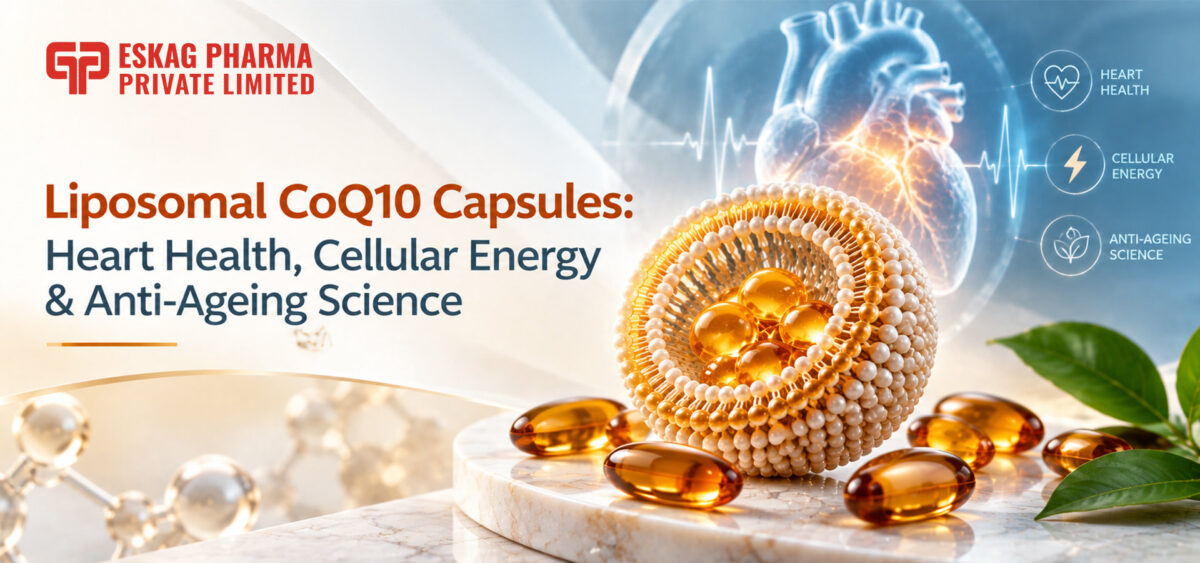
Liposomes are tiny spheres made of phospholipid bilayers. They look like a simplified cell membrane. When CoQ10 sits inside that bilayer, the gut sees a lipid particle, not a raw crystal. That is the core design of a liposomal hard capsule.
Overcoming Poor Water Solubility with Advanced Phospholipid Bilayers
Water solubility of CoQ10 is vanishingly low. Phospholipids such as phosphatidylcholine create a friendly home for a fat-loving molecule. The quinone tail nests in the fatty-acid core of the bilayer. The polar head groups face water.
This is why the finished capsule is a process product, not a simple fill. Blending CoQ10 with lecithin in a blender is not the same thing. True vesicles need controlled energy input and proof of size.
How Liposomal CoQ10 Capsules Perfectly Mimic Human Cell Membranes
Human membranes are also phospholipid bilayers. Liposomes can fuse with enterocytes or enter by endocytosis. The payload then moves into lymph or plasma. That kinship is the reason liposomal forms often beat raw powders for lipophilic actives.
Eskag Pharma explains the same membrane logic across its liposomal technology platform. The principle is not unique to CoQ10. It is the reason liposomal vitamin C, glutathione, and curcumin also exist in the same plant.
Bypassing the Gastrointestinal Tract for Direct Lymphatic Pathway Absorption
Large lipid particles can enter intestinal lacteals and ride the lymph. That route skips first-pass liver metabolism in part. For CoQ10, lymph uptake is a practical advantage. The molecule is already fat-like. A liposome gives it a passport.
This path also reduces the need for a high-fat meal. Traditional oil-filled softgels often ask the user to eat with food. The liposomal capsule aims for a more meal-independent curve. That is a daily-use advantage for older adults who eat light breakfasts.
Direct Comparison: Liposomal CoQ10 Benefits vs. Traditional Powders
Head-to-head work now exists. It does not always agree in magnitude. Directionally, lipid and liposomal systems raise plasma exposure versus crude powder. That is the commercial heart of liposomal coq10 benefits.
Analyzing Clinical Plasma Concentration Curves (Cmax and AUC)
Cmax is the peak plasma level. AUC is the total exposure over time. In a 2025 randomised, double-blind, crossover study, 100 mg liposomal CoQ10 raised Cmax by 31.3% versus the same dose of non-liposomal CoQ10. AUC over 24 hours rose by 22.6%[6]. Both forms beat placebo. Safety markers stayed quiet.
Other lipid systems report larger gaps. A 2026 Food & Function paper on a spray-dried liposomal powder described a 3.6-fold Cmax rise and a 4.3-fold AUC rise versus conventional CoQ10[7]. Older liposome work is less flattering. One small oral-mucosal study found little gain[8]. Process quality, dose, and assay method all matter.
The fair summary is this. A well-made liposomal system can lift Cmax and AUC. A poorly made “liposomal” label may not. Buyers should ask for particle-size data and a human or at least comparative PK package. That is how liposomal coq10 benefits stay a science claim, not a slogan.
Maximizing Liposomal coq10 benefits Without the Need to Ingest Fatty Foods
Classic advice is to take CoQ10 with the fattiest meal of the day. That advice exists because crude CoQ10 needs bile and mixed micelles. Many older adults skip that meal. Shift workers do too. Meal dependence then becomes a silent reason products “do not work”.
Liposomes already present CoQ10 in a lipid assembly. The meal is less critical. Users can keep a morning habit. Brands can write simpler directions. That small change improves real-world exposure. It is one of the most practical liposomal coq10 benefits on a pack.
Achieving Superior Cardiovascular Results with Lower Milligram Dosages
If more of each milligram reaches plasma, the labelled dose can be leaner. That cuts raw-material cost. It also shrinks capsule size. Older adults prefer smaller capsules. A 100 mg liposomal fill may match the blood curve of a larger crude dose. The exact ratio depends on the file.
Heart-failure trials often used 200–300 mg a day of conventional CoQ10. Those doses remain a clinical reference. They are not a rule for every wellness SKU. A CoQ10 energy supplement for general vitality may sit lower. Cardiovascular SKUs may still aim higher.
| Point of comparison | Traditional CoQ10 powder | Liposomal hard capsule |
| Water behaviour | Almost insoluble; crystals clump in the gut | Dispersed inside a phospholipid bilayer |
| Meal need | Usually needs a fatty meal | Far less meal-dependent |
| Plasma curve | Lower Cmax and AUC in several studies | Higher Cmax and AUC when the vesicle is well made |
| Dose efficiency | Often needs high milligram labels | May reach a useful blood level at a lower label dose |
| Stability risk | Oxidation if poorly packed | Needs moisture and oxygen control, then holds well |
| Brand story | Commodity ingredient | Premium delivery platform with B2B margin room |
Formulating the Perfect Cardiovascular Nutraceutical
A single-nutrient CoQ10 SKU is still valid. Many export buyers now want a heart stack. The stack must be stable, legal, and easy to swallow. CoQ10 pairs well with a short list of allies. Each ally adds a process burden.
Synergistic Pairings: Combining CoQ10 with Resveratrol and Omega-3s
Omega-3 fatty acids support membrane fluidity and triglyceride care. They also share a lipid environment with CoQ10. Softgel or lipid-multiparticulate systems can carry both. Fish-oil oxidation is the watch-out. Use fresh oil, chelators, and a tight oxygen spec.
Resveratrol adds a polyphenol story around vessels and sirtuin pathways. It is poorly soluble on its own. A shared lipid carrier can help both actives. Taste, colour, and load limits still apply. Keep the stack short. Three heroes beat seven crowded claims.
Advancing Coenzyme q10 for heart health with Dry Liposomal Solid Oral Formats
Liquid liposomes are classic. They are also heavy to ship and sensitive to cold-chain slips. Dry liposomal powders, filled into hard capsules, travel better. Spray drying or freeze drying can lock vesicles into a solid state. Rehydration in the gut then rebuilds the lipid assembly.
That dry format is why hard capsules fit global export. Blister or bottle packs are familiar to every market. Water activity must stay low. Once moisture creeps in, vesicles can fuse or leak. This is a factory control, not a marketing line.
Eskag’s wider note on liposomal manufacturing process and plant design sets out why cold handling, shear, and drying steps decide success. CoQ10 follows the same discipline as other liposomal actives in that plant.
Sustained Release Profiles for All-Day Antioxidant Protection
CoQ10 plasma peaks are slow even in good forms. Tmax often sits many hours after the dose. That natural lag already spreads the curve. Extra matrix control can stretch it further. The aim is a day-long antioxidant presence, not a spike.
Twice-daily split dosing is another simple tool. Some PK work on conventional CoQ10 found higher exposure with 100 mg twice daily than 100 mg once daily. Brands can use that pattern when the capsule size stays small.
The Intricacies of Advanced Lipid-Based Manufacturing
Many factories can fill a powder capsule. Far fewer can hold a lipid vesicle to a tight size band. Lipid capsule work therefore sits in a specialist lane. Buyers should audit process, not only paperwork.
High-Shear Microfluidization for Consistent Liposome Nano-Particle Sizing
Microfluidisation forces a coarse lipid mix through fixed-geometry channels at high pressure. The shear yields a narrower particle-size curve than a simple homogeniser in many set-ups. Repeatable size is the point. A wide size band means mixed absorption.
In-process checks should include dynamic light scattering. Record D50, D90, and polydispersity. Set alert limits before commercial fill. A contract-manufacturing file without size data is incomplete.
Moisture Control and Oxidation Prevention in Sensitive Lipid Supplements
Lipids go rancid. CoQ10 oxidises. Together they demand low oxygen, low water, and low heat. Nitrogen flushing, barrier blisters, and amber or opaque packs all help. Antioxidant systems inside the formula help too.
Humidity in the fill room must be specified. Capsule shells can pull water from the fill. That water then wakes dormant chemical reactions. A good supply partner treats the pack as part of the formula.
Why Global Healthcare Brands Rely on CoQ10 capsule contract manufacturing
Capital cost is the first reason. High-pressure lipid lines, drying towers, and particle-size labs are expensive. Most brand owners would rather buy capacity than build it. Contract manufacturing turns that capex into a purchase order.
Quality is the third reason. WHO-GMP systems, already used across Eskag nutraceutical manufacturing, give auditors a familiar frame. Brands keep their name on pack. The plant holds the process risk.
Scaling Your Brand with a Trusted CoQ10 Supplement Supplier
Choosing a supply partner is a technical buy and a commercial buy. Purity, form, and documents decide both. The cheapest ubiquinone on a spreadsheet can become the dearest recall later.
Navigating the High Capital Expenditures of Nano-Encapsulation Technology
Nano-encapsulation plants spend heavily on steel, utilities, and skilled staff. That cost only pays back at volume. A single small SKU rarely justifies a private line. Shared, audited capacity is the rational path for most labels.
Sourcing High-Purity Ubiquinone vs. Ubiquinol for Your Formulations
Ubiquinone is the oxidised form. Ubiquinol is the reduced form. The body interconverts them. Heart-outcome trials that cut events used ubiquinone, including Q-SYMBIO. A 2023 review argued that cardiovascular outcome data still favour ubiquinone over ubiquinol[9].
Ubiquinol is less stable in finished goods. It can offer easier early plasma rises in some studies. It also costs more and needs heavier protection. For many capsule briefs, high-purity ubiquinone inside a liposome is the balanced choice.
Selecting a WHO-GMP Certified CoQ10 supplement supplier for Global Export
Export buyers will ask for WHO-GMP, a Certificate of Analysis, specifications, and stability summaries. Many will also want MSDS and a manufacturing licence pack. FSSAI coverage matters for India-origin nutraceuticals.
Partnering with India’s Premier Liposomal CoQ10 Manufacturer
India now supplies a large share of the world’s nutraceutical capsules. Liposomal capacity is still scarcer than standard tablet capacity. A lipid specialist with pharmaceutical habits is the partner most export brands actually need.
Comprehensive Turnkey Solutions: From R&D Blending to Private Label Packaging
Turnkey means the brief arrives as a target profile and leaves as packed goods. R&D sets load, size, and excipients. Pilot batches confirm assay and dissolution. Commercial batches then fill, pack, and ship with batch documents.
This model already supports other liposomal lines at Eskag, from liposomal supplements as a class to antioxidant SKUs such as liposomal glutathione. CoQ10 fits that same delivery family.
Rigorous Microbiological Testing and Accelerated Stability Protocols
Lipid systems can support microbes if water activity rises. Microbiological limits therefore belong in the spec, not in a side letter. Test TAMC, TYMC, and specified pathogens on every commercial batch.
Assay, related substances, peroxide value, and particle size should join that panel. Accelerated and real-time stations then prove the claim period. A plant that skips particle size on stability is flying blind.
Why Choose Eskag Pharma as Your Strategic Liposomal CoQ10 manufacturer
Eskag Pharma Pvt. Ltd. is a WHO-GMP finished-dose manufacturer in SIDCUL, Haridwar, with corporate offices in Kolkata. The company makes pharmaceuticals, nutraceuticals, cosmeceuticals, and injectables. Liposomal nutraceuticals are a named platform, not a side experiment.
Partners gain CoQ10 capsule contract manufacturing, export-oriented documentation, and a plant used to auditor traffic. They do not need to fund a private nano-line. They do need a clear brief: dose, form, pack, and target markets.
If you are building a heart, energy, or healthy-ageing range, speak to the team. Send an enquiry with your target dose, pack style, and destination markets. A liposomal CoQ10 manufacturer can then map process, documents, and timelines with you.
Conclusion
CoQ10 is not a trend molecule. It is a native part of human mitochondria. Stores fall with age. They can fall further with illness and with statin use. A plain powder often cannot refill those stores well. That is the opening for liposomal coq10 benefits.
The liposomal capsule places the quinone inside a membrane-like vesicle. Plasma curves improve when the vesicle is real, sized, and protected. Heart data, including Q-SYMBIO and later meta-analyses, give the heart-health case a serious evidence base. Energy and skin stories follow the same cell logic.
Brands that want this SKU should treat delivery as the product. Choose a CoQ10 supplement supplier who can prove size, assay, and stability. Use CoQ10 capsule contract manufacturing rather than a light blend-and-fill. Work with a liposomal CoQ10 manufacturer that already runs WHO-GMP lipid systems.
Done that way, the finished SKU becomes more than a commodity capsule. It becomes a credible heart, energy, and ageing SKU. That is the full span of liposomal coq10 benefits for both the person who swallows the capsule and the brand that puts it on a shelf.

References
- Kalén A, Appelkvist EL, Dallner G. Age-related changes in the lipid compositions of rat and human tissues. Lipids. 1989.
- Alarcón-Vieco E, et al. Effect of coenzyme Q10 on cardiac function and survival in heart failure: an overview of systematic reviews and meta-analyses. Food Funct. 2023.
- Mortensen SA, et al. The effect of coenzyme Q10 on morbidity and mortality in chronic heart failure: results from Q-SYMBIO. JACC Heart Fail. 2014.
- Xu J, et al. Efficacy and safety of coenzyme Q10 in heart failure: a meta-analysis of randomized controlled trials. BMC Cardiovasc Disord. 2024.
- Raizner AE, Quiñones MA. Coenzyme Q10 for patients with cardiovascular disease: JACC Focus Seminar. J Am Coll Cardiol. 2021.
- Bloomer RJ, et al. Impact of liposomal delivery on coenzyme Q10 absorption: a double-blind, placebo-controlled, randomized trial. Front Nutr. 2025.
- Next-generation liposomal coenzyme Q10: from formulation to clinical evidence. Food Funct. 2026.
- Lopez-Lluch G, et al. Discussed in: The plasma bioavailability of coenzyme Q10 absorbed from the gut and the oral mucosa. PMC6306788.
- Fladerer JP, Grollitsch S. Comparison of Coenzyme Q10 (ubiquinone) and reduced CoQ10 (ubiquinol) for cardiovascular disease. Curr Cardiol Rep. 2023.
-
 📅 September 22, 2026
Anaemia is common once kidneys fail. Blood loss on... -
 📅 September 22, 2026
Coenzyme Q10 sits at the centre of how cells make ... -
 📅 June 30, 2026
Key Takeaways The Bioavailability Challenge: Stand... -
 📅 June 29, 2026
Over the past decade, dermatological science has u... -
 📅 June 27, 2026
The global nutraceutical industry faces a critical... -
 📅 June 27, 2026
Iron deficiency anaemia remains the most prevalent... -
 📅 June 26, 2026
Uneven skin tone, persistent redness, and acne tha... -
 📅 June 26, 2026
If you struggle to switch off after a long day, yo... -
 📅 June 26, 2026
India’s sleep aid market is on course to rea... -
 📅 June 26, 2026
Key Takeaways The First-Pass Barrier: Traditional ...
Liposomal CoQ10 may offer improved dispersion and bioavailability by encapsulating CoQ10 in lipid-based carriers, potentially supporting more efficient absorption than conventional powder formulations.
Statins may reduce circulating CoQ10 levels. Supplementation is therefore sometimes considered to support mitochondrial energy production and normal muscle function, although individual suitability should be assessed professionally.
Liposomal delivery surrounds CoQ10 within phospholipid structures, which can help protect the ingredient during gastrointestinal transit and facilitate its interaction with intestinal membranes for absorption.
CoQ10 is commonly taken with a meal, preferably earlier in the day. Since individual responses vary, consistent daily timing is generally more important than a specific hour.
CoQ10 is fat-soluble, so taking it with a meal containing dietary fat can support absorption. A high-fat meal is not necessarily required when using an appropriately formulated supplement.
CoQ10 supports mitochondrial electron transport and antioxidant protection. Maintaining adequate levels may help protect cells from oxidative stress and support normal cellular energy production associated with healthy ageing.
Key controls include raw-material verification, CoQ10 assay, particle-size analysis, encapsulation efficiency, microbial testing, stability studies, packaging checks, and documented batch-to-batch quality controls.
Contract manufacturing provides formulation development, sourcing, production, testing, packaging, and documentation through an established manufacturing partner, reducing the infrastructure and operational requirements for launching a branded product.
Yes, depending on formulation compatibility, regulatory requirements, stability, and manufacturing capabilities. A qualified supplier can evaluate dosage, delivery system, packaging, and testing requirements for a custom combination.
Dry liposomal systems can offer improved convenience and potentially longer storage stability. However, performance depends on formulation technology, manufacturing process, excipients, packaging, and validated stability data.