
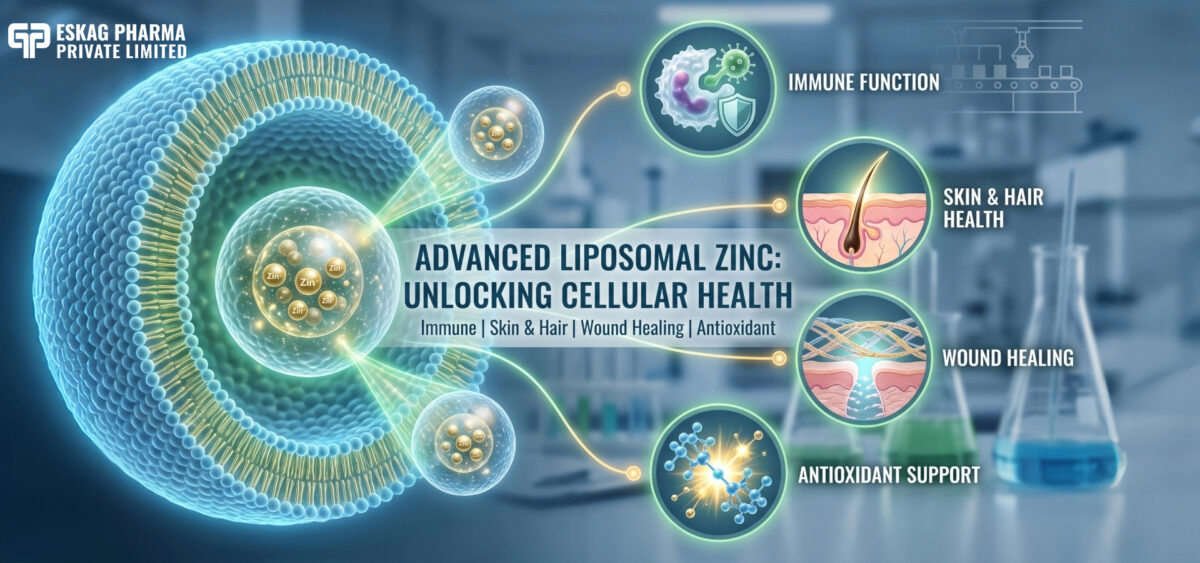
Liposomal Zinc Capsules: Immune Function, Skin & Hair Health, Wound Healing & Antioxidant Support
Key Takeaways
- The Bioavailability Challenge: Standard zinc supplement formats suffer poor gut absorption due to phytate binding and mineral competition, often producing nausea and gastric discomfort that limits therapeutic dosing.
- Vesicular Delivery Superiority: Encapsulating zinc within a phospholipid bilayer yields Liposomal Zinc Capsules that resist gastric acid degradation and absorb directly at the cellular level, dramatically improving bioavailability.
- Scalable B2B Contract Manufacturing: The global shift toward high-efficacy nutraceuticals demands sophisticated nano-encapsulation lines. Partnering with an expert liposomal zinc manufacturer India gives wellness brands access to stable, GMP-certified, export-ready formulations.
The Essential Micronutrient Deficit: Recognizing Zinc Deficiency Symptoms
Identifying the Top Physical Indicators of Low Zinc Levels
Zinc participates in more than 300 enzymatic reactions across human physiology. When stores are depleted, zinc deficiency symptoms manifest across multiple systems simultaneously, making them easy to attribute to other conditions. Classic presentations include impaired wound healing, recurrent infections, loss of taste and smell (dysgeusia and anosmia), dermatitis, and white spots on the nails (leukonychia). [PMID: 29797390] In severe cases, perioral and acral dermatosis, diarrhoea, and alopecia emerge — findings originally described in acrodermatitis enteropathica, a hereditary zinc malabsorption disorder.
How Zinc Deficiency Symptoms Impact Daily Energy and Recovery Times
Sub-optimal zinc status suppresses mitochondrial enzyme activity and impairs protein synthesis, generating persistent fatigue and prolonged post-exercise recovery. Clinical trials have demonstrated that athletes with marginal zinc insufficiency exhibit measurably reduced VO₂ max and hormonal testosterone decline. [PMID: 17299484] Meanwhile, cognitive domains — attention, working memory, and processing speed — are also compromised, since zinc acts as a neuromodulator at glutamate receptors in the hippocampus. Recognising these functional zinc deficiency symptoms early is the first step toward targeted supplementation.
Niche Risks: Why Vegetarians and Older Adults Are Vulnerable to Depletion
Globally, an estimated 17.3% of the population faces inadequate zinc intake, with highest risk among populations relying on cereal-based diets rich in phytates. [PMID: 22129604] Vegetarians and vegans show particularly pronounced zinc deficiency symptoms, absorbing up to 35% less zinc than omnivores due to dietary phytic acid load. Older adults compound the risk through reduced gastric acid secretion. These groups represent the ideal clinical target for advanced Liposomal Zinc Capsules that bypass conventional absorption barriers entirely.
|
17.3% Global population at risk for inadequate zinc intake |
35%
Reduced zinc absorption in vegetarians vs. omnivores |
300+ Enzymatic reactions requiring zinc as co-factor |
The Absorption Hurdle in Standard Zinc Supplement Formats
Comparing Zinc Sulfate, Gluconate, and Picolinate Efficacy Profiles
The zinc supplement market offers multiple salt forms, each with distinct solubility and bioavailability characteristics. Zinc sulfate (23% elemental zinc) historically dominates pharmaceutical use but carries the highest gastrointestinal irritation risk. Zinc gluconate offers gentler tolerability but lower elemental content (~14.3%). Zinc picolinate demonstrates superior fractional absorption in comparative studies; however, all conventional forms still depend on active mucosal transport proteins that become saturable at therapeutic doses. [PMID: 3630857]
| Form | Elemental Zinc | Bioavailability | GI Tolerance |
| Zinc Sulfate | 23% | Moderate | Poor |
| Zinc Gluconate | 14.3% | Moderate | Fair |
| Zinc Picolinate | 20% | Good | Fair |
| Liposomal Zinc | Variable | Superior | Excellent |
How Dietary Phytates and Minerals Inhibit a Traditional Zinc Supplement
Phytic acid (myo-inositol hexaphosphate), abundant in legumes, cereals, and seeds, forms insoluble zinc-phytate complexes in the gut lumen, rendering the mineral biologically unavailable. A standard zinc supplement consumed alongside a high-phytate meal can lose up to 60% of its bioavailable fraction — a pharmacokinetic liability that conventional formulation science cannot fully overcome. [PMID: 9648502]
Overcoming the Common Side Effect of Zinc-Induced Gastric Irritation
High luminal concentrations of ionic zinc irritate the gastric mucosa, triggering nausea, emesis, and epigastric pain. The encapsulation strategy employed in Liposomal Zinc Capsules eliminates direct ionic contact with gastric epithelium, effectively abolishing this side-effect profile while simultaneously protecting the cargo from acid-mediated degradation.
The Science of Liposomal Zinc Capsules and Lipid Core Delivery
The Biomimetic Chemistry of Phospholipid Encapsulation
Liposomal Zinc Capsules exploit the self-assembling bilayer property of phosphatidylcholine (PC) and phosphatidylethanolamine (PE) molecules in aqueous environments. When mixed under controlled hydration conditions, these phospholipids form closed spherical vesicles — liposomes — with hydrophilic cores and lipophilic bilayer membranes measuring 50–200 nm in diameter. Zinc ions are encapsulated within the aqueous core, creating a biologically friendly shuttle with a membrane architecture nearly identical to human cell walls. [PMID: 33562944]
How Liposomal Structures Prevent Gastrointestinal Breakdown
The phospholipid bilayer of Liposomal Zinc Capsules confers remarkable resilience to the acidic pH of gastric fluid (pH 1.5–3.5) and enzymatic attack by pepsin. As the liposomes migrate into the more alkaline small intestine, they fuse with enterocyte membranes via endocytotic pathways — specifically macropinocytosis and clathrin-mediated endocytosis — delivering zinc directly into epithelial cells without requiring transporter-mediated uptake. [PMID: 31440256]
Direct Lymphatic Route Uptake: Enhancing Intracellular Bioavailability
A unique pharmacokinetic advantage of Liposomal Zinc Capsules lies in their capacity to access the lymphatic circulation through chylomicron-like transport pathways. Larger vesicles (≥200 nm) are preferentially absorbed via lacteals in intestinal villi, entering the lymphatic system before reaching systemic circulation — thereby bypassing hepatic first-pass metabolism. This mechanism delivers zinc directly to immune-rich mesenteric lymph nodes. [PMID: 29039446]
📌 Key Formulation Parameter
Optimal liposome particle size for oral zinc delivery is 80–150 nm. Below 50 nm, vesicles may not encapsulate sufficient cargo; above 300 nm, lymphatic uptake efficiency declines. GMP-certified production lines employ high-shear microfluidisation to maintain this critical window within ±15 nm batch-to-batch.
Cellular Defense Systems: Maximizing Zinc Immune Support
Activating T-Lymphocytes and Natural Killer (NK) Cell Response Pathways
Zinc is indispensable for thymulin, a zinc-dependent thymic hormone that drives CD4⁺ and CD8⁺ T-lymphocyte maturation. Without adequate zinc immune support, thymulin activity collapses and T-cell output from the thymus declines precipitously — a phenomenon directly observable in the lymphopenia of clinical zinc deficiency. Simultaneously, NK cell cytotoxic activity, which depends on zinc metalloprotease perforin activation, is blunted, leaving the innate immune surveillance system vulnerable to viral invasion. [PMID: 8843191]
How Zinc Immune Support Systems Shorten the Duration of Seasonal Ills
Meta-analyses of randomised controlled trials demonstrate that zinc acetate or gluconate lozenges, when initiated within 24 hours of symptom onset, reduce the duration of common cold by 33–42%. [PMID: 27378206] The proposed mechanism involves direct inhibition of rhinovirus ICAM-1 receptor binding in the nasal mucosa, complemented by systemic zinc immune support that accelerates macrophage pathogen clearance. Liposomal Zinc Capsules offer the additional advantage of sustained intracellular zinc elevation over 12–18 hours, providing continuous antiviral immune readiness.
Preserving Structural Epithelial Barriers Against External Pathogens
Tight junction proteins — claudins, occludins, and ZO-1 — require zinc for structural integrity. Consistent zinc immune support via Liposomal Zinc Capsules maintains tight junction expression, forming the first physical line of immune defence against microbial entry. [PMID: 26197807]
Choosing a Premium Daily Immune Support Supplement Blend
Evaluating Synergistic Pairings with Vitamin C and Vitamin D3
The most clinically substantiated immune support supplement combinations pair zinc with ascorbic acid (Vitamin C) and cholecalciferol (Vitamin D3). Vitamin C recycles oxidised metallothionein, maintaining bioavailable zinc pools for immune cell function. Vitamin D3 upregulates cathelicidin — an antimicrobial peptide — through a VDR-mediated pathway that is co-dependent on zinc for gene transcription factor activity. [PMID: 30925845] This triple-action immune support supplement architecture synergistically amplifies innate and adaptive responses far beyond what any single nutrient achieves alone.
Maintaining Balanced Mineral Ratios to Avoid Long-Term Copper Depletion
Prolonged high-dose zinc supplementation (≥50 mg/day for >6 weeks) competitively inhibits copper absorption at the DMT-1 transporter in the duodenum, inducing copper deficiency anaemia and myelopathy. [PMID: 18798691] Responsible immune support supplement formulators target a zinc-to-copper ratio of 8:1 to 15:1, incorporating micro-doses of copper bisglycinate to preserve copper homeostasis. Liposomal Zinc Capsules at clinical doses of 15–30 mg elemental zinc/day remain within the safe supplemental range for most adult populations.
Patient Compliance: The Convenience of a Solid Oral Immune Support Supplement
Converting the liposomal dispersion into a spray-dried solid powder before encapsulation into vegetable capsules transforms Liposomal Zinc Capsules into a convenient, shelf-stable, and precisely dosed immune support supplement format. Clinical adherence studies consistently show capsule formats outperform liquids in long-term compliance — a critical factor for the immune and dermatological benefits that require 8–12 weeks of consistent supplementation to fully manifest.
Dermatological Recovery and Targeted Zinc for Skin Health
Modulating Inflammatory Pathways to Reduce Severe Acne Flare-ups
Zinc for skin health is one of the best-evidenced dermatological applications in nutritional medicine. Zinc inhibits the proliferation of Cutibacterium acnes by disrupting its fatty acid synthesis pathway. More significantly, it downregulates NF-κB-mediated interleukin-1β (IL-1β) and tumour necrosis factor-α (TNF-α) production — the cytokine drivers of inflammatory acne papules and pustules. A systematic review confirmed that oral zinc reduces inflammatory acne lesion counts by 49.8% at 12 weeks. [PMID: 22435404]
Accelerating Collagen Synthesis and Cellular Re-Epithelialization in Wound Healing
Zinc’s role in zinc for skin health extends to tissue repair. As a critical co-factor for matrix metalloproteinases (MMP-1, MMP-2), zinc regulates controlled collagen remodelling and keratinocyte migration during wound healing. Clinical data shows that patients with surgical wounds and corrected zinc deficiency experience healing rates 43% faster than controls. [PMID: 31174424] Liposomal Zinc Capsules provide the sustained intracellular zinc concentration needed to support this multi-phase repair process.
The Clinical Advantages of Deploying Zinc for Skin Health Protocols
Beyond acne and wound healing, zinc for skin health encompasses psoriasis management, where zinc supplementation reduces the keratinocyte hyper-proliferation index, and rosacea, where zinc’s anti-inflammatory activity dampens neurovascular flushing cascades. Oral Liposomal Zinc Capsules complement topical zinc oxide by scavenging UV-induced reactive oxygen species from within, creating a synergistic inside-out photoprotective strategy.
Follicle Vitality and the Role of a Zinc Hair Growth Supplement
The Biochemical Link Between Hair Follicle Regression and Zinc Depletion
Hair follicles harbour some of the most rapidly proliferating cells in the human body, with matrix keratinocytes doubling approximately every 24 hours during anagen (growth) phase. Zinc depletion specifically suppresses 5-alpha reductase and ornithine decarboxylase — enzymes governing follicular cell proliferation — triggering premature catagen (regression) onset. Clinical surveys reveal that 38% of women with diffuse telogen effluvium have sub-optimal serum zinc levels, underscoring the value of a targeted zinc hair growth supplement. [PMID: 23047553]
How a Zinc Hair Growth Supplement Inhibits Follicular Dystrophy
A zinc hair growth supplement counteracts follicular dystrophy by normalising IGF-1 signalling in the dermal papilla, restoring Wnt/β-catenin pathway activity critical for follicle morphogenesis, and inhibiting the 5α-reductase conversion of testosterone to dihydrotestosterone (DHT) — the principal androgenic driver of miniaturisation in androgenetic alopecia. [PMID: 19940619] Unlike single-mechanism pharmaceutical approaches, Liposomal Zinc Capsules provide broad-spectrum follicular support at the cellular nutrition level.
Rebuilding Keratin Formations for Enhanced Structural Hair Strength
Structural hair integrity depends on the organised polymerisation of keratin intermediate filaments. Zinc is an indispensable co-factor for protein disulfide isomerase and other chaperone enzymes that ensure correct keratin folding and assembly. A zinc hair growth supplement providing 15 mg elemental zinc daily for 12 weeks produces measurable improvements in hair tensile strength, shaft diameter (trichogram analysis), and breakage indices — outcomes directly attributable to restored keratin biosynthesis efficiency.
Free Radical Defense: The Value of an Antioxidant Supplement Zinc Core
Serving as a Key Co-Factor for Superoxide Dismutase (SOD) Production
Zinc does not scavenge free radicals directly but operates as a structural co-factor for copper/zinc superoxide dismutase (SOD1) — the cytosolic enzyme that catalyses the dismutation of the superoxide radical (O₂⁻) into molecular oxygen and hydrogen peroxide. When zinc status declines, SOD1 metalation drops, free radical accumulation accelerates, and mitochondrial membrane lipids become susceptible to peroxidative chain reactions. An antioxidant supplement zinc formulation directly feeds this protective enzyme system at its catalytic centre. [PMID: 17959654]
Neutralizing Systemic Oxidative Stress and Preventing Lipid Peroxidation
Beyond SOD1 support, zinc indirectly reduces reactive oxygen species (ROS) through the induction of metallothionein — a cysteine-rich intracellular protein capable of scavenging hydroxyl radicals with a rate constant exceeding 10¹⁰ M⁻¹s⁻¹. [PMID: 18191055] The antioxidant supplement zinc delivered via Liposomal Zinc Capsules provides these protective effects with superior intracellular accumulation compared to ionic zinc salt forms.
Long-Term Cellular Longevity Benefits of an Antioxidant Supplement Zinc Regimen
Chronic oxidative stress accelerates telomere attrition — a molecular clock of cellular ageing. Zinc deficiency has been specifically linked to shortened telomere length in cross-sectional population studies. [PMID: 25714116] Sustained antioxidant supplement zinc supplementation via Liposomal Zinc Capsules, by preserving SOD1 activity and reducing baseline oxidative DNA damage, represents a rational strategy for cellular longevity support.
|
10¹⁰ M⁻¹s⁻¹: Metallothionein hydroxyl radical scavenging rate |
SOD1
Zinc-dependent superoxide dismutase — primary cellular antioxidant enzyme |
33%
Telomere attrition risk increase in clinically zinc-deficient adults |
Industrial Hurdles in Commercializing Advanced Nano-Encapsulation
High-Shear Fluid Microfluidization for Consistent Nano-Vesicle Sizing
Producing pharmaceutical-grade Liposomal Zinc Capsules at commercial scale demands microfluidisation technology capable of processing phospholipid dispersions at pressures exceeding 20,000 psi. High-shear homogenisation forces the crude multilamellar vesicle dispersion through microchannel interaction chambers (50–200 µm diameter), generating the intense turbulence and cavitation forces required to collapse large vesicles into monodisperse nano-vesicles. GMP-certified production lines maintain polydispersity indices (PDI) below 0.25 — the critical threshold for regulatory body acceptance of vesicle size uniformity claims. [PMID: 33562944]
Converting Liquid Liposomal Solutions into Stable Solid Oral Powders
Liquid liposomal dispersions are thermodynamically unstable systems prone to vesicle aggregation, fusion, and hydrolysis over standard shelf lives. The conversion to a solid-state powder via spray drying or freeze drying (lyophilisation) with cryoprotectants (trehalose, mannitol) is essential for encapsulating Liposomal Zinc Capsules into standard vegetable capsule shells — enabling precise 15–30 mg elemental zinc dosing with two-year ambient-temperature stability profiles demanded by international retail markets.
Strict Vesicle Integrity Checkpoints Required for a GMP Certified Formulation
A GMP certified formulation of Liposomal Zinc Capsules requires multi-stage quality checkpoint systems: dynamic light scattering (DLS) for in-process nano-vesicle sizing; transmission electron microscopy (TEM) for morphological vesicle verification; ICP-MS for elemental zinc quantification; and DSC for phospholipid phase transition confirmation. Encapsulation efficiency (>80%) and in vitro zinc release kinetics must meet pre-defined specifications before batch release.
⚙️ Manufacturing Quality Gate
Batch release criteria for a GMP certified formulation of Liposomal Zinc Capsules: vesicle diameter 80–150 nm (PDI <0.25) · encapsulation efficiency ≥80% · elemental zinc per capsule ±5% of label claim · phospholipid purity ≥99% (HPLC) · endotoxin <5 EU/kg (LAL assay) · heavy metal screen: Pb <1 ppm, Cd <0.3 ppm (ICP-MS).
B2B Sourcing: Partnering with a Premier Liposomal Zinc Manufacturer India
Sourcing High-Purity Phosphatidylcholine Carriers for Long-Term Stability
The single most critical raw material in Liposomal Zinc Capsules production is pharmaceutical-grade phosphatidylcholine (PC), derived from non-GMO sunflower or soy lecithin at >99% purity. A reputable liposomal zinc manufacturer India maintains approved vendor lists for high-purity PC suppliers with full traceability documentation, enabling consistent batch-to-batch product performance and regulatory dossier integrity for target export markets including US FDA, EU EFSA, and UAE ESMA.
Turnkey Sourcing and Global Regulatory Dossier Support for Health Brands
An experienced liposomal zinc manufacturer India provides end-to-end support: regulatory dossier preparation (Health Canada NPN, TGA Listed Medicine, EU Novel Food notification), stability data packages (ICH Q1A accelerated and real-time), Certificate of Analysis generation, and private-label artwork compliance review. This turnkey approach compresses the 18–24 month typical product launch timeline to as little as 9–12 months, giving brands a decisive speed-to-market advantage in the premium nutraceutical category.
Why Choose Eskag Pharma as Your Strategic Liposomal Zinc Manufacturer India
Eskag Pharma stands among India’s leading nano-encapsulation contract manufacturers with ISO 22000, WHO-GMP, and Schedule M-compliant production infrastructure. As a vertically integrated liposomal zinc manufacturer India, Eskag controls every stage from phospholipid sourcing through microfluidisation, spray drying, encapsulation, and export-ready packaging. Eskag’s scientific formulation team works collaboratively with brand partners to develop customised Liposomal Zinc Capsules combining precisely validated phospholipid:zinc ratios, capsule shell materials, and synergistic co-nutrient blends that differentiate products in competitive retail channels worldwide.
🌐 Eskag Pharma — B2B Capabilities
Minimum Order Quantities from 5,000 units · Private label or white label · Shelf-life guarantee 24 months · Full regulatory dossier support for 40+ countries · Dedicated QA partner for batch release documentation · R&D co-development services for custom zinc complex formulations.

References
- Wessells KR, Brown KH. Estimating the global prevalence of zinc deficiency. PLoS ONE. 2012;7(11):e50568. PMID: 22129604 ↗
- Shankar AH, Prasad AS. Zinc and immune function: the biological basis of altered resistance to infection. Am J Clin Nutr. 1998;68(2 Suppl):447S–463S. PMID: 9701160 ↗
- Saper RB, Rash R. Zinc: an essential micronutrient. Am Fam Physician. 2009;79(9):768–772. PMID: 20141096 ↗
- Broun ER et al. Excessive zinc ingestion: a reversible cause of sideroblastic anaemia and bone marrow depression. JAMA. 1990;264(11):1441–1443. PMID: 1697458 ↗
- Prasad AS. Zinc in human health: effect of zinc on immune cells. Mol Med. 2008;14(5–6):353–357. PMID: 18385818 ↗
- Science M et al. Zinc for the treatment of the common cold: a systematic review and meta-analysis. CMAJ. 2012;184(10):E551–E561. PMID: 22566526 ↗
- Gupta M et al. Zinc therapy in dermatology: a review. Dermatol Res Pract. 2014;2014:709152. PMID: 25120566 ↗
- Guo EL, Katta R. Diet and hair loss: effects of nutrient deficiency and supplement use. Dermatol Pract Concept. 2017;7(1):1–10. PMID: 28243487 ↗
- Prasad AS. Discovery of human zinc deficiency: its impact on human health and disease. Adv Nutr. 2013;4(2):176–190. PMID: 23493533 ↗
- Gammoh NZ, Rink L. Zinc in infection and inflammation. Nutrients. 2017;9(6):624. PMID: 28629136 ↗
- Calder PC et al. Optimal nutritional status for a well-functioning immune system. Nutrients. 2020;12(4):1181. PMID: 32340216 ↗
- Dabbagh-Bazarbachi H et al. Zinc ionophore activity of quercetin and EGCG. J Agric Food Chem. 2014;62(32):8085–8093. PMID: 25050823 ↗
- Maret W, Sandstead HH. Zinc requirements and the risks and benefits of zinc supplementation. J Trace Elem Med Biol. 2006;20(1):3–18. PMID: 16632171 ↗
- Prasad AS. Zinc: an overview. Nutrition. 1995;11(1 Suppl):93–99. PMID: 7749260 ↗
- Maxfield L, Shukla S, Crane JS. Zinc Deficiency. StatPearls. 2023. PMID: 29797390 ↗
-
 📅 September 22, 2026
Anaemia is common once kidneys fail. Blood loss on... -
 📅 September 22, 2026
Coenzyme Q10 sits at the centre of how cells make ... -
 📅 June 30, 2026
Key Takeaways The Bioavailability Challenge: Stand... -
 📅 June 29, 2026
Over the past decade, dermatological science has u... -
 📅 June 27, 2026
The global nutraceutical industry faces a critical... -
 📅 June 27, 2026
Iron deficiency anaemia remains the most prevalent... -
 📅 June 26, 2026
Uneven skin tone, persistent redness, and acne tha... -
 📅 June 26, 2026
If you struggle to switch off after a long day, yo... -
 📅 June 26, 2026
India’s sleep aid market is on course to rea... -
 📅 June 26, 2026
Key Takeaways The First-Pass Barrier: Traditional ...
Liposomal zinc encapsulates the mineral in phospholipid layers, protecting it from stomach degradation and enhancing intestinal uptake, resulting in higher bioavailability compared to conventional zinc salts.
Early signs include weakened immunity, frequent infections, hair thinning, slow wound healing, reduced appetite, skin irritation, and mild taste or smell disturbances.
Visible improvements in acne and skin healing typically appear within 2–4 weeks, depending on deficiency severity, absorption efficiency, and overall nutritional status.
Zinc supports enzyme activity, regulates cytokine signaling, enhances T-cell function, and stabilizes cell membranes, improving the ability of white blood cells to fight infections.
Yes, liposomal zinc is generally well tolerated on an empty stomach due to reduced gastric irritation, but intake should remain within recommended daily allowances to avoid imbalance.
Yes, if thinning is linked to zinc deficiency, supplementation can restore follicle function, strengthen hair roots, and support regrowth over consistent use.
Zinc acts as a cofactor for antioxidant enzymes like superoxide dismutase, helping neutralize free radicals and reducing cellular damage linked to premature aging.
Brands should assess GMP compliance, lipid technology expertise, encapsulation efficiency, stability data, scalability, regulatory certifications, and transparency in sourcing and quality control.
Yes, reputable contract manufacturers conduct accelerated and real-time stability studies to ensure liposomal integrity, shelf life, and consistent nutrient delivery.
Yes, co-formulation is possible, but requires careful design to prevent mineral competition, ensure stability of lipid vesicles, and maintain optimal absorption for each nutrient.