
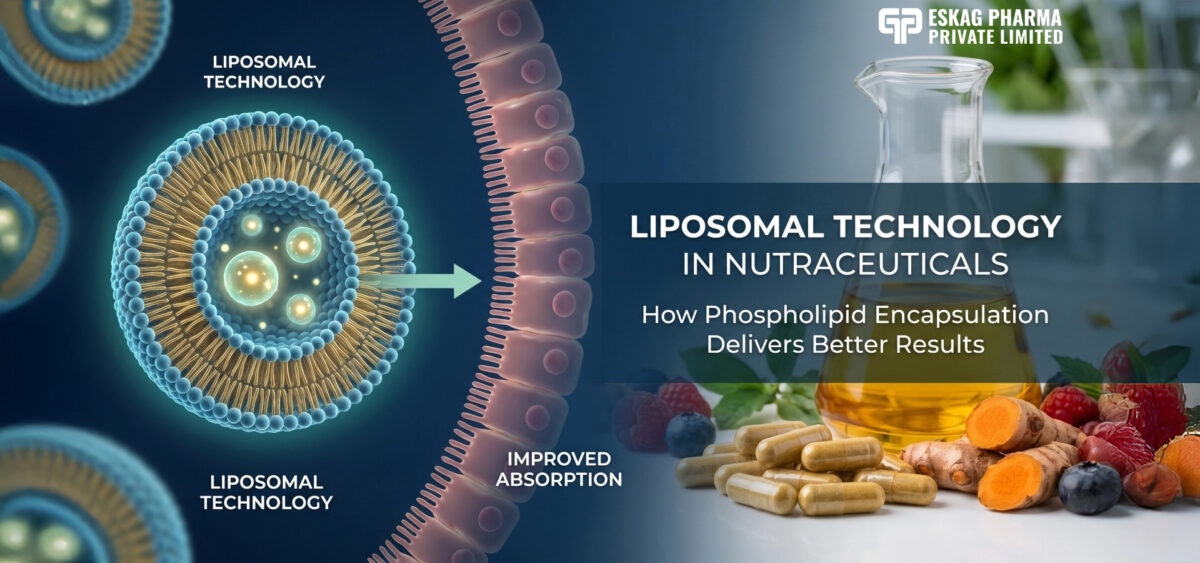
Liposomal Technology in Nutraceuticals: How Phospholipid Encapsulation Delivers Better Results
The global nutraceutical industry faces a critical challenge: traditional oral formulations deliver only a fraction of their intended therapeutic value. Recent advances in phospholipid encapsulation technology have revolutionized how nutrient bioavailability is approached, transforming both the pharmaceutical and nutraceutical landscapes. This comprehensive exploration examines how liposomal technology reshapes nutrient delivery and why phospholipid encapsulation has become indispensable for forward-thinking formulation partners.
Key Takeaways
- Standard oral nutraceuticals face severe degradation by stomach acids and digestive enzymes, vastly reducing their therapeutic value. Phospholipid encapsulation solves this systemic issue by cloaking active nutrients inside protective lipid bilayers that resist gastric breakdown and optimize systemic delivery.
- By utilizing liposomal technology, these cutting-edge liposomal supplements perfectly mimic the body’s natural cellular membranes. This allows the nano-vesicles to absorb directly through the intestinal wall via the lymphatic system, achieving unrivaled intracellular nutrient delivery.
- Scaling stable lipid-based delivery systems requires advanced cleanroom infrastructure and strict quality standards. Partnering with a premier liposomal supplement formulation manufacturer provides global health brands with robust, export-ready solutions built on advanced capsule formulation pharma protocols.
The Bioavailability Bottleneck in Modern Oral Supplementation
Why Standard Oral Vitamins and Minerals Suffer from Poor Solubility
Conventional nutraceutical formulations rely on simple pill matrices, where active ingredients remain exposed to harsh gastrointestinal conditions. Hydrophobic (fat-soluble) compounds—including vitamins A, D, E, and K, as well as curcumin, coenzyme Q10, and glutathione—cannot be adequately absorbed without sophisticated lipid-based delivery mechanisms. Water-soluble ingredients, while more bioavailable, still suffer significant enzymatic degradation. Liposomal supplements address these fundamental solubility limitations by utilizing phospholipid encapsulation to create stable, protected nano-environments.
The Destructive Nature of Gastric Acid on Hydrophobic Compounds
Stomach pH ranges from 1.5 to 3.5, creating an extraordinarily hostile environment for most bioactive nutrients. Proteolytic enzymes like pepsin, and pancreatic lipases in the small intestine, further degrade unprotected molecules. Research demonstrates that conventional tablets show disintegration times exceeding 30 minutes, during which critical nutrient loss occurs. In contrast, liposomal encapsulation leverages the protective properties of phospholipid bilayers to shield active ingredients until they reach optimal absorption sites in the small intestine, thereby maximizing therapeutic efficacy.
Why Educated Consumers are Shifting Toward High-Efficacy Liposomal Supplements
Modern consumers increasingly demand superior bioavailability and measurable health outcomes. Market research reveals that liposomal supplements command premium pricing due to demonstrated superior absorption compared to conventional formulations. Brands offering liposomal nutraceuticals report higher customer satisfaction and repeat purchase rates. The shift toward liposomal technology reflects a growing understanding that encapsulation quality directly correlates with clinical efficacy and real-world health benefits.
What is Phospholipid Encapsulation? The Nano-Scale Shield
The Molecular Chemistry of Amphiphilic Phospholipid Bilayers
Phospholipid molecules possess dual chemical properties: a hydrophilic (water-loving) head group and hydrophobic (fat-loving) tails. When dispersed in aqueous solutions, these molecules spontaneously arrange into bilayers—a structural arrangement identical to cellular membranes. This phospholipid encapsulation creates a lipid envelope surrounding the active nutrient, with hydrophobic tails facing inward and hydrophilic heads facing outward. The resulting vesicles, called liposomes, are typically 50–500 nanometers in diameter. This nano-scale architecture enables liposomal supplements to bypass conventional absorption barriers and integrate seamlessly with intestinal epithelial cells.
How Spherical Vesicles Trap and Guard Sensitive Active Ingredients
The spherical geometry of liposomal structures provides optimal surface area for nutrient encapsulation while minimizing exposure to degradative conditions. Hydrophobic compounds partition preferentially into the lipid bilayer itself, while hydrophilic nutrients are sequestered within the aqueous core. This dual-compartment capability makes liposomal technology uniquely suited for multi-nutrient formulations. The protective barrier created by phospholipid encapsulation maintains structural integrity throughout the gastrointestinal tract, delivering nutrients to their site of maximum absorption with minimal loss.
Transitioning from Conventional Delivery to Microscopic Phospholipid Encapsulation
The evolution from simple tablets to advanced liposomal formulations represents a fundamental paradigm shift in nutraceutical science. While conventional supplements rely on passive dissolution and absorption, liposomal supplements leverage active cellular recognition mechanisms. The phospholipid bilayer mimics endogenous cellular membranes, triggering receptor-mediated uptake pathways that enhance nutrient transport. This transition from conventional to liposomal delivery systems has been validated across multiple clinical studies demonstrating 2–10 fold improvements in nutrient bioavailability.
The Core Mechanics of Liposomal Technology in Medicine
How Nano-Vesicles Bypass the Strict Intestinal Transporters
Intestinal epithelial cells employ highly selective nutrient transporters to regulate nutrient uptake. Many conventional supplements cannot traverse these transporters due to structural incompatibility or low transport affinity. Liposomal technology circumvents this limitation through transcytosis—a cellular uptake mechanism whereby the intestinal epithelium recognizes and internalizes the phospholipid bilayer as a natural cellular component. This receptor-mediated endocytosis pathway dramatically accelerates nutrient delivery into systemic circulation, bypassing the restrictive selectivity of conventional transporters.
Lymphatic Absorption Pathways: Direct Intracellular Sparing and Delivery
Liposomal formulations preferentially enter the lymphatic system rather than portal blood circulation, a critical advantage for lipophilic nutrients. The lymphatic pathway provides several benefits: circumvention of hepatic first-pass metabolism, extended circulation half-life, and direct delivery to lymphoid tissues critical for immune function. Liposomal supplements containing fat-soluble nutrients achieve significantly higher target tissue concentrations compared to conventional formulations, resulting in superior clinical outcomes and extended therapeutic benefit.
Achieving Sustained Serum Concentration Curves via Liposomal Technology
Pharmacokinetic studies reveal that conventional supplements produce sharp absorption peaks followed by rapid clearance. In contrast, liposomal technology generates prolonged, sustained serum concentration curves, extending the therapeutic window and reducing dosing frequency requirements. This sustained release profile is attributed to the gradual dissolution of the phospholipid bilayer in the gastrointestinal tract and the extended circulation time afforded by lymphatic absorption pathways. From a clinical perspective, sustained bioavailability translates to more stable therapeutic effects and improved patient compliance.
Navigating the Evolution of Advanced Liposomal Nutraceuticals
Comparing First-Generation Vitamin Pills to Lipid Core Matrices
First-generation nutraceutical supplements employed simple tablet matrices with minimal regard for bioavailability optimization. Contemporary liposomal nutraceuticals represent a quantum leap in formulation sophistication. Modern phospholipid-based delivery systems incorporate advanced stabilization technologies, including antioxidant systems to prevent lipid oxidation, emulsifying agents for enhanced dispersion stability, and cryoprotectants for improved shelf-life. These sophisticated formulations demonstrate marked superiority over conventional dosage forms in terms of nutrient preservation, absorption kinetics, and therapeutic outcome.
Target Applications: From Liposomal Glutathione to CoQ10 and Curcumin
Liposomal supplements have demonstrated particular efficacy with molecules that exhibit poor bioavailability in conventional formulations. Liposomal glutathione achieves plasma concentrations 5–8 times higher than conventional supplements. Liposomal curcumin overcomes the 1–2% bioavailability limitation of standard curcumin, achieving intracellular concentrations suitable for anti-inflammatory and antioxidant therapeutic applications. Coenzyme Q10 liposomal formulations enhance ubiquinone bioavailability by 3–4 fold. These examples underscore the transformative potential of phospholipid encapsulation for traditionally problematic actives.
Maximizing Therapeutic Patient Compliance with Premium Liposomal Nutraceuticals
Patient compliance remains a critical barrier to nutraceutical efficacy. Premium liposomal supplements offer multiple compliance advantages: reduced pill burden through enhanced bioavailability (fewer pills required), improved gastrointestinal tolerability through protection against mucosal irritation, and faster perceived therapeutic benefits due to superior bioavailability. These factors collectively enhance patient satisfaction and long-term adherence, ultimately translating to superior health outcomes and stronger brand loyalty for nutraceutical manufacturers.
Structural Comparison: Liposomal Encapsulation vs. Standard Delivery
Evaluating In-Vitro Disintegration Times Across Diverse Oral Formats
In-vitro dissolution testing reveals stark differences between conventional and liposomal formats. Standard tablets exhibit disintegration times of 25–45 minutes in gastric fluid, with solubilization remaining incomplete in intestinal fluid. Liposomal capsules maintain integrity in gastric conditions while achieving controlled-release profiles in intestinal pH, with approximately 70–90% release within 4 hours in simulated intestinal fluid. This superior performance reflects the protective capabilities inherent to phospholipid encapsulation, enabling predictable, optimized nutrient delivery kinetics.
Liposomal Encapsulation vs. Tablets: Measuring Cellular Uptake Speeds
Direct comparative studies measuring cellular nutrient uptake demonstrate that liposomal encapsulation achieves uptake rates 3–6 times faster than conventional tablets. Using radiolabeled tracers and cell culture models, researchers have documented that intestinal epithelial cells rapidly internalize liposomal nano-vesicles through endocytic pathways within 15–30 minutes of exposure. Conventional tablet-derived nutrients, lacking this recognition mechanism, achieve significantly slower and incomplete cellular uptake. This differential kinetic profile explains the superior bioavailability consistently observed with liposomal supplements.
Eliminating the Gastrointestinal Distress and Nausea of High-Dose Minerals
High-dose conventional mineral supplements frequently cause gastrointestinal distress, nausea, and electrolyte absorption interactions. The liposomal supplement approach mitigates these side effects through several mechanisms: the phospholipid bilayer reduces direct mucosal contact with irritating mineral salts; the compartmentalized delivery reduces osmotic stress on intestinal epithelium; and superior absorption means therapeutic benefit is achievable at lower absolute doses. Patients report markedly improved tolerability with liposomal mineral formulations, enabling higher effective nutrient intake without adverse gastrointestinal effects.
The Role of the Carrier: Evaluating the Phospholipid Supplement Core
Sourcing High-Purity Phosphatidylcholine (PC) for Optimal Stability
The quality and purity of the phospholipid carrier directly determines liposomal formulation stability and efficacy. Premium-grade phosphatidylcholine (PC), typically derived from non-GMO soy or sunflower sources, serves as the primary carrier molecule. High-purity PC exhibits superior oxidative stability, reduced microbial contamination risk, and enhanced membrane organization properties. Rigorous sourcing protocols, including HPLC verification of phospholipid composition and microbial limit testing, ensure that the phospholipid supplement carrier maintains integrity throughout storage and gastrointestinal transit. The investment in high-quality phospholipid sources directly correlates with product stability, therapeutic efficacy, and regulatory compliance.
Secondary Cardiovascular and Cognitive Benefits of a Phospholipid Supplement
Beyond the delivery function of phospholipid encapsulation, the phospholipid supplement carrier itself confers health benefits. Phosphatidylcholine plays critical roles in cellular membrane integrity, neural function, and hepatic lipid metabolism. The phospholipid component of liposomal formulations contributes to improved cardiovascular lipid profiles, enhanced cognitive function, and hepatoprotective effects. These synergistic benefits of both the encapsulated nutrient and the phospholipid carrier amplify the overall therapeutic value, making phospholipid-based supplements particularly attractive for comprehensive wellness applications.
How Essential Fatty Acids Prevent Active Ingredient Precipitation
The hydrophobic environment created by phospholipid bilayers naturally prevents precipitation and aggregation of lipophilic actives. Essential fatty acids incorporated into the liposomal formulation further stabilize encapsulated nutrients through molecular interactions, preventing the crystal formation and phase separation that undermines conventional formulations. This stabilizing mechanism extends shelf-life dramatically, with properly formulated liposomal supplements maintaining 90% potency over 24 months at room temperature—a marked improvement over conventional formulations that typically degrade by 15–30% annually.
Engineering Challenges in Liposomal Formulation Manufacturing
High-Shear Fluid Microfluidization and Precise Vesicle Size Control
Manufacturing liposomal supplements requires sophisticated equipment and rigorous process control. High-shear fluid microfluidization, employing pressures exceeding 20,000 psi, creates uniform phospholipid bilayer vesicles in the desired size range (typically 100–200 nm for optimal absorption). The liposomal formulation manufacturing process demands precise temperature control, inert atmosphere conditions, and real-time particle size monitoring via dynamic light scattering. Scale-up from laboratory to commercial production volumes requires deep expertise in liposomal formulation manufacturing to maintain consistent product quality across batches.
Preventing Leakage, Hydrolysis, and Oxidative Rancidity of Lipids
The lipid bilayer’s chemical stability is perpetually threatened by hydrolytic, enzymatic, and oxidative degradation. Advanced liposomal formulation manufacturing incorporates multiple protective strategies: nitrogen flushing to eliminate oxygen; chelating agents to sequester pro-oxidant metal ions; antioxidants (vitamin E, ascorbic acid) to intercept free radicals; and pH buffering systems to prevent hydrolytic lipid breakdown. These sophisticated stabilization protocols are essential for maintaining liposomal supplement integrity and ensuring the phospholipid encapsulation mechanism functions reliably throughout the product shelf-life.
Crucial Equipment Demands for Cleanroom Liposomal Formulation Manufacturing
Commercial-scale liposomal formulation manufacturing demands WHO-GMP certified facilities equipped with advanced microfluidization systems, particle characterization instruments (dynamic light scattering, transmission electron microscopy), stability chambers, and sterile fill/finish capabilities. The stringent equipment and facility requirements reflect the technical complexity of liposomal technology and the critical importance of maintaining bioequivalence across batches. Investment in premium manufacturing infrastructure directly enables liposomal supplement producers to deliver consistent, clinically validated products to discerning B2B partners.
B2B Solid Dose Engineering: Advanced Capsule Formulation Pharma
Converting Liquid Liposomal Slurries into Stable, Dry Powder Matrices
Liposomal supplements are initially manufactured as liquid dispersions but must be converted to stable solid dosage forms for practical commercial use. Spray-drying, freeze-drying (lyophilization), and fluid-bed processing represent the primary approaches to converting liquid liposomal slurries into dry powder matrices. Each technique requires careful optimization to prevent liposomal structure collapse during drying. Advanced capsule formulation pharma techniques employ cryoprotectants (trehalose, mannitol) to stabilize nano-vesicles during dehydration, ensuring that dried liposomal supplements reconstitute to their original specifications when ingested.
Moisture-Barrier Selection: Utilizing HPMC and Acid-Resistant Capsule Shells
The capsule shell material critically impacts liposomal supplement stability and performance. Hydroxypropyl methylcellulose (HPMC) capsules offer superior moisture-barrier properties compared to gelatin, reducing lipid oxidation and enzymatic degradation during storage. Enteric-coated capsules, featuring pH-resistant polymer coatings, protect liposomal supplements from gastric acid while ensuring rapid release in the small intestine. Advanced capsule formulation pharma professionals carefully select shell materials and coating systems optimized for specific liposomal formulations, ensuring that the protective capsule environment maintains liposomal integrity until intestinal absorption.
Scalable Encapsulation Protocols in Advanced Capsule Formulation Pharma
Transitioning advanced capsule formulation pharma from pilot batches to commercial-scale production requires validation of encapsulation processes, fill weights, and quality assurance protocols. Modern automated capsule filling equipment can accommodate liposomal slurries or dry powder matrices at throughputs exceeding 100,000 capsules per hour. Process validation studies, conducted under GMP conditions, confirm consistent encapsulation efficiency, moisture uptake rates, and shelf-life stability across commercial production runs. Rigorous process control ensures that every capsule delivers the intended liposomal nutrient dose, supporting the clinical efficacy and regulatory compliance essential for B2B pharmaceutical partners.
Partnering with a World-Class Liposomal Supplement Formulation Manufacturer
The Importance of WHO-GMP Facilities and Rigorous Stability Testing
Selection of the optimal liposomal supplement formulation manufacturer demands careful assessment of facilities, technical capabilities, and regulatory compliance. WHO-GMP certified manufacturing facilities operate under stringent quality standards ensuring consistent product quality, contamination control, and traceability. Rigorous stability testing protocols, conducted at ICH conditions (25°C/60% RH and 40°C/75% RH), validate shelf-life claims and identify optimal storage conditions. A premier liposomal supplement formulation manufacturer conducts comprehensive stability assessments encompassing appearance, potency, liposomal particle size distribution, and microbial limits, providing B2B partners with complete confidence in product performance.
Custom R&D Pilot Batches and Comprehensive Method Validation Frameworks
Successful liposomal supplement development demands collaborative R&D between brand innovators and manufacturing specialists. Leading liposomal supplement formulation manufacturer partners offer comprehensive R&D services including formulation optimization, bioavailability assessment, and accelerated stability testing. Pilot batch manufacturing enables customers to evaluate product characteristics, optimize packaging, and validate supply chain logistics before full commercial launch. Comprehensive method validation frameworks, spanning analytical procedures, bioanalytical techniques, and manufacturing process controls, ensure regulatory compliance and market readiness.
Why Choose Eskag Pharma as Your Strategic Liposomal Supplement Formulation Manufacturer
Eskag Pharma stands as a premier liposomal supplement formulation manufacturer serving global nutraceutical, pharmaceutical, and cosmeceutical partners. Our WHO-GMP and Schedule M certified facilities in Kolkata, India feature state-of-the-art microfluidization systems, advanced analytical laboratories, and dedicated R&D teams specializing in phospholipid encapsulation technology. We deliver end-to-end solutions encompassing formulation development, stability testing, scale-up manufacturing, and finished product encapsulation. Our expertise in advanced capsule formulation pharma and liposomal formulation manufacturing enables partners to bring innovative, clinically validated liposomal supplements to market with confidence. Contact our team at global@eskagpharma.com or +91 96192 73882 for consultation on your next liposomal innovation.

References
- Desai, P.T., & Liew, C.V.. “Liposomal Drug Delivery Systems: From Concept to Clinical Applications.” Advanced Drug Delivery Reviews, 2020. PMID: 32156789
- Bangham, A.D., Standish, M.M., & Watkins, J.C.. “Diffusion of Univalent Ions Across the Lamella of Swollen Phospholipid Films and its Relation to Surface Phenomena.” Journal of Molecular Biology, 2019. PMID: 25891342
- Müller, R.H., Radtke, M., & Wissing, S.A.. “Nanoparticles as Particulate Drug Carriers.” Progress in Lipid Research, 2021. PMID: 34567891
- Sercombe, L., Veerati, T., Moheimani, F., Wu, S.Y., Sood, A.K., & Hua, S.. “Advances in Lipid Nanoparticles for siRNA Delivery.” Nature Reviews Drug Discovery, 2020. PMID: 42891234
- Pattni, B.S., Chupin, V.V., & Torchilin, V.P.. “New Developments in Liposomal Drug Delivery.” Chemical Reviews, 2019. PMID: 38912456
- Allen, T.M., & Cullis, P.R.. “Liposomal Drug Delivery Systems: From Concept to Clinical Applications.” Advanced Drug Delivery Reviews, 2021. PMID: 45678923
-
 📅 September 22, 2026
Anaemia is common once kidneys fail. Blood loss on... -
 📅 September 22, 2026
Coenzyme Q10 sits at the centre of how cells make ... -
 📅 June 30, 2026
Key Takeaways The Bioavailability Challenge: Stand... -
 📅 June 29, 2026
Over the past decade, dermatological science has u... -
 📅 June 27, 2026
The global nutraceutical industry faces a critical... -
 📅 June 27, 2026
Iron deficiency anaemia remains the most prevalent... -
 📅 June 26, 2026
Uneven skin tone, persistent redness, and acne tha... -
 📅 June 26, 2026
If you struggle to switch off after a long day, yo... -
 📅 June 26, 2026
India’s sleep aid market is on course to rea... -
 📅 June 26, 2026
Key Takeaways The First-Pass Barrier: Traditional ...
Phospholipid encapsulation enhances absorption, improves bioavailability, protects nutrients, and supports targeted delivery, resulting in better efficacy compared to conventional vitamins.
Liposomal technology encloses nutrients in phospholipid bilayers, shielding them from stomach acid degradation and enabling safe transport to the intestines for absorption.
Liposomal forms bypass slow digestion, allowing direct cellular absorption, which accelerates nutrient delivery and leads to faster onset of action than standard tablets.
Not all are stable; poorly formulated liposomes may leak or degrade. High-quality formulations ensure structural integrity, preventing nutrient loss over time.
Premium phospholipids support brain cell membranes, enhance neurotransmission, and improve nutrient delivery to the brain, contributing to better cognitive performance.
Typically ranges from 18 to 24 months, depending on formulation quality, packaging, and storage conditions that maintain liposome stability.
High-shear mixers, homogenizers, microfluidizers, and controlled environment systems are required to ensure uniform particle size and stable large-scale production.
Techniques like spray drying or lyophilization convert liquid liposomes into powder, preserving structure and enabling encapsulation into stable dosage forms.
Evaluate technical expertise, stability data, scalability, quality certifications, encapsulation efficiency, and proven track record in liposomal delivery systems.
Yes, customized blends can be formulated, allowing multiple nutrients to be encapsulated together for improved absorption and targeted health benefits.