
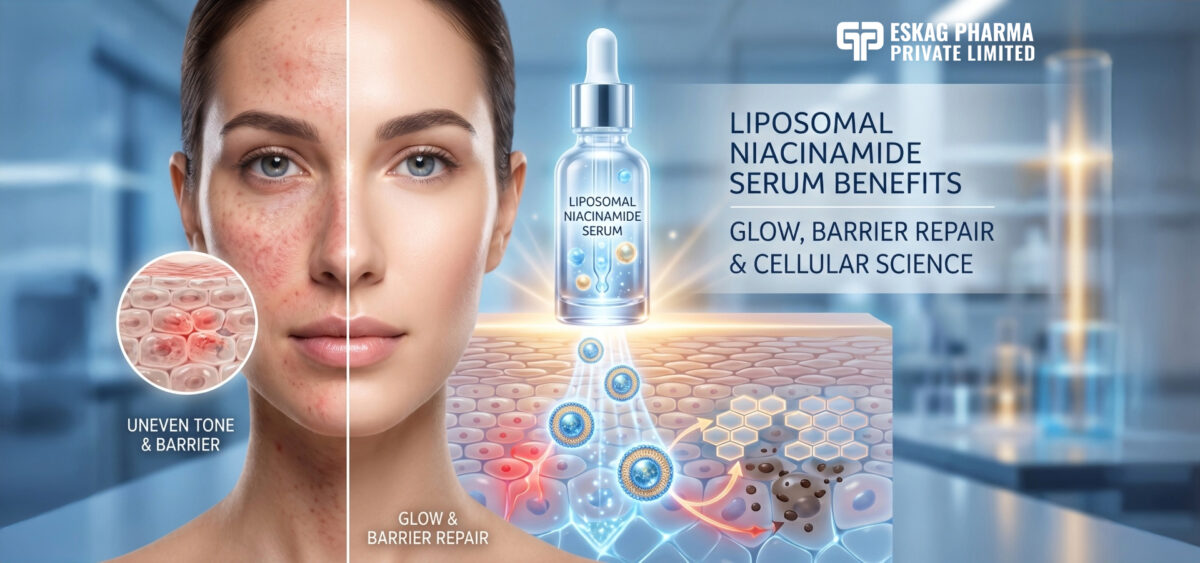
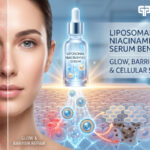
Liposomal Niacinamide Serum Benefits: Glow & Barrier Repair
Uneven skin tone, persistent redness, and acne that keeps returning despite a full skincare routine- these are not signs of neglect; they are signs of a barrier that needs targeted support at the cellular level. Most serums address these concerns at the surface, which is why results feel inconsistent and short-lived for so many people. Niacinamide serum benefits go deeper; vitamin B3 works by activating ceramide synthesis, blocking melanin transfer, and simultaneously suppressing the inflammatory pathways that drive acne and redness. What separates a genuinely effective formula from a generic one is not the ingredient itself but how well it reaches the epidermal layers where repair actually happens.
In this guide, you will find the clinical mechanisms, concentration nuances, and formulation science behind liposomal niacinamide serums, as well as what to look for when sourcing one.
Key Takeaways:
- Niacinamide reduces sebum production at 2-5% concentration and suppresses NF-κB inflammation, without targeting Cutibacterium acnes directly.
- Liposomal niacinamide fuses with the epidermal membrane, delivering the active where ceramide synthesis occurs, not just on the surface.
- Visible tone and texture improvement typically appears between weeks 8 and 12 of consistent daily use.
Quick Answer: Niacinamide serum benefits include ceramide-driven barrier repair, melanin transfer inhibition, and sebum control, clinically effective from 2% concentration with consistent daily use.
Niacinamide Serum Benefits: How Vitamin B3 Works
Niacinamide serum benefits start at the cellular level; vitamin B3 enters keratinocytes and drives NAD+ synthesis, the metabolic currency that powers barrier repair, melanin regulation, and sebum control.
Why Niacinamide Serum Benefits All Skin Types
Niacinamide serum benefits extend across every skin type because its mechanism targets cellular function, not surface symptoms. It does not exfoliate, oxidise, or sensitise; it signals keratinocytes to produce ceramide, regulate sebum, and suppress inflammation. That makes it compatible with oily, dry, sensitive, and acne-prone skin without adjustment.
How Vitamin B3 Skin Barrier Synthesis Works
Vitamin B3 skin barrier repair begins with ceramide. The lipid molecule that binds skin cells together and prevents transepidermal water loss. Niacinamide directly upregulates ceramide synthase activity in keratinocytes. Without adequate ceramide levels, the skin loses moisture faster than it retains it, which worsens both sensitivity and niacinamide’s acne-control outcomes.
Niacinamide vs Vitamin C: Stability Advantage
Vitamin C oxidises on contact with light and air, losing potency before it reaches the skin. Niacinamide exhibits no such instability; it maintains full activity across a wide pH range and temperature variations. For liposomal niacinamide specifically, phospholipid encapsulation adds an additional layer of stability, protecting the active from oxidation during storage and after application.
Now, let’s understand how vitamin B3 is critical for the skin barrier.
Vitamin B3 Skin Barrier: Repair from Within
The vitamin B3 skin barrier connection is direct; niacinamide upregulates ceramide and natural moisturising factor production, reducing transepidermal water loss and restoring the skin’s primary defence layer.
How Vitamin B3 Skin Barrier Ceramide Works
Ceramide accounts for approximately 50% of the stratum corneum lipid matrix. Vitamin B3 activates ceramide synthase, the enzyme that builds this layer. A 2024 pilot RCT confirmed a significant improvement in hydration at week 4 in the niacinamide group. A stronger lipid matrix also supports niacinamide acne control; a compromised barrier worsens inflammatory acne by allowing bacterial penetration and moisture loss.
Niacinamide Serum Benefits for Sensitive Skin
Unlike retinoids or exfoliating acids, niacinamide does not thin the stratum corneum or alter skin pH. As a skin-calming serum, it reduces cytokine-driven erythema and supports the lipid matrix that helps keep reactive skin stable during environmental exposures.
Liposomal Niacinamide for Deeper Barrier Repair
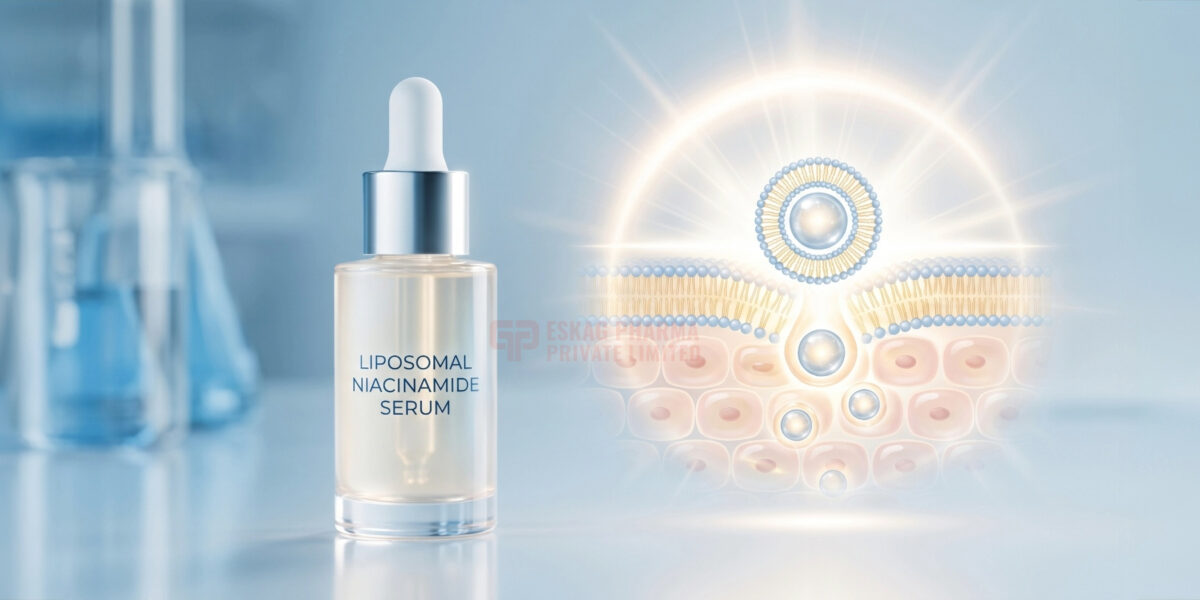
Liposomal niacinamide uses phospholipid vesicles that fuse with the epidermal membrane, releasing the active into deeper keratinocyte layers where ceramide synthesis occurs. Any niacinamide serum manufacturer producing a liposomal formulation must validate encapsulation efficiency and vesicle size per batch; these two parameters determine whether the claim of deeper delivery holds.
Niacinamide Acne Control: Sebum and Inflammation
Niacinamide acne control works through two independent biological pathways, sebostatic regulation and anti-inflammatory NF-κB suppression, addressing acne at the root rather than masking surface symptoms.
- Sebum reduction is concentration-dependent. Clinical studies confirm that 2-5% niacinamide reduces sebum production in both Asian and Caucasian populations [1]. Unlike oral retinoids, this reduction occurs without systemic side effects or dryness-driven barrier compromise.
- NF-κB suppression cuts the inflammatory cascade. Niacinamide inhibits neutrophil chemotaxis, histamine release, and nitric oxide synthase activity, three distinct points in the inflammatory pathway that drive papule and pustule formation in acne vulgaris.
- Niacinamide does not directly target bacterial load. It addresses sebum and inflammation, the conditions that allow Cutibacterium acnes to proliferate, rather than killing the bacterium itself. This distinction matters for brands positioning a skin-calming serum against concerns about antibiotic resistance.
- Post-acne pigmentation reduces through melanin inhibition. Once active lesions resolve, niacinamide blocks melanosome transfer to keratinocytes, preventing the dark marks that persist long after inflammation clears.
- A 2024 split-face RCT confirmed clinical outcome. The ceramide-niacinamide combination significantly improved total acne lesion counts and reduced cutaneous irritation compared with standard anti-acne therapy alone in 40 patients over 8 weeks [2].
Skin Calming Serum: Brightening and Even Tone
A skin calming serum with liposomal niacinamide addresses uneven tone through two simultaneous actions: suppressed melanin transfer at the keratinocyte level and reduced inflammatory erythema that dark spots commonly sit beneath.
How Liposomal Niacinamide Reduces Hyperpigmentation
Liposomal niacinamide does not inhibit tyrosinase, the enzyme most brightening actives target. It works one step later, blocking melanosome transfer from melanocytes to keratinocytes. This distinction matters clinically: tyrosinase inhibition affects melanin production; niacinamide affects melanin distribution. The result is a more even surface tone without suppressing the melanocytes that protect skin from UV damage.
Skin Calming Serum Action on Redness and Erythema
Persistent facial redness has two sources, vascular reactivity and cytokine-driven inflammation. A skin calming serum with niacinamide addresses the second pathway directly, suppressing pro-inflammatory cytokine expression in keratinocytes. A 2024 study confirmed a significant decrease in erythema values from baseline to final measurement in the niacinamide serum intervention group, independent of sun protection use.
Niacinamide Serum Benefits for Even Skin Tone
Niacinamide serum benefits for skin tone are cumulative, not immediate. Melanin already distributed across the stratum corneum sheds through natural cell turnover, niacinamide prevents new transfer while the existing pigment clears. Visible tone improvement typically appears between weeks 8 and 12 of consistent daily use, making realistic expectation-setting a necessary part of any brand’s product communication.
Also read: Liposomal vs. Supramolecular Salicylic Acid-Choosing the Right Acne Treatment for Sensitive Skin.
Niacinamide Serum Manufacturer: Sourcing in India
For brands seeking a niacinamide serum manufacturer in India, the liposomal format raises the bar for formulation complexity, and only manufacturers with phospholipid encapsulation capability, stability testing, and regulatory-compliant documentation meet clinical-grade standards.
What a Niacinamide Serum Manufacturer Must Provide
A qualified niacinamide serum manufacturer must supply HPLC-verified niacinamide concentration per batch, preservative efficacy testing, and a minimum 12-month stability dataset under accelerated conditions. For liposomal formats, encapsulation efficiency data and particle size distribution per production run are non-negotiable. Manufacturers who list liposomal niacinamide without these batch-level documents are not producing a clinical-grade product.
Skincare Serum Contract Manufacturing: Key Checks
Skincare serum contract manufacturing for a liposomal niacinamide product requires three additional verifications beyond standard serum production. First, confirm the phospholipid source, soy or sunflower lecithin, non-GMO verified. Second, confirm that controlled-release validation data exist for the specific formulation, not just for the ingredient. Third, verify that scale-up from pilot to commercial batch maintains uniform vesicle size; inconsistency at scale undermines the delivery claim entirely.
Why Choose Eskag Pharma for Liposomal Niacinamide Serums
Eskag Pharma brings pharmaceutical-grade liposomal encapsulation expertise, already validated for iron and melatonin formulations, directly to the production of a cosmeceutical niacinamide serum. Five decades of WHO-GMP-certified manufacturing, active export partnerships across 50+ countries, and end-to-end regulatory documentation make Eskag Pharma a credible production partner for brands that need a liposomal niacinamide serum backed by verifiable batch data, not just marketing claims.
Final Thoughts
Niacinamide serum benefits are well-documented across barrier repair, pigmentation, sebum control, and inflammation, but those benefits only reach their clinical potential when the formulation delivers the active to the right epidermal depth. If you are developing or sourcing a niacinamide serum, start with the delivery mechanism: a standard water-based formula and a liposomal format are not clinically equivalent, regardless of niacinamide concentration. For brands building a product with genuine differentiation, confirm encapsulation efficiency data, vesicle size distribution, and 12-month stability documentation before committing to a manufacturer. Do not rely on ingredient listings alone; a liposomal claim without batch-level encapsulation data is a marketing label, not a formulation credential. The science behind niacinamide is strong enough to carry a premium product; the manufacturing rigour behind the delivery system determines whether that science reaches the skin.

References
- Marques C, Hadjab F, Porcello A, Lourenço K, Scaletta C, Abdel-Sayed P, Hirt-Burri N, Applegate LA, Laurent A. Mechanistic Insights into the Multiple Functions of Niacinamide: Therapeutic Implications and Cosmeceutical Applications in Functional Skincare Products. Antioxidants (Basel). 2024 Mar 30;13(4):425. doi: 10.3390/antiox13040425. PMID: 38671873; PMCID: PMC11047333.
- Tempark, T., Shem, A. and Lueangarun, S. (2024). Efficacy of ceramides and niacinamide-containing moisturizer versus hydrophilic cream in combination with topical anti-acne treatment in mild to moderate acne vulgaris: A split face, double-blinded, randomized controlled trial. Journal of Cosmetic Dermatology. [online]
-
 📅 September 22, 2026
Anaemia is common once kidneys fail. Blood loss on... -
 📅 September 22, 2026
Coenzyme Q10 sits at the centre of how cells make ... -
 📅 June 30, 2026
Key Takeaways The Bioavailability Challenge: Stand... -
 📅 June 29, 2026
Over the past decade, dermatological science has u... -
 📅 June 27, 2026
The global nutraceutical industry faces a critical... -
 📅 June 27, 2026
Iron deficiency anaemia remains the most prevalent... -
 📅 June 26, 2026
Uneven skin tone, persistent redness, and acne tha... -
 📅 June 26, 2026
If you struggle to switch off after a long day, yo... -
 📅 June 26, 2026
India’s sleep aid market is on course to rea... -
 📅 June 26, 2026
Key Takeaways The First-Pass Barrier: Traditional ...
Niacinamide works on four fronts simultaneously: ceramide synthesis for barrier repair, melanin transfer inhibition for even tone, sebum regulation at 2-5% concentration, and NF-κB suppression for inflammation. Results build over 8-12 weeks of consistent use, not days.
2-5% suits sensitive and barrier-compromised skin. 5-10% targets sebum, pigmentation, and pore refinement. Above 10%, irritation risk rises without proportional benefit. Liposomal niacinamide achieves therapeutic effect at lower concentrations because encapsulation improves epidermal delivery efficiency.
For sensitive and barrier-damaged skin, yes. Phospholipid encapsulation gradually releases niacinamide into deeper epidermal layers, where ceramide synthesis occurs. Standard serums deposit the active on the surface, where absorption depends entirely on skin condition and formulation base.
It reduces sebum and suppresses the NF-κB inflammatory cascade, but it does not directly kill Cutibacterium acnes. Studies confirm that the ceramide-niacinamide combination significantly reduced total acne lesion counts over 8 weeks.
Melanin already distributed across the stratum corneum clears through natural cell turnover; niacinamide prevents new transfer while existing pigment sheds. Visible tone improvement typically appears between weeks 8 and 12. Consistent daily use and morning sunscreen are both required for results to hold.