
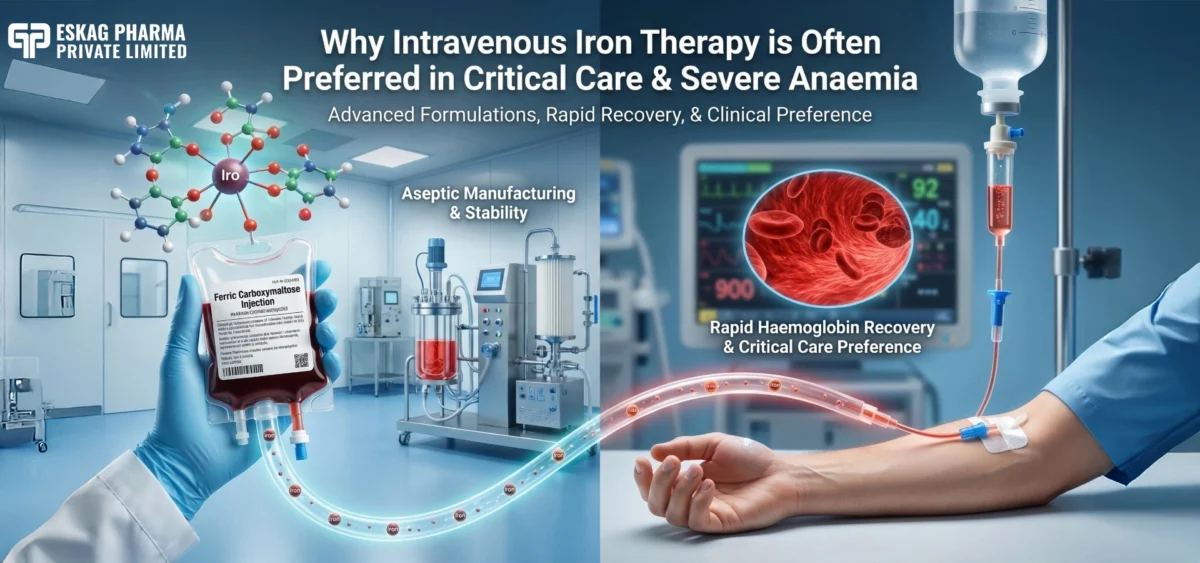
Why Intravenous Iron Therapy is Often Preferred in Critical Care and Severe Anaemia
Anaemia is one of the most common and consequential conditions encountered in hospitals worldwide. In critical care settings, the stakes are particularly high: patients with severe iron deficiency often arrive with dangerously low haemoglobin levels, compromised organ perfusion, and a physiological reserve too depleted to recover through conventional treatment alone. In these scenarios, intravenous iron therapy has emerged not merely as an alternative to oral supplementation, but as the definitive standard of care — a life-saving intervention backed by decades of clinical evidence and an increasingly sophisticated pharmacological science.
This blog explores the science, clinical rationale, formulation advances, and manufacturing excellence behind modern intravenous iron therapy — drawing on peer-reviewed evidence to explain why parenteral iron has become indispensable across a spectrum of critical and chronic conditions.
Key Takeaways
- The Clinical Imperative : Oral iron fails in critical care due to poor GI absorption, severe side effects, and slow action. Intravenous iron therapy bypasses the digestive system entirely, delivering iron directly into the bloodstream for rapid haemoglobin recovery in severe anaemia patients.
- Advanced Formulations: Modern iron carbohydrate complexes have transformed treatment protocols. Understanding ferric carboxymaltose injection uses reveals how these stable, high-dose preparations can safely replenish depleted iron stores in just one or two clinical visits, while minimising free iron toxicity.
- Strategic Manufacturing Demands: Producing sterile colloidal iron injectables requires highly specialised aseptic infrastructure. Hospitals and global health brands rely on an expert ferric carboxymaltose injection manufacturer India to ensure WHO-GMP-certified formulations. Leveraging IV iron injectable third party manufacturing India allows pharmaceutical companies to scale critical care portfolios seamlessly.
The Clinical Challenge of Severe Iron Deficiency Anaemia
Iron deficiency anaemia (IDA) is the most common nutritional deficiency globally, affecting hundreds of millions of people across all age groups. While mild IDA is routinely managed in community settings, severe IDA presenting in critical care carries a distinct clinical urgency that demands a fundamentally different therapeutic approach — making iron therapy for anemia a priority clinical decision.
When Oral Iron Therapy Fails in Critical Care Patients
Oral iron supplements are inexpensive and widely prescribed, but they carry significant limitations that render them inadequate in critical care. GI intolerance — including nausea, vomiting, constipation, and abdominal cramping — leads to high rates of non-compliance. More importantly, oral iron depends on intestinal absorptive capacity. In patients with inflammatory bowel disease, post-surgical malabsorption, celiac disease, or critical illness-associated gut dysfunction, this absorptive pathway is severely compromised. A well-established review in the European Journal of Gastroenterology and Hepatology confirms that parenteral (intravenous) iron therapy becomes essential precisely when intolerance, non-compliance, or treatment failure undermines oral supplementation.
Equally significant is the rate of correction. In critical care, where haemoglobin must be restored rapidly to support healing, surgical recovery, or haemodynamic stability, the slow rise achievable with oral iron (weeks to months) is clinically unacceptable. The urgency of these situations mandates a direct route: straight into the bloodstream.
The Impact of Severe Anaemia on Organ Function and Recovery
Severe anaemia is far more than a number on a blood report. When haemoglobin levels fall critically low, oxygen delivery to vital organs — the heart, kidneys, brain, and lungs — becomes insufficient. Clinicians describe this as tissue hypoxia: a state where metabolic demands cannot be met, triggering cellular dysfunction, organ failure, and, in extreme cases, death. Critically ill patients with acute brain injury are particularly vulnerable, as the exhausted cerebrovascular reserve loses its capacity to adjust cerebral blood flow to oxygen demand, a concept supported by a multicenter randomised trial published in Trials.
Beyond oxygen delivery, iron deficiency impairs mitochondrial function, immune competence, and cognitive performance — creating a systemic cascade of physiological deterioration that goes far beyond simple fatigue.
Recognising the Urgent Need for Advanced Iron Therapy for Anaemia
The recognition that certain patients cannot wait for oral iron to work — or simply cannot absorb it — has driven clinical guidelines across oncology, nephrology, obstetrics, cardiology, and intensive care to endorse intravenous parenteral iron as first-line iron therapy for anemia in high-risk groups. The transition from watchful waiting to proactive intravenous repletion represents one of the most important shifts in modern supportive care medicine.
Understanding Intravenous Iron Therapy Delivery Mechanisms
At its core, the superiority of intravenous iron therapy in critical settings lies in its ability to circumvent the body’s most unreliable iron delivery pathway — the gastrointestinal tract — and deliver elemental iron directly to where it is needed most.
How Parenteral Administration Bypasses the Gastrointestinal Tract
When iron is administered intravenously, it enters the systemic circulation within minutes, packaged inside a stable carbohydrate shell that prevents toxicity while enabling biological uptake. The iron complex is recognised and internalised by macrophages in the reticuloendothelial system (RES), principally in the liver, spleen, and bone marrow. From there, iron is liberated at a controlled rate and handed to transferrin — the blood’s natural iron carrier — for delivery to erythroid precursors in the bone marrow, where it is incorporated into new haemoglobin molecules. This entire process bypasses the hepcidin-regulated duodenal absorption pathway entirely, making intravenous iron therapy effective even in states of elevated hepcidin (such as chronic inflammation) where oral iron absorption is actively suppressed.
The Pharmacokinetics of High-Dose Iron Replenishment
The pharmacokinetics of modern intravenous iron formulations are designed for controlled, safe iron release. Unlike older preparations that could dump free ionic iron into the circulation, contemporary formulations (including ferric carboxymaltose) maintain iron in a tightly complexed, colloidal state. Radio-labelled studies conducted with ferric carboxymaltose (FCM) have demonstrated that the hepatic reticuloendothelial system serves as the primary uptake organ, with iron subsequently transferred to haemoglobin synthesis in a physiologically regulated manner. Crucially, iron does not appear to cross the placental barrier at clinically significant levels and transfers minimally into breast milk — an important safety finding for obstetric applications.
Why Intravenous Iron Therapy is the Standard of Care for Rapid Correction
Clinical trials have consistently demonstrated that intravenous iron therapy achieves haemoglobin correction significantly faster and more completely than oral alternatives. A pivotal multicenter randomised feasibility trial published in the British Journal of Anaesthesia found that in ICU survivors with moderate to severe anaemia (haemoglobin ≤100 g/L), a single dose of ferric carboxymaltose 1000 mg IV produced substantially higher haemoglobin at both 28 days and 90 days compared to standard care. Crucially, hospital readmission rates at 90 days post-ICU discharge were nearly halved in the IV iron group (risk ratio 0.46; 95% CI, 0.21–0.99), a finding with profound implications for patient outcomes and healthcare resource utilisation.
The Evolution of the Intravenous Iron Formulation
The scientific history of the intravenous iron formulation is a story of progressive refinement — from hazardous early compounds to today’s sophisticated, highly stable colloidal preparations that balance potency with an exceptional safety profile.
Designing a Stable and Safe Intravenous Iron Formulation
The central design challenge in any intravenous iron formulation is the paradox of iron itself: it is an essential nutrient that becomes dangerously toxic when free in the bloodstream. Unbound ferric iron generates reactive oxygen species through Fenton chemistry, causing oxidative damage to cell membranes, proteins, and DNA. The solution, developed over decades of pharmaceutical innovation, is to encapsulate elemental iron within a carbohydrate matrix — a shell that is stable enough to prevent free iron release in the vascular space, yet biodegradable enough to allow controlled liberation within the macrophage lysosome.
The Shift from Iron Dextran to Modern Carbohydrate Complexes
Earlier generations of IV iron were based on iron dextran, a high-molecular-weight polymer. While effective in terms of iron delivery, these preparations carried a significant risk of dextran-specific immune reactions and anaphylaxis — a consequence of pre-existing anti-dextran antibodies in a segment of the population. This safety concern spurred the development of non-dextran alternatives. Low-molecular-weight iron dextran improved upon its predecessors, followed by iron sucrose and sodium ferric gluconate — compounds with better safety profiles but limitations on maximum single-dose capacity. The most significant advance came with ferric carboxymaltose and ferumoxytol, which offered both high single-dose capability and a demonstrably improved immunogenic profile.
Critically, antigenicity studies with ferric carboxymaltose showed no cross-reactivity with anti-dextran antibodies — a finding published in a detailed pharmacology review in Arzneimittelforschung — confirming that the shift away from dextran-based cores eliminated the principal mechanism of anaphylactic risk. No sensitising potential was identified, and local tolerance studies found no evidence of irritation.
Preventing Oxidative Stress and Managing Free Iron Toxicity
A well-formulated intravenous iron formulation is characterised not just by its efficacy in raising haemoglobin, but by its capacity to maintain iron in a safely complexed state throughout the infusion and uptake process. The thermodynamic stability of the iron-carbohydrate complex — assessed through dissociation constants and lability indices — directly correlates with the rate of free iron release and, therefore, the oxidative stress burden placed on the patient. Ferric carboxymaltose demonstrates high thermodynamic stability under physiological conditions, releasing iron gradually within the RES rather than into the open bloodstream. Safety pharmacology studies confirmed a favourable profile across cardiovascular, central nervous system, respiratory, and renal parameters, with a high maximum non-lethal dose established in single-dose toxicity studies.
Exploring Ferric Carboxymaltose Injection Uses in Hospitals
Among all available intravenous iron preparations, ferric carboxymaltose (FCM) has perhaps the broadest and most evidence-supported clinical footprint. Understanding the full range of ferric carboxymaltose injection uses reveals why this compound has become a cornerstone of iron replacement therapy across diverse hospital departments.
The Unique Biochemical Structure of Ferric Carboxymaltose
Ferric carboxymaltose is formulated as a colloidal solution at physiological pH, comprising ferric hydroxide cores stabilised by a carboxymaltose (oxidised starch-derived) carbohydrate shell. This architecture confers both biological and physicochemical stability. The molecular weight of the complex falls in a range that enables efficient uptake by the macrophage RES without triggering the immune sensitisation seen with high-molecular-weight dextrans. The colloidal suspension is isotonic, compatible with normal saline, and can be administered as a bolus injection (in 7–8 minutes) or a diluted IV infusion — offering flexibility that is highly valued in busy clinical environments.
A notable metabolic consequence of FCM administration, identified in mechanistic studies, is a transient and asymptomatic reduction in serum phosphate. This occurs because FCM induces fibroblast growth factor 23 (FGF-23), which promotes renal phosphate excretion. While generally clinically insignificant, this effect warrants monitoring in patients with pre-existing hypophosphataemia or renal impairment.
Rapid Haemoglobin Recovery and Targeted Ferric Carboxymaltose Injection Uses
The breadth of ferric carboxymaltose injection uses across hospital specialties reflects the compound’s versatility. A landmark comprehensive review in Arzneimittelforschung, synthesising nine Phase III randomised controlled multicentre trials across more than 3,000 patients, demonstrated that FCM improved haemoglobin, ferritin, and transferrin saturation values across every studied indication — from inflammatory bowel disease and chronic heart failure to post-partum anaemia and chronic kidney disease. Haemoglobin improvements with FCM were generally faster than with oral iron, with patients achieving target haemoglobin levels earlier and with fewer treatment visits.
Treating Chronic Kidney Disease (CKD) and Postpartum Haemorrhage
Two of the most clinically impactful ferric carboxymaltose injection uses involve CKD and postpartum anaemia. The landmark FIND-CKD trial — a 56-week, multicentre, prospective randomised study of 626 patients with non-dialysis-dependent CKD — demonstrated that IV FCM targeting a higher ferritin (400–600 μg/L) significantly delayed or reduced the need for erythropoiesis-stimulating agents (ESAs) or blood transfusions compared to oral iron (HR 0.65; 95% CI, 0.44–0.95; p = 0.026). A greater proportion of patients in the high-ferritin FCM group achieved a haemoglobin increase ≥1 g/dL compared to oral iron (HR 2.04; p < 0.001), with a similar safety profile across all groups.
In postpartum anaemia, a randomised controlled trial published in the International Journal of Gynaecology and Obstetrics compared FCM to oral ferrous sulphate in 344 women. Despite a much shorter treatment period (2 versus 12 weeks), FCM achieved equivalent haemoglobin correction, significantly higher ferritin levels, and importantly faster haemoglobin rises — 86.3% of FCM-treated women achieved a haemoglobin rise ≥3.0 g/dL versus 60.4% with oral iron (p < 0.001). Gastrointestinal side effects were substantially lower in the FCM group, and no safety concerns were identified in breastfed infants.
Clinical Advantages of an IV Iron Infusion for Anaemia
The clinical case for iv iron infusion for anemia extends well beyond simply avoiding the GI side effects of oral iron. Across a range of settings, IV iron infusion for anemia confers measurable, outcome-relevant benefits that have transformed patient care pathways.
Achieving Complete Iron Store Replenishment in Fewer Doses
One of the most compelling attributes of modern IV iron preparations — particularly ferric carboxymaltose — is the capacity to replenish the entire calculated iron deficit in one or two infusions. Traditional iron sucrose protocols required repeated doses of 200–300 mg over multiple sessions, demanding significant patient time and healthcare resources. FCM changed this paradigm: doses of up to 1000 mg can be safely administered in a single 15-minute infusion session (or 7–8 minutes as a bolus injection). A comprehensive experience report in Therapeutic Advances in Hematology confirmed that the full approved US dose (up to 1500 mg total, administered in two doses at least 7 days apart) can be completed in as little as two clinical visits — a logistical advantage that improves patient adherence and health system efficiency alike.
For patients with multiple competing comorbidities who struggle with frequent hospital visits, this consolidation of iron therapy into fewer encounters is not merely convenient — it is clinically transformative.
Immediate Symptom Relief from Severe Fatigue and Hypoxia
Beyond laboratory parameters, the experience of iv iron infusion for anemia translates into rapid subjective improvement for patients. Severe anaemia manifests as profound fatigue, dyspnoea on exertion, palpitations, poor concentration, and — in vulnerable patients — angina and haemodynamic instability. As iron stores are replenished and erythropoiesis accelerates, these symptoms begin to resolve within days to weeks of IV iron administration. In patients with chronic heart failure and iron deficiency anaemia, clinical trials have documented improved exercise capacity and quality of life following FCM treatment — benefits that extend beyond haemoglobin correction to encompass mitochondrial function and cardiac performance.
Why an IV Iron Infusion for Anaemia is Crucial Before Major Surgeries
Preoperative anaemia is an independent predictor of perioperative mortality, prolonged hospitalisation, and postoperative complications. Correcting anaemia before elective surgery is a cornerstone of patient blood management programmes worldwide, and iv iron infusion for anemia has become the preferred tool for rapid preoperative haemoglobin optimisation.
A cohort study published in Transfusion demonstrated that in anemic colorectal cancer patients scheduled for surgery, preoperative IV iron therapy produced a significantly greater rise in haemoglobin compared to standard care (0.65 vs 0.10 mmol/L, p < 0.001) — without blood transfusion. Patients with higher transferrin and lower ferritin — hallmarks of absolute iron deficiency — showed the most robust responses. Similarly, a study in Annals of Surgical Treatment and Research evaluating ferric carboxymaltose in patients scheduled for pancreaticoduodenectomy reported that FCM administration 1–3 weeks before surgery was associated with a reduced perioperative transfusion rate (22.5%) and significantly higher haemoglobin on the day of the operation compared to baseline (p < 0.001).
Protocols and Guidelines for Administering IV Iron Therapy
Safe and effective iv iron therapy depends not just on product quality but on the precision and rigour with which it is administered. Standardised protocols govern everything from dose calculation to patient monitoring, ensuring that the clinical benefits of parenteral iron are realised without preventable adverse events.
Calculating the Correct Iron Deficit and Dosage Requirements
The Ganzoni formula is the most widely used method for calculating total iron deficit in clinical practice: Total Iron Dose (mg) = Body Weight (kg) × (Target Hb − Actual Hb) (g/dL) × 2.4 + Iron Stores (mg). The iron stores component (typically 500 mg for adults, 15 mg/kg for patients under 35 kg) accounts for replenishment of depleted ferritin stores beyond what is needed to correct circulating haemoglobin alone. Accurate dose calculation is clinically important: under-dosing leads to incomplete repletion and relapse, while appropriate dosing ensures durable correction. For FCM, the maximum single-dose recommendation is 1000 mg iron per session, with a total dose of up to 1500 mg in two administrations at least 7 days apart.
Infusion Rates, Dilution, and Patient Monitoring Guidelines
Ferric carboxymaltose can be administered undiluted as an IV push (minimum 15 minutes for doses ≥200 mg to ≤1000 mg) or diluted in 100–250 mL of normal saline for a slower infusion. Patients should be monitored during and for at least 30 minutes after the infusion for signs of hypersensitivity or hypophosphataemia. Vital signs, including blood pressure and pulse oximetry, should be recorded at baseline, mid-infusion, and post-infusion. Patients with known allergies, asthma, or prior reactions to parenteral iron require heightened vigilance and should be administered iron only in settings with full resuscitation equipment available.
Ensuring Safety and Managing Anaphylactic Risks in IV Iron Therapy
The safety record of modern iv iron therapy formulations — particularly non-dextran compounds — is far superior to earlier generations. In pooled data from over 5,799 subjects exposed to ferric carboxymaltose reviewed across clinical development programmes, the compound was well tolerated, with no significant difference in composite safety endpoints (death, myocardial infarction, stroke) compared to comparators. The most significant risk in iv iron therapy administration is hypersensitivity reaction, ranging from transient flushing and pruritus to, rarely, anaphylaxis. Risk is minimised through the use of non-dextran formulations, appropriate patient selection, slow initial infusion rates, and mandatory post-infusion observation periods.
Industry Insight: Formulating Sterile Injectables at Scale
The clinical success of intravenous iron therapy is inseparable from the manufacturing excellence required to produce it. Sterile parenteral iron is among the most technically demanding pharmaceutical forms, requiring infrastructure, expertise, and quality systems that go far beyond standard tablet or capsule manufacturing. The growing global need has positioned IV iron injectable third party manufacturing India as a strategically important solution for pharmaceutical companies worldwide.
The Complexities of Aseptic Processing and Terminal Sterilisation
Producing a colloidal iron injectable requires the precise synthesis of the iron-carbohydrate complex under tightly controlled conditions of pH, temperature, and mixing dynamics. Deviations from these parameters can alter the particle size distribution of the colloid — directly impacting both the stability and the pharmacokinetics of the final product. Following synthesis, the solution must be filtered, filled into vials under aseptic conditions in ISO-classified clean rooms, and either terminally sterilised (moist heat at 121°C) or filtered through validated 0.22 μm sterilising-grade filters where terminal sterilisation is incompatible with the product. The integrity of this aseptic manufacturing chain is non-negotiable: any contamination or deviation represents both a patient safety risk and a regulatory failure.
Maintaining the Long-Term Stability of Colloid Iron Suspensions
Colloidal stability is the defining analytical challenge for IV iron injectable products. The iron-carbohydrate complex must remain uniformly dispersed in solution without aggregation, precipitation, or chemical degradation throughout its shelf life — typically 24–36 months. Stability studies evaluate pH maintenance, particle size consistency (by dynamic light scattering), iron speciation, colour and clarity, and preservative efficacy where applicable. Accelerated stability testing under ICH Q1A conditions is mandatory, and any facility engaged in IV iron injectable third party manufacturing India must demonstrate comprehensive stability data packages to support both domestic and international registrations. Storage conditions (typically 15–30°C, protected from light) must be validated and maintained across the entire cold chain from manufacturing facility to hospital.
The Growing Global Demand for IV Iron Injectable Third Party Manufacturing India
India has emerged as a globally recognised hub for sterile injectable pharmaceutical manufacturing, combining state-of-the-art facility infrastructure, a highly trained scientific and technical workforce, and cost-competitive production economics. For international pharmaceutical companies seeking to expand their critical care portfolios without the capital burden of building dedicated parenteral manufacturing facilities, IV iron injectable third party manufacturing India offers an efficient, regulation-compliant pathway to market. India’s contract manufacturing ecosystem is well-positioned to support WHO-GMP, EU-GMP, and US FDA-compliant production of ferric carboxymaltose and related iron injectable products for both domestic and export markets — making it a strategic choice for global health brands and emerging market distributors alike.
Excellence in Parenteral Iron Production and B2B Partnerships
For pharmaceutical companies, hospital procurement teams, and global health distributors, partnering with the right ferric carboxymaltose injection manufacturer India is a decision with direct consequences for patient outcomes, supply chain reliability, and regulatory credibility.
State-of-the-Art Infrastructure for High-Quality Injectable Manufacturing
A world-class ferric carboxymaltose injection manufacturer India operates dedicated injectable manufacturing suites that meet the most stringent international regulatory expectations. Critical infrastructure includes multi-zone ISO 5 and ISO 7 clean rooms for aseptic filling and capping operations; validated autoclave systems for terminal sterilisation; water-for-injection (WFI) generation and distribution systems compliant with pharmacopoeial specifications; continuous environmental monitoring for particulate matter, viable micro-organisms, and differential air pressure; and cold storage and dispatch facilities that maintain product integrity throughout distribution. Facility design follows ISPE baseline guides and current Good Manufacturing Practice (cGMP) standards, ensuring that every batch produced meets the exacting quality standards demanded by global health authorities.
Ensuring WHO-GMP Compliance and Rigorous Batch Testing
Regulatory compliance is not a checkbox — it is the foundation of every decision made in a high-quality injectable manufacturing environment. WHO-GMP certification encompasses every facet of the operation: raw material qualification and testing, in-process controls during synthesis and filling, finished product release testing, environmental monitoring programmes, equipment qualification and calibration, and the robustness of the pharmaceutical quality system. For a ferric carboxymaltose injection, release testing includes assay (iron content by atomic absorption or ICP-MS), particle size analysis, pH, osmolality, sterility, bacterial endotoxins (LAL test), particulate matter, container closure integrity, and stability. Only batches passing all release criteria are dispatched — a rigorous standard that protects both the patient and the brand.
Why Choose Eskag Pharma as Your Ferric Carboxymaltose Injection Manufacturer India
Eskag Pharma stands at the forefront of IV iron injectable manufacturing in India, combining scientific rigour, advanced aseptic manufacturing infrastructure, and a deep commitment to regulatory excellence. As a dedicated ferric carboxymaltose injection manufacturer India, Eskag Pharma offers pharmaceutical partners a manufacturing relationship built on transparency, quality, and shared commitment to patient safety.
Our facilities operate under WHO-GMP certification, with comprehensive quality systems covering the full product lifecycle from raw material sourcing to final batch release. Our scientific team brings extensive expertise in the chemistry of iron-carbohydrate complexes, ensuring that every vial of ferric carboxymaltose produced meets the stability, potency, and sterility specifications demanded by global regulators.
For brands seeking to enter or expand in the critical care injectables space, Eskag Pharma provides end-to-end IV iron injectable third party manufacturing India services — from formulation development and stability studies to scale-up, validation, and commercial supply. Our B2B partnerships are characterised by flexibility, responsiveness, and the scientific depth that separates a true manufacturing partner from a mere contract supplier.
If your organisation is evaluating a strategic partnership for IV iron formulation manufacturing, we invite you to connect with Eskag Pharma — where pharmaceutical science meets manufacturing excellence.
Conclusion
The preference for intravenous iron therapy in critical care and severe anaemia is not a matter of clinical convenience — it is a mandate grounded in robust evidence, sound pharmacology, and the urgent physiological needs of the most vulnerable patients. From the ICU patient recovering from multi-organ stress to the postpartum mother haemorrhaging critical iron stores, iv iron therapy offers what oral supplementation cannot: speed, completeness, and the certainty of delivery.
The evolution of the intravenous iron formulation — from early dextran-based compounds to modern ferric carboxymaltose complexes — represents decades of pharmaceutical innovation in service of patient safety. And as the global demand for high-quality parenteral iron continues to grow, the role of expert manufacturers committed to WHO-GMP standards and scientific rigour has never been more critical.
Intravenous iron therapy is, in the truest sense, iron where it matters most — delivered precisely, safely, and at the scale that modern medicine demands.

-
 📅 June 30, 2026
Key Takeaways The Bioavailability Challenge: Stand... -
 📅 June 29, 2026
Over the past decade, dermatological science has u... -
 📅 June 27, 2026
The global nutraceutical industry faces a critical... -
 📅 June 27, 2026
Iron deficiency anaemia remains the most prevalent... -
 📅 June 26, 2026
Uneven skin tone, persistent redness, and acne tha... -
 📅 June 26, 2026
If you struggle to switch off after a long day, yo... -
 📅 June 26, 2026
India’s sleep aid market is on course to rea... -
 📅 June 26, 2026
Key Takeaways The First-Pass Barrier: Traditional ... -
 📅 June 24, 2026
Sleep disruption is not simply a lifestyle inconve... -
 📅 June 18, 2026
The sleep supplement industry is undergoing a fund...
IV iron bypasses poor gut absorption and GI side effects, delivering faster, higher hemoglobin and ferritin rises. Oral iron is slower, less effective in malabsorption or intolerance cases, and often causes GI upset.
Doctors recommend IV iron for oral intolerance (GI side effects), malabsorption (e.g., IBD, celiac), poor response to pills, rapid correction needs (pre-op, pregnancy, heart failure), or heavy ongoing blood loss.
In critical care, ferric carboxymaltose treats iron deficiency anemia in heart failure, pre/post-operative anemia (to reduce transfusions), post-partum hemorrhage, and rapid repletion in chronic disease or blood loss cases.
Ferritin rises within 24–48 hours. Hemoglobin increases noticeably in 1–3 weeks (often 2–4 g/dL), with symptom relief in days. Full stores replenish over several weeks.
Manufacturers must follow CDSCO regulations, Schedule M GMP, WHO-GMP, ISO standards, plus rigorous sterility, stability, quality testing, facility audits, and batch release protocols for safety and efficacy.
High stability prevents premature labile iron release, minimizing hypersensitivity reactions, oxidative stress, inflammation, and toxicity while ensuring controlled delivery to bone marrow.
Patients with severe IDA, oral intolerance/malabsorption, pre-op anemia, heart failure, post-partum hemorrhage, or heavy bleeding benefit most—enabling rapid repletion, fewer transfusions, and faster recovery.
Using the Ganzoni formula: Total iron (mg) = body weight (kg) × (target Hb – actual Hb in g/dL) × 2.4 + iron stores (typically 500 mg). Adjusted per product and patient factors.
Services include contract/GMP-compliant manufacturing, sterile formulation & filling, quality testing, regulatory (CDSCO) support, labeling, packaging, and supply chain/logistics for domestic and export markets.
Yes, IV iron (including ferric carboxymaltose) is considered safe and effective in the second and third trimesters, with faster Hb correction and fewer complications than oral iron under medical supervision.