
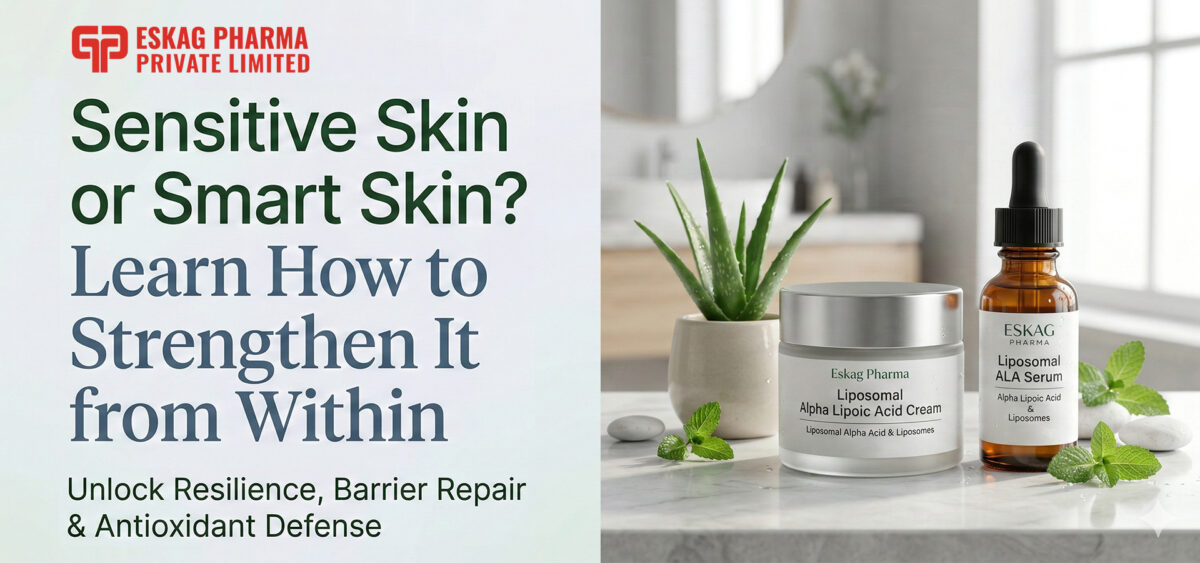
Sensitive Skin or Smart Skin? Learn How to Strengthen It from Within
Sensitive skin isn’t just a “skin type.” For many people, it’s a daily experience—tightness after cleansing, stinging when trying a new product, sudden redness during weather changes, or flare-ups that seem to appear out of nowhere. But here’s the empowering truth: sensitivity isn’t always permanent. In many cases, it’s a signal that your skin barrier is compromised—and that means it can be strengthened.
Think of your skin as a smart, living shield. When it’s strong, it knows how to keep moisture in, irritants out, and inflammation under control. When it’s weakened, even harmless triggers like cold wind, hard water, fragrance, or a new active can feel like an attack. That’s why choosing the right cream for sensitive skin isn’t just about comfort—it’s about restoring your skin’s natural intelligence.
In this blog, we’ll explore why skin becomes reactive, how barrier function is repaired, and why antioxidant protection is a non-negotiable for sensitive skin. We’ll also dive into the science and benefits of Liposomal Alpha Lipoic Acid Cream—a next-generation approach that supports skin tolerance, barrier recovery, and long-term resilience.
What Makes Skin Sensitive and Easily Irritated?
Skin sensitivity usually begins when your protective barrier (the outermost layer) is no longer able to do its job effectively. A strong barrier maintains hydration, supports a balanced microbiome, and filters out pollutants and allergens. A weak barrier becomes leaky, inflamed, and reactive.
When this happens, you may notice symptoms like burning, itching, redness, dryness, or bumps—often without a clear “allergy.” That’s why sensitive skin isn’t always about what you apply; it’s about what your skin can tolerate.
Common Causes of Skin Irritation and Redness
Several everyday factors can trigger irritation:
- Harsh cleansing (foaming surfactants, over-washing, hot water)
- Over-exfoliation (AHA/BHA peels, scrubs, frequent retinoid use)
- Fragrance and essential oils
- Alcohol-heavy formulations
- Climate stress (heat, cold, dry air, wind)
- Stress and hormonal shifts
- Pollution and UV exposure
When these triggers stack up, your skin struggles to recover. At that stage, people often reach for quick fixes like a cream for irritated skin—which can soothe temporarily but may not rebuild barrier strength if the formula isn’t designed for repair.
Environmental Stress and Weak Skin Barrier
Modern skin lives under constant pressure. Pollution particles, UV radiation, smoke, blue light exposure, and even indoor air conditioning all increase oxidative stress. Oxidative stress weakens lipids in the skin barrier and accelerates inflammation.
This is why sensitivity often feels worse in cities, during seasonal transitions, or after travel. Skin that once felt normal may suddenly become reactive, pushing you to search for a reliable skin cream for irritation that calms without causing more flare-ups.
How a Damaged Barrier Leads to Chronic Sensitivity
A damaged barrier creates a vicious cycle:
- Barrier weakens → moisture escapes
- Skin becomes dry and tight → micro-cracks form
- Irritants penetrate easily → redness and stinging increase
- Inflammation rises → healing slows
- Skin becomes “chronically sensitive”
If you only treat symptoms, the cycle continues. The goal is to shift from reactive skin to resilient skin—using products that support repair. A well-formulated cream for irritated skin can provide immediate relief, but long-term transformation comes when your routine is built around barrier repair and antioxidant defense.
Why Choosing the Right Cream for Sensitive Skin Matters
Not all moisturizers are created equal. Many provide temporary softness but do little to restore barrier integrity. For reactive skin, the right cream for sensitive skin should do three things:
- Calm inflammation
- Replace missing lipids and hydration
- Support barrier rebuilding over time
If your product only hydrates but doesn’t strengthen, your skin may feel better for a few hours—then relapse.
How a Cream for Sensitive Skin Supports Barrier Recovery
A truly effective cream for sensitive skin helps reinforce the barrier by supporting:
- Moisture retention (reducing trans epidermal water loss)
- Lipid balance (restoring protective fats)
- Reduced reactivity (lowering irritation signals)
Look for formulas built around gentle, skin-compatible ingredients, ideally without aggressive fragrance, harsh preservatives, or sensitizing actives. When used consistently, your cream for sensitive skin becomes part of a “training program” that teaches skin to tolerate daily stress again.
Difference Between Regular Moisturizer and Skin Barrier Repair Cream
A regular moisturizer may rely mainly on humectants and occlusives to soften skin. A Skin barrier repair cream is designed with a deeper goal: restoring barrier structure and function.
Key differences typically include:
- Barrier-supporting lipids (e.g., ceramide-like structures)
- Anti-inflammatory support
- Soothing agents chosen for tolerance
- Repair-focused formulation strategy, not just hydration
If your skin reacts easily, upgrading to a Skin barrier repair cream can change everything—especially when paired with antioxidant protection.
Benefits of Using an Antioxidant Cream for Face
Sensitive skin is often inflamed skin—and inflammation is strongly linked to oxidative stress. That’s why an Antioxidant cream for face is not just “anti-aging.” It’s a protective tool for tolerance.
An effective Antioxidant cream for face can help:
- Neutralize free radicals from UV and pollution
- Reduce inflammatory cascades
- Support faster recovery after exposure
- Strengthen long-term resilience
When your barrier is weak, oxidative triggers hit harder. Pairing your cream for sensitive skin with antioxidant defense helps prevent repeated flare-ups that keep your skin stuck in survival mode.
The Science Behind Liposomal Alpha Lipoic Acid Cream
Alpha Lipoic acid is a powerful antioxidant that has earned attention for its skin benefits—especially in stressed, reactive, or environmentally exposed skin. But like many actives, it must be delivered gently to be well tolerated.
That’s where Liposomal Alpha Lipoic Acid Cream stands out.
What Is Liposomal Alpha Lipoic Acid Cream?
Liposomal Alpha Lipoic Acid Cream is a formulation where alpha lipoic acid is encapsulated within liposomes—tiny lipid-based carriers that mimic skin’s natural structure. This delivery system helps transport the active more comfortably and evenly, improving tolerance.
For sensitive skin, delivery matters as much as the ingredient itself. Liposomal systems can reduce the chance of stinging or irritation that sometimes occurs with potent antioxidants.
Role of Alpha Lipoic Acid in Reducing Oxidative Stress
Alpha lipoic acid is known for broad antioxidant activity. In skincare, its value includes:
- Helping neutralize free radicals
- Supporting reduction of oxidative inflammation
- Improving the skin’s ability to handle environmental stress
- Encouraging a calmer overall skin state
This is why Liposomal Alpha Lipoic Acid Cream can be a smart choice for people whose sensitivity is linked to pollution, UV exposure, stress, and barrier impairment.
Why Liposomal Delivery Enhances Skin Tolerance
The liposomal approach offers multiple advantages:
- Gentler release of the active over time
- Improved compatibility with the skin barrier
- Reduced irritation potential in reactive skin
- Better stability compared to unprotected actives
When sensitivity is the challenge, the goal isn’t just “stronger ingredients.” It’s smarter delivery—and Liposomal Alpha Lipoic Acid Cream is built around that idea.
How Liposomal Alpha Lipoic Acid Cream Repairs the Skin Barrier
Barrier repair isn’t only about “moisturizing.” It’s about improving the skin’s ability to defend itself daily. A strong barrier reduces water loss, blocks irritants, and keeps inflammation from spiralling.
Strengthening the Skin’s Natural Defense System
When used consistently, Liposomal Alpha Lipoic Acid Cream can support a stronger defense environment by reducing oxidative burden. Less oxidative stress often means calmer skin—because free radicals are a major trigger for inflammatory signalling.
This matters for anyone who feels like their skin is always “on edge,” even with a gentle routine.
Supporting Deep Skin Barrier Repair Cream Functionality
Many people use a Skin barrier repair cream for rebuilding, and that’s the right instinct. What elevates the approach is adding antioxidant support that helps prevent ongoing barrier breakdown.
In that sense, Liposomal Alpha Lipoic Acid Cream can complement the functionality you expect from a Skin barrier repair cream—not by replacing the need for gentle barrier-friendly bases, but by strengthening the environment in which the barrier heals.
If you’re building a recovery routine, pairing barrier repair strategies with antioxidant defense can make results last longer.
Reducing Redness, Irritation, and Sensitivity
Redness and stinging are often signs of an overactive inflammatory response. The soothing benefit people want from a cream for irritated skin can be amplified when the formula also supports long-term resilience.
That’s why a product like Liposomal Alpha Lipoic Acid Cream can be a strategic choice: it supports calm today and tolerance tomorrow. For consumers searching for a dependable cream for irritated skin, the ideal outcome is fewer flare-ups over time—not just temporary relief.
Antioxidant Cream for Face – Why Sensitive Skin Needs It
Sensitive skin is more vulnerable to environmental triggers. When the barrier is compromised, the skin becomes less able to neutralize the oxidative stress caused by daily exposure.
That’s where an Antioxidant cream for face becomes essential—especially for people living in polluted environments or under intense UV conditions.
Fighting Free Radical Damage
Free radicals are unstable molecules generated by UV radiation, pollution, smoke, and stress. They can:
- Damage barrier lipids
- Increase inflammation
- Slow recovery
- Make skin feel hot, itchy, or tight
An Antioxidant cream for face helps neutralize those triggers before they ignite a full inflammatory response.
Preventing Environmental Stress-Triggered Sensitivity
Some sensitivity is “situational.” Your skin may be fine at home and reactive when traveling, in winter air, or after a day outdoors.
In these situations, an Antioxidant cream for face acts like a protective buffer, helping skin handle exposure without tipping into a flare-up cycle. This is especially important when paired with a reliable cream for sensitive skin that maintains hydration and barrier comfort.
Long-Term Benefits of Antioxidant Protection
The biggest win for sensitive skin is consistency: fewer unexpected reactions, less redness, and a stronger baseline.
Over time, antioxidant protection can support:
- Better barrier stability
- Improved recovery after stress
- Reduced visible irritation
- A smoother, calmer appearance
If you want “smart skin,” antioxidant support is part of the blueprint.
Cream for Irritated Skin Vs Barrier Repair Cream
People often ask: should I use a soothing cream or a barrier repair product? The truth is—both matter, but they serve different purposes.
Immediate Soothing Vs Long-Term Strengthening
A cream for irritated skin is often designed for immediate comfort—reducing redness, tightness, and discomfort quickly. It can be very helpful during flare-ups.
A Skin barrier repair cream, on the other hand, targets the foundation: it helps rebuild what’s missing so irritation happens less often.
If your skin feels reactive every week, you likely need both strategies—soothing support when needed and a routine anchored in barrier rebuilding.
Choosing the Right Skin Cream for Irritation
When selecting a skin cream for irritation, prioritize:
- Minimal fragrance or essential oils
- Gentle preservation systems
- Skin-friendly bases
- Proven soothing ingredients (without harsh actives)
Many people make the mistake of “chasing sensations”—using strong actives to fix redness fast. But irritated skin needs calming, not stimulation. A well-designed skin cream for irritation should feel comforting within minutes and leave skin less reactive over days.
When to Switch to Liposomal Alpha Lipoic Acid Cream
If your irritation is tied to environmental stress and recurring sensitivity, it may be time to upgrade from “basic soothing” to “soothing + strengthening.”
That’s where Liposomal Alpha Lipoic Acid Cream fits: it supports antioxidant defense while remaining focused on tolerance. For consumers who repeatedly buy a cream for irritated skin but still face flare-ups, this can be a more strategic long-term choice.
How to Use Liposomal Alpha Lipoic Acid Cream Effectively
Even the best formulation needs the right routine to deliver results. Sensitive skin responds best to consistency, simplicity, and gentle layering.
Daily Skincare Routine for Sensitive Skin
A beginner-friendly routine might look like this:
- Gentle cleanser (no harsh foaming, no strong fragrance)
- Apply Liposomal Alpha Lipoic Acid Cream on slightly damp skin
- Use sunscreen in the daytime
- At night, repeat cleanser + cream
If you’re using a separate cream for sensitive skin in your routine, apply the antioxidant formula first (if it’s lighter), then seal with your cream for sensitive skin to lock in comfort.
Combining with Gentle Cleansers and Serums
Sensitive skin can still benefit from serums, but only if they are:
- Low irritation potential
- Simple and fragrance-free
- Focused on hydration (not aggressive exfoliation)
If you choose to layer, keep it minimal. Too many steps increase the chance of reaction. Many users do best when their core routine is built around one hero cream for sensitive skin plus sun protection.
Tips to Avoid Over-Exfoliation and Barrier Damage
If you want your skin to become stronger, avoid common pitfalls:
- Don’t exfoliate daily
- Avoid multiple active-heavy serums at once
- Don’t “scrub away” flakes—treat dryness as barrier damage
- Introduce new products one at a time
- Patch test on sensitive areas
Remember: a barrier-first approach makes your skin more tolerant over time, so you can eventually do more without reacting.
Manufacturing Excellence Behind Liposomal Alpha Lipoic Acid Cream
Performance in sensitive-skin products depends heavily on formulation precision and manufacturing quality. With advanced systems like liposomes, the manufacturing process becomes even more important.
Advanced Liposomal Formulation Technology
Liposomal systems require:
- Controlled particle size distribution
- Stable encapsulation
- Compatibility between active, lipids, and base cream
- Uniform dispersion for consistent dosing
When done right, Liposomal Alpha Lipoic Acid Cream becomes a high-value product category—combining sophisticated delivery with consumer-friendly tolerance.
Stability, Safety & Quality Control Standards
Sensitive-skin products demand higher quality expectations because the target user has low tolerance for inconsistency. Manufacturing excellence typically focuses on:
- Stability testing under multiple conditions
- Microbial safety and preservative efficacy
- Batch-to-batch consistency
- Packaging compatibility to prevent degradation
For brands, this matters because consumer trust is fragile in the sensitive-skin segment. One bad experience can lose a customer permanently.
Regulatory Compliance for Sensitive Skin Products
Sensitive-skin positioning often requires careful compliance, including:
- Label accuracy for claims
- Ingredient documentation
- Safety assessment and quality records
- Standards aligned with target market regulations
For liposomal antioxidant products, compliance also includes ensuring the delivery system is stable, safe, and manufactured under consistent controls.
Why Choose Eskag Pharma as Your Manufacturing Partner?
If you’re developing products in the sensitive-skin category, you’re competing in a market where performance and trust define success. Consumers want formulas that work gently, consistently, and reliably. That requires the right manufacturing partner—especially for advanced delivery systems.
Alpha Lipoic Acid Cream Manufacturer Expertise
Brands looking for an experienced Alpha lipoic acid cream manufacturer typically prioritize formulation know-how, stability capability, and the ability to scale without compromising quality. An established Alpha lipoic acid cream manufacturer understands how to keep potent antioxidants effective while minimizing irritation risk—particularly important for sensitive skin positioning.
With specialized formulation development and controlled manufacturing practices, an Alpha lipoic acid cream manufacturer can help brands create products that stand out in performance and consumer experience.
Barrier Repair Cream Contract Manufacturer Solutions
As demand rises for barrier-focused skincare, partnering with a reliable Barrier repair cream contract manufacturer becomes a competitive advantage. A capable Barrier repair cream contract manufacturer can support:
- Custom formulation aligned with brand goals
- Stability and compatibility testing
- Scalable production planning
- Quality systems suited for sensitive-skin requirements
Choosing the right Barrier repair cream contract manufacturer is especially important when your product line includes advanced systems like liposomes or antioxidant complexes.
Scalable Third-Party Manufacturing for Skincare Brands
For growing skincare brands, scalability can’t come at the expense of consistency. Whether you’re launching a hero cream for sensitive skin or expanding into a portfolio that includes Skin barrier repair cream and antioxidant-focused products, third-party manufacturing should support:
- Flexible batch sizes (pilot to commercial)
- Repeatable quality standards
- Documentation and compliance readiness
- Long-term collaboration for line extensions
A strong partner helps you move from idea to shelf with fewer delays, fewer reformulations, and better market confidence.
Conclusion
Sensitive skin isn’t “weak skin”—it’s skin that’s asking for support. When the barrier is disrupted, everyday triggers like weather, pollution, and harsh actives penetrate faster, causing recurring redness and discomfort. The real solution is to rebuild from the inside out: protect the barrier, reduce oxidative stress, and choose formulas designed for high tolerance. A well-made cream for sensitive skin should do more than moisturize—it should reinforce resilience. That’s where Liposomal Alpha Lipoic Acid Cream stands apart, combining advanced delivery with antioxidant defense to help skin calm down, recover faster, and become less reactive over time.
-
 📅 March 4, 2026
Sensitive skin isn’t just a “skin type.” For... -
 📅 February 28, 2026
There’s a certain kind of glow that looks amazin... -
 📅 February 26, 2026
Rough, tight, and uneven skin often signals disrup... -
 📅 February 18, 2026
Many night routines promise repair, yet morning sk... -
 📅 February 11, 2026
You may notice fine lines or a dry feel, and that ... -
 📅 January 30, 2026
City life pushes your skin through pollution, stre... -
 📅 January 30, 2026
Your skin can feel tight and tired even after care... -
 📅 January 28, 2026
Consumers reject serums that oxidise or cause any ... -
 📅 January 22, 2026
If you’ve ever stood in front of a skincare shel... -
 📅 January 20, 2026
Iron deficiency anaemia remains a common clinical ...
The best cream for sensitive skin is one that calms irritation while rebuilding the protective barrier. Look for fragrance-free, non-stinging formulas with barrier-supportive lipids and soothing agents, and avoid harsh actives if you’re flaring. Ideally, choose a product that also defends against environmental stress. If sensitivity is frequent, pairing daily hydration with a targeted barrier-support approach helps skin become more resilient and less reactive over time.
Alpha lipoic acid supports skin by helping reduce oxidative stress, a key driver of redness and reactivity. In Liposomal Alpha Lipoic Acid Cream, the active is carried in lipid-based liposomes that improve skin compatibility and gentler delivery. This can enhance tolerance for sensitive users while supporting a calmer skin environment. Over time, consistent use may help reduce the frequency of irritation triggers and support stronger, smarter-looking skin.
Yes. A well-formulated Skin barrier repair cream can reduce irritation by strengthening the outer barrier that locks in moisture and keeps irritants out. When the barrier is compromised, skin becomes dry, tight, and easily inflamed. Barrier repair formulas help restore comfort and reduce stinging by supporting lipid balance and hydration. For best results, use it consistently, minimize exfoliation, and pair it with a gentle cleanser and daily sunscreen.
Often yes—if it’s formulated for tolerance. An Antioxidant cream for face can be beneficial for sensitive skin because it helps defend against pollution and UV-triggered oxidative stress that worsens redness. Choose fragrance-free, non-irritating bases and avoid overly strong or acidic antioxidant blends during flare-ups. Patch test first and introduce slowly. Liposomal delivery systems can further improve comfort by releasing actives more gently and evenly.
Skin barrier repair timelines vary, but many people notice reduced tightness and stinging within 1–2 weeks with consistent gentle care. More complete barrier strengthening often takes 4–8 weeks, depending on how damaged the barrier is and what’s causing stress (over-exfoliation, weather, actives). Using a Skin barrier repair cream, simplifying your routine, avoiding hot water and harsh cleansers, and wearing sunscreen daily can speed visible recovery.
Many users can use alpha lipoic acid cream daily, especially when it’s designed for sensitive skin and delivered gently, like Liposomal Alpha Lipoic Acid Cream. Start with once daily (preferably at night), then increase as tolerated. If you experience stinging, reduce frequency and focus on barrier support first. Always apply on clean, dry skin and follow with a cream for sensitive skin if extra comfort is needed.
Sudden sensitivity is often caused by barrier disruption. Common triggers include over-exfoliation, introducing multiple actives at once (retinoids, acids), harsh cleansers, weather changes, stress, illness, or increased UV/pollution exposure. Even new laundry detergents, masks, or hard water can contribute. When sensitivity appears, pause strong actives and switch to a gentle cleanser plus a cream for sensitive skin to rebuild comfort and tolerance.
It can be. Liposomal creams use lipid-based carriers that can improve compatibility with a compromised barrier. For irritated, reactive skin, liposomal delivery may help reduce the “hit” of potent actives by releasing them more gradually and evenly. That’s why Liposomal Alpha Lipoic Acid Cream may be a good option when you need antioxidant support without extra irritation. Still, formula quality matters—choose fragrance-free, sensitive-skin tested products.
Signs of a damaged barrier include tightness, dryness that won’t improve, stinging when applying products, sudden redness, flaking, increased sensitivity to weather, and breakouts that feel inflamed. Your skin may look dull, feel rough, or burn after cleansing. If multiple products suddenly “sting,” it’s often a barrier issue, not allergy. Simplify your routine and use a Skin barrier repair cream consistently until comfort returns.
Yes—Eskag Pharma provides third-party manufacturing support for advanced skincare formulations, including options like Liposomal Alpha Lipoic Acid Cream, depending on your product requirements and specifications. As an experienced Alpha lipoic acid cream manufacturer, Eskag can support formulation development, quality control, stability considerations, and scalable production. If you’re seeking a reliable Barrier repair cream contract manufacturer partner, Eskag can help brands create sensitive-skin products designed for safety, consistency, and performance