
Why Anti-Aging Cream & Serum – When Is the Best Time to Start Using It?
If you’ve ever stood in front of a skincare shelf wondering whether anti-aging is “for later,” you’re not alone. The truth is: anti-aging is not a single moment or a single product—it’s a strategy. Some steps prevent early damage, while others correct changes that have already appeared. Therefore, the “best time” depends on your age, lifestyle, sun exposure, and skin type.
What makes the conversation more interesting today is delivery technology. A Liposomal anti aging cream and a Liposomal anti aging serum are designed to support better ingredient performance by helping actives reach where they matter, with improved comfort and consistency. Moreover, when used thoughtfully across your 20s, 30s, and 40s, they can become part of a simple routine that evolves with your skin rather than overwhelming it.
Below is a clear, age-wise guide on when to start, what to use, how to choose, and how brands can build high-performance products through advanced manufacturing.
Understanding Anti-Aging Skin Care and How Skin Aging Begins
What Causes Skin Aging and Why Anti-Aging Skin Care Matters
Skin aging is influenced by two major forces:
- Intrinsic aging (natural aging): gradual reduction in collagen, elastin, skin lipids, hydration capacity, and cell turnover.
- Extrinsic aging (environment + lifestyle): UV exposure, pollution, smoking, stress, poor sleep, and diet.
UV exposure is often the biggest accelerant, because it triggers oxidative stress and collagen breakdown. Thus, anti aging skin care is not only about looking younger—it’s about keeping the skin barrier stronger, calmer, and more resilient over time.
Early Signs of Aging and the Need for Anti-Aging Products
Early aging doesn’t always look like deep wrinkles. It can start as:
- dullness and uneven tone
- dehydration lines (especially around eyes and mouth)
- texture changes and larger-looking pores
- slower “glow” and less bounce
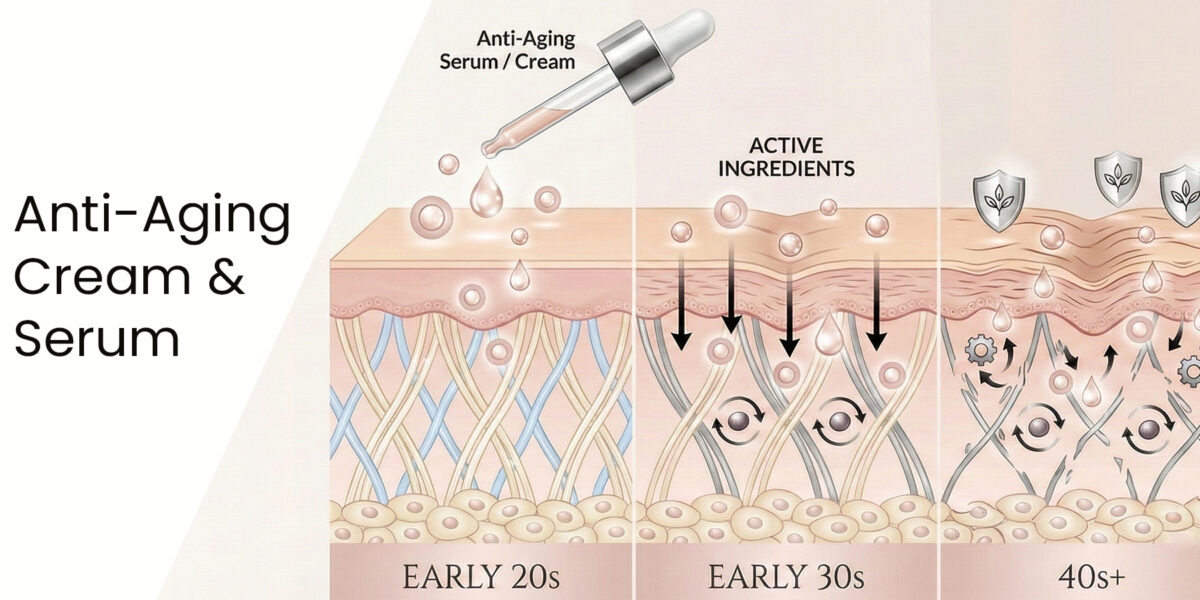
These are the points where anti aging products can make the greatest difference. Prevention is usually easier than correction; therefore, your 20s and early 30s can be a powerful window to build habits that protect collagen and support barrier health.
Role of Anti-Aging Ingredients in Prevention vs Correction
Different anti aging ingredients play different roles:
- Prevention-focused: antioxidants, barrier lipids (ceramides), hydrators (hyaluronic acid), gentle peptides.
- Correction-focused: retinoids, stronger peptides, exfoliating acids, pigment modulators.
The smartest approach blends both. For example, a Liposomal anti aging serum can carry antioxidants and renewal actives with better consistency, while a Liposomal anti aging cream can support barrier repair and hydration—two pillars that make “anti-aging” look natural rather than forced.
What Makes Liposomal Anti-Aging Cream & Liposomal Anti-Aging Serum Different?
How Liposomal Technology Enhances Anti-Aging Ingredient Delivery
Liposomal technology uses tiny lipid-based vesicles that can help protect delicate actives and improve how they interact with the skin. In practical terms, that may mean:
- improved stability of sensitive actives
- smoother feel on application
- more even distribution of actives
- better comfort for long-term use
Therefore, choosing a Liposomal anti aging cream or Liposomal anti aging serum can be especially helpful when your formula includes high-value, performance-driven ingredients.
Benefits of Liposomal Anti-Aging Cream for Long-Lasting Hydration
A well-designed Liposomal anti aging cream is not just “thick moisturizer.” It is typically built to:
- reduce water loss (TEWL)
- reinforce barrier lipids
- support plumpness and softness
- improve comfort when using stronger actives
Hydration is an anti-aging strategy because dehydrated skin makes lines look sharper. Moreover, when hydration is long-lasting, makeup sits better, irritation reduces, and texture looks smoother—without needing aggressive steps every day.
Why Liposomal Anti-Aging Serum Works Deeper Than Regular Serums
A serum is usually designed for active delivery—lightweight, concentrated, and fast-absorbing. A Liposomal anti aging serum can be formulated to enhance sensory elegance while still delivering performance actives consistently. Thus, it becomes easier to maintain a routine, which is the real secret: skincare works best when it’s used regularly, not occasionally.
Key Anti-Aging Ingredients That Actually Work for Youthful Skin
Retinol Anti-Aging Serum and Its Role in Skin Renewal
Retinol remains one of the most studied ingredients for visible aging because it supports:
- improved cell turnover
- collagen support over time
- smoother texture and refined appearance
A retinol anti aging serum is typically introduced carefully—starting low and slow. Moreover, pairing retinol with barrier-support steps reduces dryness and flaking, which helps you stay consistent.
Antioxidants, Peptides, and Hydration Actives Explained
Let’s simplify what “works”:
- Antioxidants (Vitamin C, E, ferulic, etc.): defend against oxidative stress and dullness.
- Peptides: signal support for firmness and elasticity.
- Humectants (hyaluronic acid, glycerin): bind water for plump, hydrated skin.
- Ceramides and fatty acids: repair barrier and reduce sensitivity.
In a modern routine, many of these can be layered comfortably using a Liposomal anti aging serum followed by a Liposomal anti aging cream—therefore addressing both performance and comfort.
How to Choose Anti-Aging Ingredients by Age and Skin Type
A quick guide:
- Oily/combination: lightweight antioxidant serums + gel-cream textures.
- Dry/sensitive: barrier lipids + gentle peptides + strong hydration support.
- Pigmentation-prone: antioxidants + sunscreen discipline + targeted brighteners.
- Acne-prone adults: gentle retinoids + non-comedogenic hydration.
Thus, the best routine is not “more products,” but the right balance of anti aging ingredients plus consistent sun protection.
Anti-Aging Cream & Serum for 20s – Is It Too Early to Start?
Anti-Aging Cream for 20s: Preventing Early Skin Aging
Your 20s are usually about prevention. You may not need intense correction, but you do need stability: hydration, barrier support, and protection from UV and pollution. An anti aging cream for 20s should feel comfortable and support the barrier rather than feel heavy.
At this stage, a Liposomal anti aging cream can be ideal if you want lasting hydration without layering too many steps. Moreover, early consistency makes later routines simpler.
Anti-Aging Serum for 20s with Antioxidant Protection
A daily antioxidant serum can help defend against early oxidative stress that shows up as dullness or uneven tone. Therefore, an anti aging serum for 20s often focuses on antioxidants, gentle peptides, and hydration boosters rather than strong retinoids.
Why Liposomal Anti-Aging Serum Is Ideal in Your 20s
A Liposomal anti aging serum in your 20s can be a “quiet investment” in long-term skin quality. It supports consistent delivery of preventive actives while keeping the routine minimal. Pair it with sunscreen and a simple moisturizer, and you’ve covered most of what matters.
Anti-Aging Cream & Serum for 30s – The Right Time to Start Actively
Anti-Aging Cream for 30s to Reduce Fine Lines
In your 30s, collagen decline becomes more noticeable, and lifestyle stress often increases. You may see fine lines, slower recovery, and a less even tone. Therefore, an anti aging cream for 30s can be a key daily step—especially one that supports barrier lipids and hydration.
A Liposomal anti aging cream fits well here because it helps you maintain comfort while you begin incorporating stronger actives, including retinoids.
Anti-Aging Serum for 30s with Retinol for Collagen Support
This is often the decade where retinol starts to make sense—carefully. An anti aging serum for 30s may include retinol or retinoid alternatives, plus soothing hydration to reduce irritation risk. Many people choose a retinol anti aging serum 2–3 nights a week initially, then adjust based on tolerance.
Liposomal Anti-Aging Cream for Dry Skin in Your 30s
If dryness or tightness appears (especially with active use), a Liposomal anti aging cream for dry skin becomes more than comfort—it becomes a compliance tool. When your skin feels calm, you stick to your routine. Thus, pairing a Liposomal anti aging serum with a barrier-support cream is often the most sustainable method for visible results.
Anti-Aging Cream & Serum for 40s – Repair, Firming & Rejuvenation
Anti-Aging Cream for 40s to Restore Firmness and Elasticity
In your 40s, you may notice deeper lines, more dryness, and changes in firmness. Therefore, an anti aging cream for 40s should prioritize barrier repair, elasticity support, and rich hydration.
A daily Liposomal anti aging cream can support comfort and help reduce the appearance of creasing from dryness—while also preparing skin to tolerate performance serums.
Anti-Aging Serum for 40s to Target Wrinkles and Pigmentation
This decade is often where targeted correction becomes more valuable. An anti aging serum for 40s may include a retinoid system, peptides, antioxidants, and pigment support. If you’re using a retinol anti aging serum, you’ll likely benefit from a stronger hydration partner to keep the routine stable.
Using Liposomal Anti-Aging Cream & Serum Together for Best Results
For many, the best structure is:
- Liposomal anti aging serum (active delivery)
- Liposomal anti aging cream (seal + barrier support)
Used consistently, this pairing supports both correction and recovery. Moreover, when your skin barrier is strong, nearly every active performs better and irritates less.
Anti-Aging Cream vs Anti-Aging Serum – Which One Do You Really Need?
Difference Between Anti-Aging Cream and Anti-Aging Serum
- Serum: concentrated actives, lighter texture, targeted performance.
- Cream: hydration, barrier support, comfort, and long-wear moisturization.
Therefore, serums “do,” creams “support.” Yet the best anti-aging outcomes usually come from using both strategically.
How Women Can Choose the Right Anti-Aging Cream and Serum
Many routines are built around anti aging cream for women needs—because hormonal shifts, lifestyle changes, and barrier sensitivity can vary across decades. The best approach:
- If you’re oily: choose a lightweight serum + gel-cream.
- If you’re dry: choose a richer cream + barrier-focused serum.
- If you’re sensitive: choose fewer actives, more consistency.
A Liposomal anti aging serum can be a smart option when you want performance without an overly harsh feel, and a Liposomal anti aging cream helps maintain comfort and hydration.
Layering Cream and Serum in Anti-Aging Skin Care Routine h3
A simple order:
- Cleanser
- Serum (like Liposomal anti aging serum)
- Cream (like Liposomal anti aging cream)
- Sunscreen (AM)
At night, swap sunscreen for your renewal actives if you use them. Moreover, keep routines stable for at least 8–12 weeks before judging results—because collagen support takes time.
The Most Important Anti-Aging Step at Any Age
Daily Sunscreen as the Foundation of Anti-Aging Skin Care
If you do only one thing, do sunscreen. It is the single most powerful anti-aging habit because it prevents ongoing collagen damage and uneven pigmentation. Therefore, even the best anti aging products struggle to show results if UV exposure is not controlled.
Why UV Damage Is the Biggest Cause of Visible Skin Aging
UV rays trigger oxidative stress, collagen breakdown, and pigment irregularities. This is why two people of the same age can look very different depending on sun habits. Thus, sunscreen is not optional—it is the foundation of anti aging skin care, regardless of whether you start in your 20s, 30s, or 40s.
Third-Party Manufacturing of Anti-Aging Creams & Serums
If you’re a brand owner, formulation and manufacturing choices decide whether your claims become reality. The market is crowded with anti aging products, so performance, stability, and texture matter as much as the label story.
Third-Party Manufacturing of Anti-Aging Creams: What Brands Should Check
In Third-party manufacturing of anti-aging creams, brands should evaluate:
- ingredient sourcing and documentation
- batch-to-batch consistency
- microbiological safety and preservative strategy
- stability testing (heat, freeze-thaw, long-term)
- packaging compatibility
Moreover, high-performance creams must remain stable, elegant, and consistent—not just on day one, but throughout shelf life.
Third-Party Manufacturing of Anti-Aging Skincare: Quality & Stability
In Third-party manufacturing of anti-aging skincare, stability is especially critical when using sensitive actives (retinoids, antioxidants, peptides). Therefore, you need:
- process controls (mixing, emulsification, temperature handling)
- validated cleaning and hygiene systems
- robust QC checkpoints
- documentation that supports product quality
A reliable partner ensures your Liposomal anti aging cream and Liposomal anti aging serum maintain integrity from pilot to scale-up.
Choosing an Anti-Aging Cream Manufacturer for Skincare Brands
When choosing an Anti-aging cream manufacturer for skincare brands, look for:
- expertise in advanced delivery systems (like liposomes)
- R&D support for texture, fragrance, and sensorial tuning
- ability to customize for different markets and compliance needs
- clear MOQs, timelines, and packaging support
- strong QA/QC and traceability
Thus, the right manufacturer is not only a vendor—they become your product-performance backbone.
Why Choose Eskag Pharma as Your Anti-Aging Manufacturing Partner?
Expertise in Liposomal Anti-Aging Cream & Serum Formulations
Eskag Pharma brings formulation-focused manufacturing capabilities designed to support modern skincare performance. If you are building a Liposomal anti aging cream or a Liposomal anti aging serum, expertise in process control, stability planning, and ingredient handling becomes essential. Moreover, liposomal systems require disciplined manufacturing conditions to protect sensitive actives and maintain consistency.
End-to-End Manufacturing Support for Skincare Brands
A true manufacturing partner supports you from concept to commercialization:
- formula development and refinement
- pilot batches and scale-up planning
- stability strategy and packaging alignment
- documentation support and batch records
- consistent quality delivery across multiple batches
This matters because brands don’t just sell products—they sell trust. Therefore, reliable manufacturing is the base of long-term brand growth.
Quality-Driven Third-Party Manufacturing for Anti-Aging Skincare
If you’re exploring Third-party manufacturing of anti-aging creams or Third-party manufacturing of anti-aging skincare, quality systems are not a “bonus”—they are the difference between repeat customers and refunds. Eskag Pharma’s quality-driven approach supports consistent product feel, stable actives, and scalable execution. In addition, if your goal is to launch differentiated anti aging products with advanced delivery, Eskag Pharma can help you build products that stand out in performance and consumer experience.
A Practical “Best Time to Start” Summary (So You Can Decide Today)
20s: Start prevention. Use antioxidants, hydration, and sunscreen. Choose an anti aging cream for 20s and anti aging serum for 20s that are gentle, consistent, and barrier-friendly. A Liposomal anti aging serum is ideal for daily preventive actives.
30s: Start active support. Add retinol carefully and upgrade hydration. Choose an anti aging cream for 30s and anti aging serum for 30s, and consider a retinol anti aging serum with a barrier-support routine. If dryness appears, Liposomal anti aging cream for dry skin helps maintain comfort.
40s: Focus on repair + firmness. Prioritize deeper hydration, peptides, antioxidants, and renewal. Choose an anti aging cream for 40s and anti aging serum for 40s that support texture, pigmentation, and elasticity.
And at every age: sunscreen remains the non-negotiable foundation of anti aging skin care.
Conclusion
The best time to start anti-aging is not when wrinkles are “bad enough.” It’s when you want your future skin to look calm, even, and resilient. Therefore, start with a routine you can follow: a high-performance Liposomal anti aging serum, a supportive Liposomal anti aging cream, and daily sunscreen. Moreover, if you are a brand looking to enter or scale in this space, choosing the right Anti-aging cream manufacturer for skincare brands—with proven capability in Third-party manufacturing of anti-aging creams and Third-party manufacturing of anti-aging skincare—can turn your product idea into a truly competitive, repeat-purchase formula.
-
 📅 June 30, 2026
Key Takeaways The Bioavailability Challenge: Stand... -
 📅 June 29, 2026
Over the past decade, dermatological science has u... -
 📅 June 27, 2026
The global nutraceutical industry faces a critical... -
 📅 June 27, 2026
Iron deficiency anaemia remains the most prevalent... -
 📅 June 26, 2026
Uneven skin tone, persistent redness, and acne tha... -
 📅 June 26, 2026
If you struggle to switch off after a long day, yo... -
 📅 June 26, 2026
India’s sleep aid market is on course to rea... -
 📅 June 26, 2026
Key Takeaways The First-Pass Barrier: Traditional ... -
 📅 June 24, 2026
Sleep disruption is not simply a lifestyle inconve... -
 📅 June 18, 2026
The sleep supplement industry is undergoing a fund...
Most people can start in their mid-20s with gentle prevention, and become more active in their 30s when fine lines and uneven tone begin to show. If you notice dullness, dehydration lines, or slower “bounce,” that’s a good time to begin. Start simple: a Liposomal anti aging serum for antioxidants and hydration, plus a Liposomal anti aging cream for barrier support. Add stronger actives gradually as needed.
It’s not “necessary” in a heavy way, but smart prevention in your 20s helps a lot. Your goal is protection, hydration, and barrier strength—not aggressive correction. Choose anti aging skin care with antioxidant protection, lightweight hydration, and daily sunscreen. An anti aging serum for 20s can help with early dullness and pollution stress, while an anti aging cream for 20s supports moisture and comfort. Keep it minimal and consistent.
Neither is universally “better”—they do different jobs. An anti-aging serum is usually lighter and more concentrated, designed to deliver anti aging ingredients like antioxidants, peptides, or retinol. An anti-aging cream focuses on hydration, barrier repair, and comfort, helping reduce dryness-related lines. For many people, the best results come from layering: Liposomal anti aging serum first, then Liposomal anti aging cream. Choose based on your skin type and goals.
They can be, especially when formulas use sensitive or high-value actives. Liposomal systems help protect certain ingredients and support more even delivery on the skin, which may improve comfort and consistency. A Liposomal anti aging serum can feel lighter while still being performance-focused, and a Liposomal anti aging cream can support long-lasting hydration and barrier strength. Effectiveness still depends on the ingredient choice, concentration, and using it regularly—plus sunscreen.
Look for a mix of proven anti aging ingredients: retinol (or gentle retinoids) for renewal, antioxidants like vitamin C for brightness and defense, peptides for firmness support, and hydrators like hyaluronic acid and glycerin for plumpness. Ceramides and barrier lipids help reduce irritation and dryness. If you’re new, start with antioxidants + hydration first. Then add a retinol anti aging serum slowly in your 30s or later.
They can help prevent or delay visible wrinkles, but they won’t stop natural aging entirely. The biggest “wrinkle prevention” step is daily sunscreen because UV damage breaks collagen faster than almost anything else. Anti aging products work best when used consistently—think months, not days. Hydration and barrier care reduce fine lines caused by dryness, while ingredients like retinol, peptides, and antioxidants support smoother texture over time. Prevention is real, but consistency matters most.
Yes, if you start carefully. Beginners should choose a low strength retinol anti aging serum and use it 2–3 nights a week at first. Apply on dry skin, follow with moisturizer, and increase frequency only if your skin stays comfortable. Mild dryness or flaking can happen early; that’s normal. Avoid mixing retinol with strong exfoliating acids on the same night. Always use sunscreen in the daytime, because retinol can increase sun sensitivity.
Yes—dry skin often benefits the most. A Liposomal anti aging cream for dry skin can support long-lasting hydration and strengthen the barrier, which reduces tightness and the appearance of dehydration lines. Dry skin also tends to react more to actives like retinol, so pairing a Liposomal anti aging serum with a nourishing liposomal cream helps improve comfort and consistency. Look for formulas that include ceramides, humectants, and soothing agents alongside performance ingredients.
Some changes—like better hydration, softness, and glow—can appear within 2–4 weeks. However, real anti-aging improvements (fine lines, firmness, texture, pigmentation) usually take 8–12 weeks or longer, because collagen support is slow. Consistency is the key: use your anti aging serum and anti aging cream regularly, wear sunscreen daily, and avoid switching products too quickly. Track progress with photos once every 2–3 weeks in similar lighting.
Yes. Eskag Pharma supports Third-party manufacturing of anti-aging creams and serums, including advanced formats such as Liposomal anti aging cream and Liposomal anti aging serum. For brands, Third-party manufacturing of anti-aging skincare should include strong quality systems, stability testing, and consistent production controls—especially when working with sensitive actives. If you’re looking for an Anti-aging cream manufacturer for skincare brands, Eskag Pharma can help with formulation development, scale-up, and end-to-end manufacturing support.