
Emerging Market Opportunities for Advanced Iron Injectable Products
Iron deficiency anaemia remains a common clinical challenge across hospitals, dialysis centres, and speciality care settings worldwide. Intravenous iron therapy has become essential where oral supplementation shows limited absorption, poor tolerance, or delayed response.
This blog reviews clinical use, formulation science, and manufacturing considerations, with a specific focus on Ferric Derisomaltose injection for anaemia for B2B pharmaceutical stakeholders.
Key Takeaways:
- Advanced iron injectables support rapid iron correction with fewer infusions and a predictable haemoglobin response.
- Ferric derisomaltose offers clinical and operational value for hospitals, dialysis centres, and speciality care settings.
- GMP-certified third-party manufacturing enables scalable, compliant, and cost-controlled global supply for IV iron portfolios.
Rising Global Burden of Anaemia and Iron Deficiency
Anaemia and iron deficiency affect billions globally, which drives sustained demand for effective diagnosis, prevention, and treatment strategies.
Increasing Prevalence of Anaemia Worldwide
Anaemia affects billions of people around the world and remains a significant health concern in many countries. Nearly one in four people globally live with anaemia, reflecting a prevalence near 24.3% across all ages 1.
Women of reproductive age, young children and pregnant women suffer a high share of the total burden in many regions. For example, around 30% of women aged 15–49 are anaemic, and children under five show higher prevalence rates.
Role of Iron Deficiency in Chronic Diseases
Iron deficiency sits at the heart of the global anaemia problem, often driving low haemoglobin levels and tissue oxygen shortfall. Research shows that iron shortage contributes to reduced organ performance in chronic conditions such as heart failure, chronic kidney disease and cancer.
For many clinicians, treatments such as Ferric Derisomaltose injection for anaemia have become a key option where standard care does not restore iron reserves quickly. Such approaches can support better clinical outcomes in selected patients with chronic inflammation.
Growing Demand for Effective Iron Injectables
The demand for intravenous iron has risen as providers seek reliable ways to correct iron shortage without delay. Older iron supplements often fall short of efficacy or cause tolerability issues for many patients.
In clinical settings, higher doses delivered in a single session reduce the need for frequent hospital visits, creating a preference for advanced injectable forms. Ferric Derisomaltose injection for anaemia meets this requirement by enabling higher doses in fewer sessions.
Evolution of Iron Injectable Therapies
The evolution of iron injectable therapies reflects clinical demand for safer, high-dose options such as Ferric Derisomaltose injection for anaemia.
From Conventional Iron Injections to Advanced Formulations
Early iron injections allowed for the treatment of iron deficiency when oral therapy failed. These products used smaller iron complexes that required repeated low-dose administration.
Over time, research highlighted the need for formulations that allow stable iron delivery with fewer infusions. The need supported the development path that later enabled products such as Ferric Derisomaltose injection for anaemia.
Limitations of Older Injectable Iron Products
Older injectable iron products showed limits related to dosing volume and infusion frequency. Many formulations required multiple hospital visits to reach target iron levels. Some products also showed a higher risk of infusion reactions due to less stable carbohydrate complexes. These limits created challenges for both patient compliance and healthcare resource planning.
Shift Toward Safer and High-Dose Iron Injectables
Clinical evidence supported a move toward iron injectables, which allow higher single-dose administration. Newer complexes exhibit improved stability, supporting controlled iron release after infusion.
This shift reduces visit frequency and supports faster iron repletion in hospital and dialysis settings. Such progress explains the growing clinical and commercial interest in Ferric Derisomaltose injection for anaemia for modern treatment protocols.
What Is Ferric Derisomaltose Injection for Anaemia?
Ferric derisomaltose injection for anaemia is an intravenous therapy that restores iron stores when oral treatment proves ineffective or unsuitable.
Overview of Ferric Derisomaltose Injection
Ferric derisomaltose injection is an iron replacement medicine used to treat anaemia. It is appropriate for patients when oral iron therapy is ineffective. The product treats iron-deficiency anaemia in adults, including those with non-dialysis CKD, under direct clinician supervision.
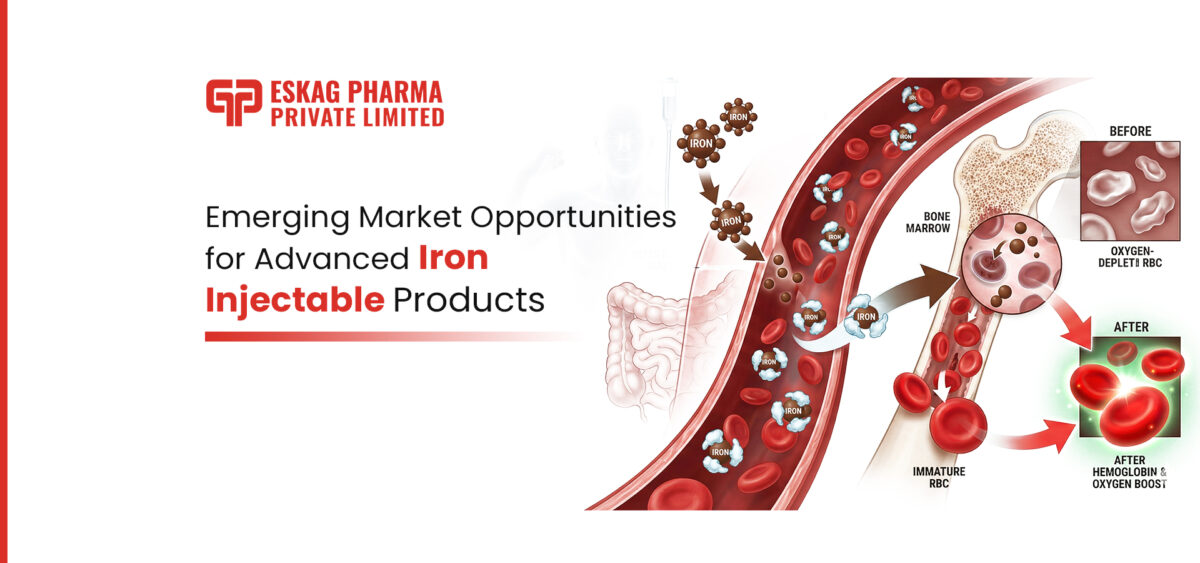
Ferric Derisomaltose injection for anaemia helps restore iron stores and supports normal red blood cell production by delivering iron directly into the bloodstream.
Transition from Iron Isomaltoside to Ferric Derisomaltose
Ferric Derisomaltose has officially replaced Iron Isomaltoside as the International Non-proprietary Name (INN) to strictly comply with WHO nomenclature standards and ensure global uniformity.
This update aligns the product’s identity with its precise chemical structure while ensuring that the underlying formulation, manufacturing process, and clinical profile remain completely unchanged.
- WHO INN Standardisation: The World Health Organisation selected Ferric Derisomaltose as the designated global generic name to eliminate confusion between similar IV iron complexes and establish a single standard for procurement.
- Precise Chemical Descriptor: The new name provides a scientifically accurate description, where “Ferric” denotes iron in the +3 oxidation state and “Derisomaltose” identifies the specific polyglucose isomaltoside carbohydrate ligand.
- Correction of Legacy Terminology: The previous name, “Iron Isomaltoside 1000,” primarily referred to the carbohydrate chain length, whereas the new name correctly identifies the final compound structure.
- Global Regulatory Harmonisation: Major regulatory authorities, including the EMA and MHRA, have adopted this nomenclature to streamline export registrations and maintain consistency across FDA-equivalent markets.
- Operational and Clinical Continuity: For pharmaceutical partners and healthcare providers, this transition is purely administrative; the product’s safety, efficacy, and dosage protocols remain identical to the original formulation.
Mechanism of Action and Pharmacological Advantages
Ferric derisomaltose works by releasing iron into the bloodstream to meet the body’s iron requirements.
- It supplies a stable iron complex that releases iron for uptake by developing red blood cells.
- This formulation supports faster iron repletion than oral iron, especially in moderate to severe deficiency.
- It reduces the need for frequent doses by allowing a larger iron load per infusion.
- It supports clinical care where iron injectables must meet high-dose requirements with predictable delivery.
How Ferric Derisomaltose Differs from Other Iron Injectables
Ferric derisomaltose offers distinct benefits compared with other intravenous options.
- It allows higher dose delivery in fewer sessions compared with smaller iron sucrose doses.
- This product shows a lower incidence of hypophosphatemia than some alternatives in clinical research.
- Iron injection use in CKD often favours products that support safe, controlled iron release with fewer visits.
- Among injectable iron formulations, ferric derisomaltose balances safety and efficacy for patients who need fast repletion.
Clinical Applications of Advanced Iron Injectables
Advanced iron injectables support targeted anaemia management across chronic disease, dialysis care, and clinical settings that require rapid iron restoration.
Ferric Derisomaltose Injection for Anaemia Management
Ferric derisomaltose shows strong performance in restoring iron status for adults who cannot tolerate or do not respond to oral iron. In large clinical trials, this formulation matched the efficacy of iron sucrose for haemoglobin increase over eight weeks.
It led to faster increases in serum ferritin and transferrin saturation, which are vital for effective anaemia control. These results support the use of this product, where injectable iron formulations offer a safer alternative to repeated low-dose therapy and help maintain normal iron levels with fewer visits.
Iron Injection Use in CKD Patients
Patients with chronic kidney disease frequently develop iron deficiency anaemia that oral supplements fail to correct due to poor absorption and loss of iron from dialysis. In trials involving non-dialysis CKD patients, ferric derisomaltose showed haemoglobin gains similar to those of iron sucrose, with a comparable safety profile over 8 weeks.
The product supported steady haemoglobin improvement while maintaining low rates of severe reactions, which matters in patients with renal impairment. Because of this, Iron injection use in CKD has expanded as physicians prefer intravenous delivery where oral therapy cannot meet iron needs.
Role in Rapid Iron Repletion and Haemoglobin Improvement
Advanced intravenous iron therapies play a key role when rapid iron correction is necessary to meet clinical goals. Ferric derisomaltose allows a full therapeutic dose to be delivered in a single session, eliminating the need for multiple infusions in many cases.
In head-to-head studies, patients reached target haemoglobin increases at early timepoints more often than those receiving repeated low-dose alternatives. The efficiency supports reduced hospital visits and fewer treatment cycles, which can benefit care pathways under tight resource constraints.
Benefits of Ferric Derisomaltose and Advanced Iron Injectables
Ferric derisomaltose and advanced iron injectables offer adequate iron repletion with fewer infusions, a predictable response, and improved treatment adherence.
High-Dose Administration with Fewer Infusions
Ferric derisomaltose supports the administration of a full iron dose within a single infusion session. This approach reduces the number of treatment visits compared with low-dose intravenous iron products. Fewer infusions ease hospital scheduling pressure and support efficient therapy planning for healthcare providers.
Improved Safety and Tolerability Profile
Clinical studies show that ferric derisomaltose has a safety profile comparable to that of established intravenous iron therapies. The stable iron–carbohydrate complex supports controlled iron release after administration. This property reduces the risk of labile iron exposure during infusion.
Better Patient Compliance and Outcomes
Reduced infusion frequency supports higher treatment adherence across chronic care settings. Patients experience faster iron restoration without repeated hospital attendance. These factors support consistent haemoglobin response and predictable clinical outcomes.
Emerging Market Opportunities for Iron Injectables
Rising anaemia prevalence and expanding hospital infrastructure create strong emerging market opportunities for iron injectables across developing healthcare systems.
Growing Demand in Developing and Emerging Economies
Anaemia remains widespread in low- and middle-income countries due to nutritional gaps and chronic disease burden. Iron deficiency causes substantial morbidity among women and children, which increases demand for effective treatment options. Intravenous iron therapy meets clinical needs where oral supplementation fails to deliver consistent correction.
Hospital, Dialysis Centre, and Speciality Clinic Adoption
Hospitals now use advanced iron therapies as standard of care for moderate to severe iron-deficiency anaemia. Dialysis centres rely on intravenous iron to maintain haemoglobin targets and reduce transfusion dependence. Speciality clinics also adopt injectable formats for anaemia linked to chronic disease and cancer therapy.
Government Programs and Public Health Initiatives
Public health programmes aim to reduce anaemia prevalence through screening and iron supplementation strategies. Oral iron remains first-line, while intravenous therapy serves cases with poor response or urgent correction needs. Expansion of hospital-based care supports inclusion of injectable iron within national anaemia control frameworks.
Injectable Iron Formulations: Manufacturing and Quality Considerations
Third-party manufacturing of IV iron formulations requires strict control over sterile processing, product stability, and regulatory compliance to ensure safe and consistent injectable iron supply.
Sterile Injectable Manufacturing Requirements
Injectable iron products require aseptic processing under validated sterile conditions to avoid microbial and endotoxin risk. You need tight control of water quality, cleanroom classification, filtration steps, and container-closure integrity. A validated sterilisation strategy matters, since the choice of heat or filtration depends on product stability and the excipient profile.
Stability, pH Control, and Quality Assurance
Injectable iron formulations rely on strict pH control to keep the iron–carbohydrate complex stable and limit free iron release. Your quality plan should include in-process checks plus finished testing for assay, impurities, particulate matter, and complex integrity. For parenteral products, pharmacopeial limits on particulate contamination apply, such as not more than 6,000 particles ≥10 μm for small-volume injections, which strengthens batch-release discipline 2.
Regulatory Standards for Injectable Iron Products
Regulators expect full GMP compliance, validated aseptic controls, and a robust control strategy for critical quality attributes. You must justify specifications, demonstrate batch consistency, and support shelf-life with stability data under defined conditions. For complex IV iron products, you also need strong comparability evidence if you manufacture a follow-on product, since minor changes may affect clinical performance.
Third-Party Manufacturing of IV Iron Formulations
Third-party manufacturing of IV iron formulations allows pharma brands to access specialised sterile facilities and regulatory-ready processes without capital investment.
Benefits of Outsourcing Injectable Iron Manufacturing
Outsourcing IV iron production allows you to access specialised sterile facilities without heavy capital investment. You gain faster development timelines through established processes for complex iron–carbohydrate products. This model also supports flexible supply for tenders, exports, and hospital demand cycles.
Scalability and Cost Efficiency for Pharma Brands
Third-party manufacturing supports rapid scale-up to meet variable order volumes across markets. You benefit from shared infrastructure, bulk procurement, and optimised batch sizes that lower unit costs. This approach helps you manage price pressure while maintaining consistent quality for injectable portfolios.
Importance of Partnering with GMP-Certified Manufacturers
IV iron products require strict aseptic controls, validated processes, and robust quality systems. A GMP-certified partner assures compliance with global regulatory expectations and repeatable batch performance. This partnership reduces compliance risk and supports smooth audits, registrations, and long-term supply continuity.
Why Choose Eskag Pharma for Ferric Derisomaltose Injection Manufacturing?
As a Ferric Derisomaltose Injection manufacturer India, Eskag Pharma offers GMP-certified sterile capability, consistent quality, and dependable global supply.
Ferric Derisomaltose Injection Manufacturer India – Expertise
Eskag Pharma operates as a Ferric derisomaltose injection manufacturer India with strong technical expertise in complex intravenous iron products for regulated and semi-regulated markets.
You gain access to formulation science, process control, and batch consistency specific to ferric derisomaltose. This expertise supports reliable supply for hospitals, dialysis centres, and export programmes.
GMP-Certified Facilities for Advanced Iron Injectables
Eskag Pharma operates WHO-GMP-certified sterile facilities that meet global quality and compliance expectations. You benefit from validated aseptic systems, controlled environments, and strict in-process checks. These standards support audit readiness and confidence for international registrations.
End-to-End Third-Party Manufacturing Solutions
Eskag Pharma offers complete third-party solutions from product development to commercial batch supply. You receive coordinated support for scale-up, documentation, and market launch needs. This integrated approach reduces operational load and supports long-term portfolio growth.
Future Outlook of Advanced Iron Injectable Products
Advanced iron injectable products are poised for strong future growth driven by wider clinical adoption, improved formulation science, and rising global treatment demand.
Innovation in Injectable Iron Formulations
Research activity focuses on iron complexes with higher stability and predictable iron release after infusion. Developers aim for formulations that permit single-visit dosing with consistent haemoglobin response. These advances support safer therapy across hospital and dialysis settings.
Expanding Therapeutic Applications Beyond Anaemia
Clinical use now extends beyond primary anaemia into heart failure, oncology support, and perioperative care. Physicians select intravenous iron when rapid iron correction supports recovery and reduces the need for transfusion. This broader scope increases demand across multiple speciality pathways.
Growth Opportunities for Pharma Manufacturers and Exporters
Rising clinical acceptance creates steady demand across emerging and regulated markets. Manufacturers with sterile capacity and regulatory readiness can address hospital tenders and long-term supply contracts. Exporters also benefit from harmonised standards that support multi-country registration and scale.
Final Thoughts
Advanced intravenous iron therapy now plays a central role in effective anaemia care across hospital and speciality settings. Ferric Derisomaltose injection for anaemia supports rapid iron correction with fewer infusions and a predictable clinical response.
This profile delivers substantial value to pharma brands targeting the chronic disease and dialysis segments. With proven manufacturing expertise, Eskag supports reliable supply and long-term partnership for global IV iron portfolios.
References
- https://www.thelancet.com/journals/lanhae/article/PIIS2352-3026(23)00160-6/fulltext
- https://nishkaresearch.com/ensuring-particle-free-injectables-usp-788-and-global-best-practices/
-
 📅 June 30, 2026
Key Takeaways The Bioavailability Challenge: Stand... -
 📅 June 29, 2026
Over the past decade, dermatological science has u... -
 📅 June 27, 2026
The global nutraceutical industry faces a critical... -
 📅 June 27, 2026
Iron deficiency anaemia remains the most prevalent... -
 📅 June 26, 2026
Uneven skin tone, persistent redness, and acne tha... -
 📅 June 26, 2026
If you struggle to switch off after a long day, yo... -
 📅 June 26, 2026
India’s sleep aid market is on course to rea... -
 📅 June 26, 2026
Key Takeaways The First-Pass Barrier: Traditional ... -
 📅 June 24, 2026
Sleep disruption is not simply a lifestyle inconve... -
 📅 June 18, 2026
The sleep supplement industry is undergoing a fund...
Ferric derisomaltose injection treats iron-deficiency anaemia when oral iron fails or is unsuitable. It delivers iron directly into the bloodstream, effectively restoring iron stores.
Ferric derisomaltose allows higher single-dose administration with controlled iron release. This feature reduces infusion frequency compared with several older intravenous iron products.
Advanced iron injectables support rapid iron correction with a predictable haemoglobin response. They also reduce hospital visits by requiring fewer infusions.
Iron injectables are used to treat iron-deficiency anaemia in CKD patients when oral therapy is ineffective. Clinicians prefer intravenous delivery to safely maintain haemoglobin targets.
Rising anaemia prevalence and chronic disease burden drive demand for effective intravenous therapies. Hospitals also prefer faster iron correction with fewer treatment sessions.
Modern iron injectables show improved stability and controlled iron release. These features reduce the risk of adverse infusion reactions.
IV iron products require GMP-compliant sterile manufacturing and validated aseptic controls. Regulators also expect strict quality testing and stability data support.
This therapy is suitable for patients with moderate to severe iron-deficiency anaemia. It also benefits patients who cannot tolerate or absorb oral iron.
Eskag Pharma provides third-party manufacturing of IV iron formulations with GMP-certified sterile facilities. The company supports scale-up, documentation, and global supply needs.
Indian manufacturers offer cost-effective production with strong regulatory compliance. They also support reliable export supply for global pharmaceutical markets.