
When Your Skin Feels Thirsty All Day—It’s Crying for Deep Hydration
Your skin can feel tight and tired even after careful care, and that frustration often signals a deeper hydration need. Many serums add surface comfort, yet true water balance depends on how actives reach the upper skin layers.
Advanced delivery systems now allow hydration to stay where your skin needs it most. This shift helps brands and formulators meet rising demand for long-term moisture rather than short-term relief.
In this blog, you will see how hydration science, liposomal delivery, and formulation choices that shape liposomal hyaluronic acid serum for skin for commercial value.
Key Takeaways
- Liposomal delivery helps hyaluronic acid stay close to skin cells and support stable moisture levels across daily exposure.
- Dehydrated skin needs water support, not oil, which makes advanced hyaluronic acid systems more effective than basic creams.
- Formulation science and carrier design define how long hydration lasts and how well a product performs across skin types.
Why Skin Feels Dehydrated Even After Moisturising
Cream can add surface lipids but cannot replace lost water within skin cells. Liposomal hyaluronic acid serum for skin supports deep skin hydration through water hold within the outer skin layers.
Difference Between Dry Skin and Dehydrated Skin
Dry skin lacks oil, while dehydrated skin lacks water within corneocyte spaces. This water loss can reduce skin bounce and raise fine line visibility. Hyaluronic acid serum for dry skin helps because hyaluronic acid can bind up to 1,000 times its own weight in water [1]. This figure is based on dermatology data on hyaluronan water-holding capacity.
Common Causes of Skin Dehydration and Moisture Loss
Cold air, heat, and harsh face washes can reduce skin hydration by disrupting the skin barrier. Age also reduces the natural hyaluronic acid in skin tissue.
Signs Your Skin Is Crying for Deep Hydration
Skin that feels tight after a face wash often has low water content. Dull tone and line view also link to low skin water. Deep skin hydration can raise a smooth feel and soft look.
Before product choice, liposomal hyaluronic acid serum for skin helps explain how water balance within skin decides comfort, tone, and surface quality.
Understanding Skin Hydration and Moisture Balance
Skin needs stable water within its outer layers, and liposomal hyaluronic acid serum for skin helps keep that water close to skin cells. This balance supports skin comfort, tone, and long-term surface quality.
What Skin Hydration Really Means
Skin hydration refers to the level of water within the stratum corneum.
- Hyaluronan exists as a natural skin glycosaminoglycan that draws water into tissue spaces.
- Its molecular mass can range from 5,000 to over 10 million Daltons, which affects water hold and skin feel.
Role of Water Retention in Healthy Skin
Water retention keeps skin soft, smooth, and more even in tone.
- Water within corneocyte spaces helps skin resist a rough feel and a dull look.
- Lower natural hyaluronan within the skin leads to higher transepidermal water loss.
- Hyaluronic acid serum for dry skin helps keep water near the skin surface.
- Skin care with hyaluronic acid supports a stable water pool within the outer skin zone.
Importance of Skin Care with Hyaluronic Acid
Hyaluronic acid acts as a natural water carrier for skin.
- Hyaluronan has a strong affinity for water due to its large molecular weight.
- Skin care with hyaluronic acid helps skin retain water without heavy oil.
- High surface water links to less line view and a smoother skin feel.
Before deeper hydration gains, liposomal hyaluronic acid serum for skin defines how lipid carriers help water stay close to the upper skin layers.
What Is Liposomal Hyaluronic Acid Serum for Skin?
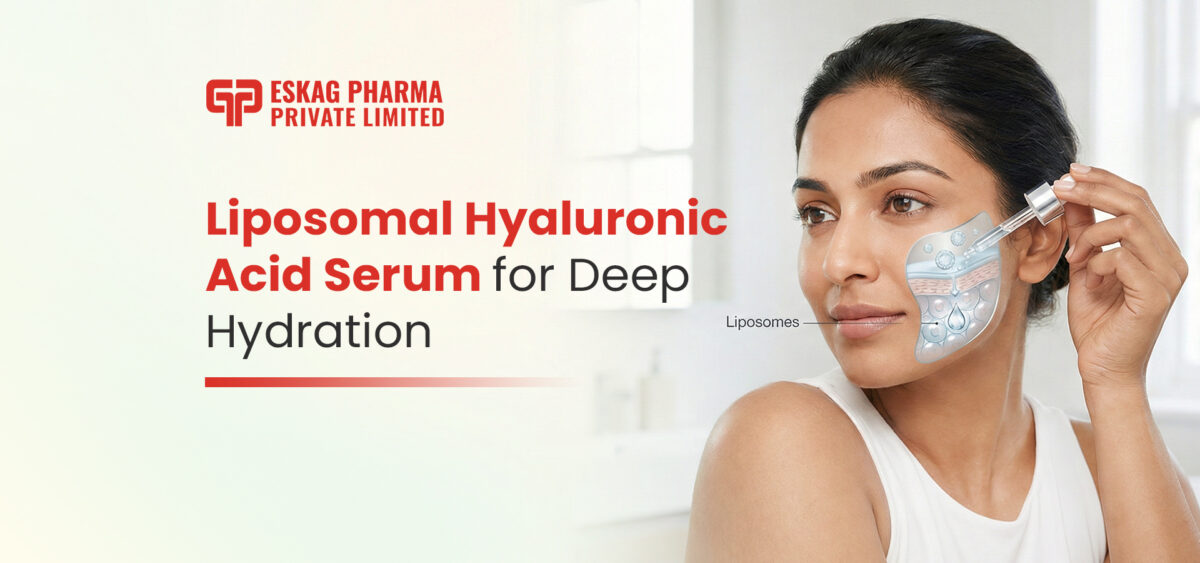
Liposomal hyaluronic acid serum for skin is a delivery system in which hyaluronic acid is encapsulated in lipid vesicles that support deeper skin penetration. This format allows water to hold and barrier support beyond surface hydration, which suits premium skincare lines that rely on liposomal expertise.
How Liposomal Hyaluronic Acid Works at the Cellular Level
Liposomal carriers place hyaluronic acid close to keratinocytes and fibroblasts that carry HA receptors. These receptors help cells respond to HA by regulating extracellular water balance and the quality of the skin matrix. Research shows that hyaluronic acid with a molecular weight below 50 kDa can reach deeper epidermal zones than high-weight forms [2]. This cellular access supports longer hydration and better surface comfort.
Why Liposomal Hyaluronic Acid Offers Superior Absorption
Liposomal expertise helps hyaluronic acid remain stable and more readily available to skin cells. Free hyaluronic acid mainly remains on the surface due to its large molecular weight. Liposomal carriers protect the active compound and allow gradual release near the epidermis. Studies on advanced HA systems show up to 30 per cent higher skin water levels compared with standard HA formats.
Liposomal Hyaluronic Acid vs Regular Hyaluronic Acid Serum
Regular hyaluronic acid serum forms a water layer at the skin surface and helps to provide a short-term moisture feel. Liposomal hyaluronic acid serum for skin delivers HA to skin cells that regulate the barrier and water flow. This difference leads to longer moisture retention and more stable skin comfort. Clinical data on encapsulated HA systems report hydration support lasting up to 24 hours, whereas free HA shows a shorter effect window.
Liposomal hyaluronic acid serum for skin explains how carrier-based delivery supports stable water levels and long-lasting comfort within the outer skin layers.
Benefits of Liposomal Hyaluronic Acid for Deep Skin Hydration
Liposomal hyaluronic acid supports deep water supply within the epidermis, which improves skin comfort and visual quality. This benefit makes such systems suitable for premium skincare lines that focus on lasting moisture rather than short surface relief.
Long-Lasting Hydration for Dehydrated Skin
Liposomal carriers help hyaluronic acid stay near skin cells for a longer time than free HA. This allows a steady water supply that supports skin softness across the day. A serum for dehydrated skin that uses liposomal delivery can maintain moisture even under dry climate exposure.
Strengthening Skin Barrier and Preventing Moisture Loss
When hyaluronic acid reaches the upper epidermis, it supports cell spacing and water balance, which helps the barrier stay intact. A serum for deep skin hydration can reduce rapid water loss by keeping hydration within the outer skin layers. Hyaluronic acid for skin moisture also supports the lipid structure that protects against environmental dryness. This effect helps brands offer products that suit both climate stress and daily use.
Liposomal Hyaluronic Acid for All Skin Types
Liposomal technology suits oily, dry, and sensitive skin due to its water-based nature and high skin tolerance. The delivery system avoids heavy residue while still offering stable hydration. This feature allows formulators to create broad-use products without compromise on comfort or performance. It also supports a wide market reach across diverse consumer profiles.
Hyaluronic Acid Serum for Dry and Dehydrated Skin
Hyaluronic acid serums support water balance at the skin surface and within the upper epidermis, which helps improve comfort and tone. This feature makes such products suitable for premium hydration ranges that target both dryness and water loss.
Hyaluronic Acid Serum for Dry Skin: How It Helps
This type of serum supports water levels in skin that lacks natural oils.
- A serum for deep skin hydration supports a soft and smooth skin surface.
- Its water-rich polymer structure suits brands with a global presence.
- The format allows use with creams or oils in layered routines.
- Regular use supports a looser feel and better skin comfort.
Best Serum for Dehydrated Skin with Deep Penetration
A serum for dehydrated skin must place water close to living skin cells.
- Smaller molecular forms of hyaluronic acid can reach deeper epidermal zones.
- Lipid-based carriers can keep the active near the skin for a longer period.
- This format supports stable water levels rather than short surface relief.
- Such delivery suits brands that focus on long-term hydration value.
Daily Hydration Support Without Greasiness
A daily hydration serum must add water without a heavy skin feel.
- Hyaluronic acid for skin moisture draws water into the outer skin layers without oil.
- The serum format allows fast skin contact and a light skin feel.
- This suits oily and mixed skin that needs water rather than lipid content.
- Light textures also suit layered routines with sunscreen or creams.
Also read: Why Anti-Ageing Cream & Serum – When Is the Best Time to Start Using It?
Liposomal Hyaluronic Acid Serum vs Conventional Hydration Serums
Liposomal hyaluronic acid serums use lipid carriers to support deeper and more controlled contact between hyaluronic acid and the skin. Conventional serums often act only at the surface, while liposomal systems allow the active ingredients to remain near the epidermis for longer periods.
Better Penetration and Controlled Release with Liposomal Technology
Liposomal carriers consist of lipid layers that can align with the skin’s natural structure. This allows hyaluronic acid to stay closer to skin cells rather than remain only on the surface. The carrier can release the active slowly, which supports more stable water levels within the epidermis. For premium skincare lines, this type of delivery allows better performance without heavy textures.
Reduced Evaporation and Longer Moisture Retention
Free hyaluronic acid can lose its effect when surface water evaporates. Liposomal systems protect the active ingredient within a lipid shell, which reduces rapid loss and keeps water available near skin cells. Liposomal cosmetics allow moisture to remain in the skin for longer, supporting day-long comfort. This feature helps products meet consumer expectations for sustained hydration.
Why Liposomal Formulations Deliver Deeper Hydration
The format of a hydration serum affects how far water support can reach within the skin. Liposomal carriers place hyaluronic acid closer to the epidermal cells that regulate water balance and barrier function. This proximity allows more effective water support than surface-only formulas. For brands, this creates a clear performance difference that supports premium positioning.
How to Use Liposomal Hyaluronic Acid Serum for Best Results
Correct use allows liposomal hyaluronic acid serum for skin to keep water within the outer skin layers for a longer time. A consistent routine helps maintain surface comfort and supports stable moisture across daily skin exposure.
Morning and Night Application Routine
A liposomal hyaluronic acid serum works best on clean skin so the lipid carriers can reach the upper epidermis. In the morning, the serum supports water balance before daily exposure to dry air and sunlight. At night, the same serum helps restore skin moisture after contact with heat, dust, and cleansing products. Regular use in both periods supports steady skin comfort and surface smoothness.
Pairing Hydration Serum with Moisturiser and Sunscreen
A hydration serum provides water, while a moisturiser helps seal that water within the skin. Sunscreen then protects the hydrated surface from UV-related dryness and barrier stress. When these products are used in this order, the hydration from hyaluronic acid remains available for longer. This routine supports both immediate skin comfort and long-term surface quality.
How Often Should You Apply Hydration Serums
Daily use helps maintain stable water levels in the skin. Most formulations suit twice-daily application without overload or residue. Regular contact with hyaluronic acid helps keep the outer skin layers soft and flexible. This schedule also supports consistent product performance over time.
Manufacturing Science Behind Liposomal Hyaluronic Acid Serums
The science behind liposomal hyaluronic acid serums relies on controlled lipid assembly, precise polymer handling, and strict process validation. Third-party manufacturing of hyaluronic acid serum requires this level of control to deliver uniform particle size, stable hydration performance, and consistent batch quality across commercial volumes.
Liposomal Hyaluronic Serum Formulation Process
The liposomal hyaluronic serum formulation begins with selection of pharmaceutical-grade hyaluronic acid and compatible phospholipids that can form stable vesicles. These lipids self-assemble around the hyaluronic acid to create carriers that hold and protect the active ingredient.
Process variables such as lipid ratio, hydration medium, and mixing speed define vesicle size and payload efficiency. In third-party manufacturing of hyaluronic acid serum, these parameters must remain fixed to ensure every batch shows the same hydration performance and skin feel.
Stability, Molecular Size, and Quality Control
The stability of a liposomal system depends on both lipid integrity and the molecular size of the hyaluronic acid. The liposomal hyaluronic serum formulation must balance molecular weight with vesicle structure so the active remains available for skin contact without aggregation.
Quality control teams monitor particle size, zeta potential, and viscosity to confirm batch uniformity. For third-party manufacturing of hyaluronic acid serum, these tests protect brand reputation by ensuring every delivery meets defined technical standards.
Regulatory and Safety Standards in Serum Manufacturing
Cosmetic and cosmeceutical regulations require raw material traceability, microbial control, and documented process validation. The liposomal hyaluronic serum formulation must comply with cosmetic safety norms related to preservatives, lipid purity, and skin compatibility.
Stability and safety studies confirm that the formulation remains safe across its full shelf life. In third-party manufacturing of hyaluronic acid serum, regulatory compliance allows brands to register and market their products in multiple regions without formulation changes.
Why Choose Eskag Pharma for Liposomal Hyaluronic Serum Manufacturing?
Eskag Pharma has more than five decades of experience as a contract manufacturer serving pharmaceutical, nutraceutical, and cosmeceutical markets.
Third-Party Manufacturing of Hyaluronic Acid Serum
Eskag Pharma offers third-party manufacturing of hyaluronic acid serum that covers research, formulation, production, and packaging under one roof. Their infrastructure ensures batch uniformity, regulatory documentation support, and private-label options to match specific brand strategies. This full-service approach helps partners scale without internal manufacturing investment and supports faster time-to-market.
Expertise in Advanced Liposomal Skincare Formulations
Eskag Pharma focuses on liposomal expertise through dedicated R&D teams that develop stable, effective vesicle-based products for hydration and active delivery. Their systems allow close control of particle size, payload stability, and water retention performance for premium serums. This depth of technical capability supports brands that seek differentiated products with demonstrable results in hydration and consumer appeal.
Trusted Partner for Scalable and Compliant Manufacturing
Eskag Pharma’s manufacturing sites hold WHO-GMP, HACCP, and ISO certifications that align with global quality norms and international export requirements. Their operational scale supports both small pilot runs and large commercial volumes, backed by regulatory and logistical assistance. This makes Eskag Pharma a reliable partner for brands that need consistent supply, compliance support, and manufacturing agility.
Wrapping Up
Long-term skin comfort depends on how well water stays within the outer skin layers rather than how rich a product feels at first touch. When you evaluate a hydration product, focus on delivery format, molecular size, and how the active stays available near skin cells.
Liposomal hyaluronic acid serum for skin offers a route to support steady moisture and a smoother skin surface across daily use, a focus that companies like Eskag Pharma also prioritise in their formulation work. For brands, this means selecting partners who understand both formulation science and consistent production standards.
References
- https://www.healthline.com/health/beauty-skin-care/hyaluronic-acid
- https://medcraveonline.com/JDC/hyaluronic-acid-in-modern-cosmeceuticals-a-review-of-skin-health-and-anti-aging-innovations.html
-
 📅 June 30, 2026
Key Takeaways The Bioavailability Challenge: Stand... -
 📅 June 29, 2026
Over the past decade, dermatological science has u... -
 📅 June 27, 2026
The global nutraceutical industry faces a critical... -
 📅 June 27, 2026
Iron deficiency anaemia remains the most prevalent... -
 📅 June 26, 2026
Uneven skin tone, persistent redness, and acne tha... -
 📅 June 26, 2026
If you struggle to switch off after a long day, yo... -
 📅 June 26, 2026
India’s sleep aid market is on course to rea... -
 📅 June 26, 2026
Key Takeaways The First-Pass Barrier: Traditional ... -
 📅 June 24, 2026
Sleep disruption is not simply a lifestyle inconve... -
 📅 June 18, 2026
The sleep supplement industry is undergoing a fund...
Your skin can lose water due to dry air, sun exposure, harsh cleansers, or a weak skin barrier. These factors allow moisture to escape faster than it can be replaced.
It uses lipid carriers to place hyaluronic acid close to the upper skin layers where water balance occurs. This helps the skin retain moisture for a longer time than standard serums.
Yes, hyaluronic acid adds water without oil, so it does not clog pores. It suits oily skin that lacks hydration rather than lipids.
Yes, it can be applied every day because it supports natural skin moisture without irritation. Daily use helps keep the outer skin layers soft and balanced.
Dry skin lacks oil, while dehydrated skin lacks water within the skin layers. Dehydrated skin can affect all skin types, including oily skin.
Many people notice improved skin comfort and softness within a few days of regular use. Deeper hydration and smoother texture may appear within one to two weeks.
Liposomal forms help hyaluronic acid stay closer to skin cells for longer moisture support. Regular HA mainly acts on the surface.
Yes, low skin water can make the surface look uneven and less reflective. This can make fine lines and dullness more visible.
Yes, Eskag Pharma provides third-party manufacturing services for hyaluronic acid and liposomal skincare products. This includes formulation, production, and regulatory support.