
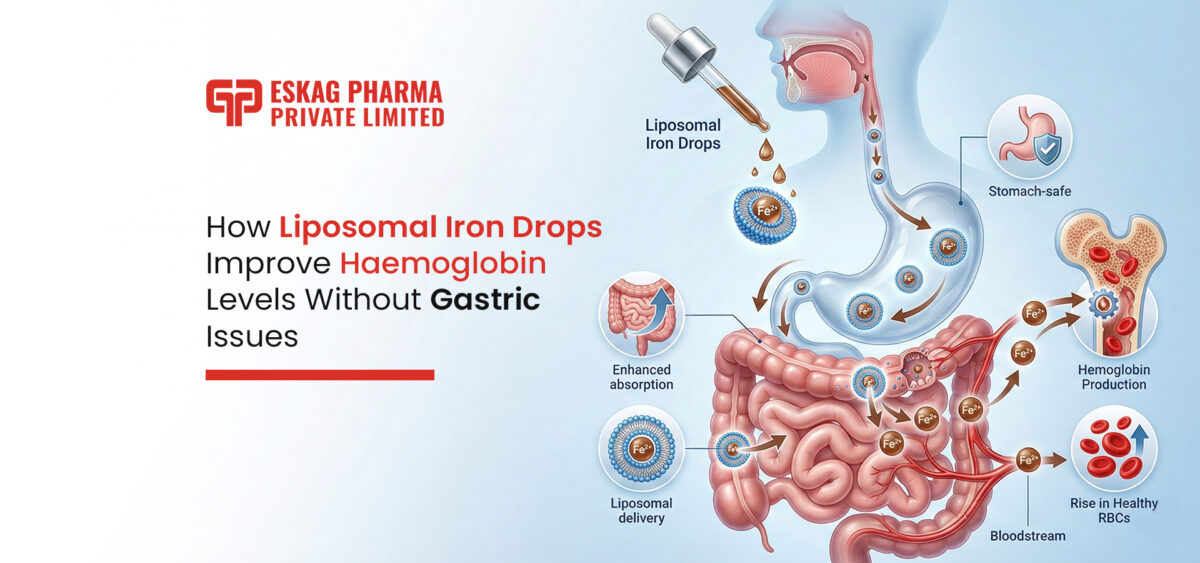
How Liposomal Iron Drops Improve Haemoglobin Levels Without Gastric Issues
Low haemoglobin due to iron deficiency impairs oxygen delivery and often leads to fatigue and reduced work capacity. There is a limited response or stomach discomfort, which is familiar with oral iron forms. Liposomal delivery systems allow introduces active iron compounds within lipid carriers that mimic cell membranes and enhance uptake. The approach is best suited for manufacturers seeking better tolerance and dosing across different age groups.
In this blog, we will understand how liposomal iron drops for haemoglobin address absorption limits, gastric comfort, and B2B formulation needs.
Key Takeaways:
- Liposomal iron drops support higher iron uptake with better gut comfort than traditional oral iron formats for patients.
- Encapsulated iron reduces stomach contact, helping reduce nausea, constipation, and taste issues in routine therapy for users.
- For B2B brands, liposomal iron drops allow differentiated products with stable quality and regulatory readiness across global markets.
Understanding Low Haemoglobin and Iron Deficiency
With reduced levels of haemoglobin, there is limited oxygen transport. This explains why liposomal iron drops for haemoglobin have clinical attention as an oral support option.
What Causes Low Haemoglobin Levels
Low haemoglobin is linked with poor dietary iron intake, reduced iron uptake, and blood loss within the gut. Conditions such as pregnancy, heavy menstrual loss or restricted diets increase the risk over time. Assessment of liposomal iron drops for haemoglobin helps analyse why standard intake fails to restabilise iron balance.
Symptoms and Health Risks of Iron Deficiency Anaemia
Iron deficiency anaemia corresponds to tiredness, pale skin, dizziness, or reduced focus during daily tasks. Lower haemoglobin levels for a longer time may strain the heart and minimise physical endurance. Liposomal iron drops for haemoglobin support are a potent option when symptoms persist despite routine iron use.
Why Conventional Iron Supplements Cause Gastric Issues
Traditional iron salts have a contact with the stomach lining and cause constipation, nausea or abdominal pain. Moreover, high levels of unabsorbed iron in the gut may disrupt normal digestion and bowel comfort. This explains why liposomal iron drops for haemoglobin are attracting interest among patients who have poor tolerance to regular iron formulations.
Let’s now explore what liposomal iron drops are for haemoglobin and their characteristics.
What Are Liposomal Iron Drops for Haemoglobin?
Liposomal iron drops for haemoglobin deliver elemental iron in lipid vesicles that support absorption with reduced irritation.
Introduction to Liposomal Iron Supplement Technology
Liposomal iron relies on microscopic lipid spheres that enclose iron and protect it across the digestive tract. This lipid structure resembles human cell membranes and allows direct entry into the blood circulation. Clinical studies highlight clear liposomal iron benefits, especially in terms of absorption and tolerance.
How Liposomal Iron Drops Differ from Traditional Iron Drops
Standard iron drops release free iron that reacts with stomach acid and intestinal tissue. Liposomal iron keeps iron enclosed until uptake, thereby limiting local irritation in the gut. This distinction sets liposomal formulations apart from common Iron drops for anaemia, which often cause poor comfort.
Why Liquid Liposomal Iron Is Ideal for Sensitive Digestion
Liquid liposomal iron is suitable for people who experience discomfort with tablets or conventional syrups. Encapsulated iron reaches absorption sites with minimal contact with the stomach lining. For sensitive patients, this form is the best iron for low haemoglobin when tolerance is a concern.
With a better understanding of liposomal iron drops, let’s now explore the benefits of liposomal iron drops.
Liposomal Iron Benefits for Better Haemoglobin Support
Liposomal iron drops for haemoglobin offer reliable iron uptake, better gut comfort, and steady haemoglobin response across routine oral use.
Liposomal Iron for Better Absorption
Liposomal iron enters the bloodstream through lipid membranes rather than standard iron transport routes. Enhanced iron uptake is a phenomenon in which iron stays within encapsulated lipid layers. The overall absorption pathway allows for better haemoglobin response at lower doses.
Gentle on the Stomach with Minimal Side Effects
Encapsulated iron avoids direct contact with the gastric mucosa and intestinal tissue. Lower rates of nausea and abdominal discomfort are possible with ferrous sulfate than with ferrous salts. This profile suits when stomach sensitivity limits the use of regular iron.
Consistent Haemoglobin Improvement Over Time
A steady rise in haemoglobin after regular oral liposomal iron use over several weeks is evident nowadays. Moreover, controlled delivery decreases daily fluctuation in iron exposure with the gastrointestinal pathway. The mode of delivery provides sustained reduction of iron deficiency without disruption of treatment plans.
Liposomal Iron Drops for Anaemia Management
Liposomal iron drops are an oral option for anaemia care when standard iron formulations fail due to poor tolerance or low response.
Iron Drops for Anaemia in Children and Adults
Liposomal iron drops for haemoglobin are suitable for both paediatric and adult use due to their gentle oral delivery and proven safety profiles.
- Clinical paediatric studies report higher acceptance of ferrous sulphate drops than ferrous sulfate drops, due to better gut comfort.
- Lower doses of liposomal elemental iron achieve a comparable haemoglobin response in adults with mild to moderate anaemia.
- A liquid dosage form allows precise dose adjustment based on age and body weight.
- Suitable for routine use under medical supervision in nutritional iron deficiency cases.
Best Iron for Low Haemoglobin in Sensitive Patients
Liposomal iron drops for haemoglobin offer a preferred oral option for patients with poor tolerance to standard iron salts.
- Gastroenterology research links liposomal iron with reduced gastric mucosal exposure.
- Suitable for patients with prior intolerance to ferrous fumarate or ferrous sulphate.
- Clinical reports show improved treatment adherence due to better digestive comfort.
- Appropriate for post-surgical, elderly, or inflammatory gut conditions under guidance.
Role of Liposomal Iron Supplement in Long-Term Therapy
Liposomal iron drops for haemoglobin support sustained correction of iron deficiency where extended supplementation is required.
- Long-term studies show a stable haemoglobin rise without frequent dose interruption
- Reduced gut irritation allows continuous daily use across several months
- Suitable for chronic iron loss conditions such as menstrual blood loss or dietary deficiency
- Medical literature supports the use of maintenance therapy after the initial correction phase
- The following section explains how liposomal technology protects active ingredients from gastrointestinal degradation.
How Liposomal Technology Prevents Gastric Issues
Liposomal delivery keeps iron enclosed within lipid layers, limiting stomach contact and reducing common digestive discomfort associated with oral iron intake.
Bypassing Direct Gastric Irritation
Liposomal iron stays enclosed within lipid layers that pass through the stomach without direct contact with gastric tissue. This barrier helps reduce irritation that often occurs with free iron salts in common iron supplement drops. For you, this mechanism supports daily intake without stomach discomfort.
Controlled Iron Release and Improved Bioavailability
Liposomal iron reaches absorption sites in the intestine through lipid-mediated transport pathways. This process allows Liposomal Iron to be better absorbed without excess iron exposure in the gut lumen. Clinical nutrition research links this delivery method with higher systemic iron uptake at lower doses.
Reduced Nausea, Constipation, and Metallic Taste
Encapsulated iron avoids chemical reactions with digestive fluids that trigger nausea or bowel discomfort. There is a lower rate of constipation and metallic taste compared with conventional oral iron. This makes liposomal formulations suitable when standard iron supplement drops are poorly tolerated.
Liposomal Iron Drops vs Conventional Iron Supplements
Liposomal iron drops differ from conventional iron supplements by limiting gut irritation while supporting steady iron uptake through lipid-based oral delivery.
Liposomal Iron Drops vs Regular Iron Syrups
Regular iron syrups often rely on ferrous salts that sit in the gut lumen and may trigger gut upset in many patients. Liposomal iron drops keep iron within a lipid carrier, so free iron contact with the stomach stays low. Reviews on new oral iron formulations note better GI comfort with liposomal or similar lipid-based iron options compared with classic ferrous salts.
Absorption Efficiency and Tolerability Comparison
With ferrous salts, a higher unabsorbed iron load in the gut often links to nausea, constipation, dyspepsia, and pain, which can cut adherence. Liposomal supplements show strong oral tolerance in clinical trials, with child trial data reporting lower constipation and better adherence compared with conventional iron. For you, this mix of iron uptake support plus GI comfort helps brand owners position a premium oral iron format.
Why Liposomal Iron Is the Preferred Choice
If your customer base includes sensitive users, liposomal drops help reduce the main barrier that stops oral iron use: GI side effects. A haematology review notes excellent GI tolerance for newer oral iron systems, with supportive data in groups such as IBD and CKD, where classic iron salts often fail. Paediatric research also compares liposomal iron drops with ferrous sulphate drops, which supports a clear product story for brands that want efficacy with comfort.
Also read: Why Liposomal Ferrous Ascorbate Tablets Are Revolutionising Iron Supplementation.
Let’s now explore the uses of liposomal iron drops that make it a plausible choice against traditional formats.
How to Use Liposomal Iron Drops Effectively
Effective use depends on correct dosing, safety guidance, and intake timing that supports steady iron uptake without digestive discomfort.
Recommended Dosage and Administration
For B2B product planning, dosage definition depends on elemental iron strength, target group, and clinical purpose. Oral liposomal iron drops usually allow once-daily dose plans due to high uptake at lower iron levels. You should align final dose guidance with regional medical standards and product labelling rules.
Suitable Age Groups and Safety Guidelines
Liposomal iron drops support paediatric, adult, and geriatric segments when doses are adjusted to body weight and iron requirements. Safety data from oral iron research support use under medical supervision, with caution in patients with iron overload conditions. You should ensure clear warnings, child-safe pack design, and clinician-approved instructions.
Tips to Maximise Iron Absorption
Liposomal iron shows the best response when calcium products or antacids stay separate for a few hours. Food impact stays lower than ferrous salts, which supports flexible dose timing. Regular blood tests help you validate haemoglobin response and guide future dose adjustment.
Manufacturing Excellence in Liposomal Iron Drops
Excellence relies on precise lipid selection, controlled particle size, validated encapsulation rate, and strict quality systems across each production batch.
Importance of Advanced Liposomal Formulation Techniques
Advanced liposomal methods rely on precise lipid selection, controlled particle size, and high iron encapsulation ratio. These factors support predictable absorption and low free iron exposure across oral dose forms. For a liposomal iron drop contract manufacturer, technical control at this stage defines product performance, scale reliability, and batch repeatability.
Stability, Bioavailability, and Quality Control Parameters
Liposomal iron drops require strict control of pH range, particle uniformity, and oxidative protection to maintain shelf life. Analytical tests such as particle size distribution, encapsulation rate, and elemental iron assay confirm batch consistency. In third-party manufacturing of liposomal iron drops, these checks protect bioavailability claims and support brand confidence across supply cycles.
Regulatory Compliance for Oral Iron Drops
Oral iron drops must meet food or supplement rules based on target market classification and dose strength. Documentation such as product specification, safety data, stability records, and label compliance forms a core requirement. For B2B partners, regulatory alignment ensures smooth market entry, audit readiness, and long-term commercial supply.
Why Choose Eskag Pharma for Liposomal Iron Drop Manufacturing?
Eskag Pharma offers WHO-GMP-certified production, proven liposomal expertise, and reliable third-party supply for regulated oral iron drop markets.
Liposomal Iron Drop Contract Manufacturer Expertise
As a liposomal iron drop contract manufacturer, Eskag Pharma offers decades of experience across oral dosage and nutraceutical formats. You gain access to proven liposomal know-how, batch consistency, and repeatable quality across supply cycles. This expertise helps your brand place reliable iron drops within regulated and export-ready portfolios.
Third-Party Manufacturing of Liposomal Iron Drops
For third-party manufacturing of liposomal iron drops, Eskag Pharma provides scalable batch options and precise technical documentation. You receive formulation customisation, validation data, and market-ready dossiers aligned with buyer and regulator needs. This approach reduces capital load while you retain brand control and speed to market.
GMP-Certified Facilities and Custom Formulation Support
Eskag Pharma operates WHO-GMP and ISO-certified units with stringent controls from raw material acquisition to final formulation. Some of the major benefits include in-house testing, stability checks, and label-ready specifications for liposomal iron formulations. Custom formulation support helps you define dose strengths, lipid systems, and pack formats for target markets.
Final Thoughts
It is critical to assess iron formulation tolerance, dose control, and support before selection to ensure consistent haemoglobin response across patient groups. Brands benefit from liposomal iron formulation when stomach comfort, adherence, and predictable absorption matter for long-term anaemia care.
With Eskag Pharma, you access WHO-GMP systems, liposomal expertise, and dependable third-party supply for compliant iron drop portfolios worldwide markets.
-
 📅 June 30, 2026
Key Takeaways The Bioavailability Challenge: Stand... -
 📅 June 29, 2026
Over the past decade, dermatological science has u... -
 📅 June 27, 2026
The global nutraceutical industry faces a critical... -
 📅 June 27, 2026
Iron deficiency anaemia remains the most prevalent... -
 📅 June 26, 2026
Uneven skin tone, persistent redness, and acne tha... -
 📅 June 26, 2026
If you struggle to switch off after a long day, yo... -
 📅 June 26, 2026
India’s sleep aid market is on course to rea... -
 📅 June 26, 2026
Key Takeaways The First-Pass Barrier: Traditional ... -
 📅 June 24, 2026
Sleep disruption is not simply a lifestyle inconve... -
 📅 June 18, 2026
The sleep supplement industry is undergoing a fund...
They deliver iron in lipid carriers that support blood uptake and haemoglobin formation through oral use and daily dosing. The format suits people who experience stomach discomfort or poor tolerance to everyday oral iron products worldwide.
Lipid carriers allow iron entry into intestinal cells, thereby increasing systemic availability and supporting haemoglobin synthesis safely and reliably. Lower free iron within the gut reduces loss and allows effective dose action at reduced elemental levels.
Yes, lipid encapsulation prevents direct stomach contact and reduces the irritation commonly associated with ferrous iron salts. Clinical use shows fewer nausea and bowel complaints compared with standard oral iron preparations in routine patient care.
Regular iron drops release unbound iron ions that irritate gut tissue and alter digestive comfort for many users. Liposomal drops keep iron enclosed until uptake, which limits gut exposure and reduces taste disturbance with oral doses.
Clinicians may prescribe liposomal iron drops for nutritional iron deficiency anaemia with tolerance concerns in long-term care. They support haemoglobin recovery when standard iron therapy causes discomfort or poor adherence across adult and paediatric groups.
Benefits include higher iron uptake, improved gut comfort, stable haemoglobin rise, and better treatment adherence across routine use. These features allow a lower elemental iron dose without compromising clinical response or safety margins for many patient groups.
You may consider iron supplement drops if tablets cause discomfort or difficulty with oral intake with standard iron forms.
Healthcare advice helps determine suitability based on age, iron status, and medical history before regular dose selection.
Haemoglobin increase often appears within four to eight weeks after regular oral liposomal iron use under medical review. Blood tests help confirm response and guide dose adjustments throughout therapy to ensure safe, long-term care.
Yes, liposomal iron drops suit children and elderly patients with careful dose control under medical supervision and review. Weight, iron requirements, and clinical status guide dosing to avoid excess iron exposure in vulnerable age-group care.
Yes, Eskag Pharma provides third-party supply services for liposomal iron drops with GMP-certified facilities for global nutraceutical brands. You receive formulation support, quality systems, and documentation suitable for regulated market supply across multiple regions and portfolios.